

Your players know the play. They have seen it, repped it, and heard it coached all week.
But when the picture changes on Friday night, execution breaks down.
That moment is often the difference between almost ready and truly prepared.
Most coaches work hard and have structure. The real challenge is that practice often doesn’t match what happens in games. Far too often, players are ready for the script but not the chaos. When coaches rethink practice, players learn to respond, adjust, and solve problems in real time.
Why Traditional Drills Fall Short in Player Development
For years, football has focused on repetition. Coaches plan drills, expect precision, and aim for perfect execution. This approach seems right because repetition should build consistency.
But football does not unfold the same way every time.
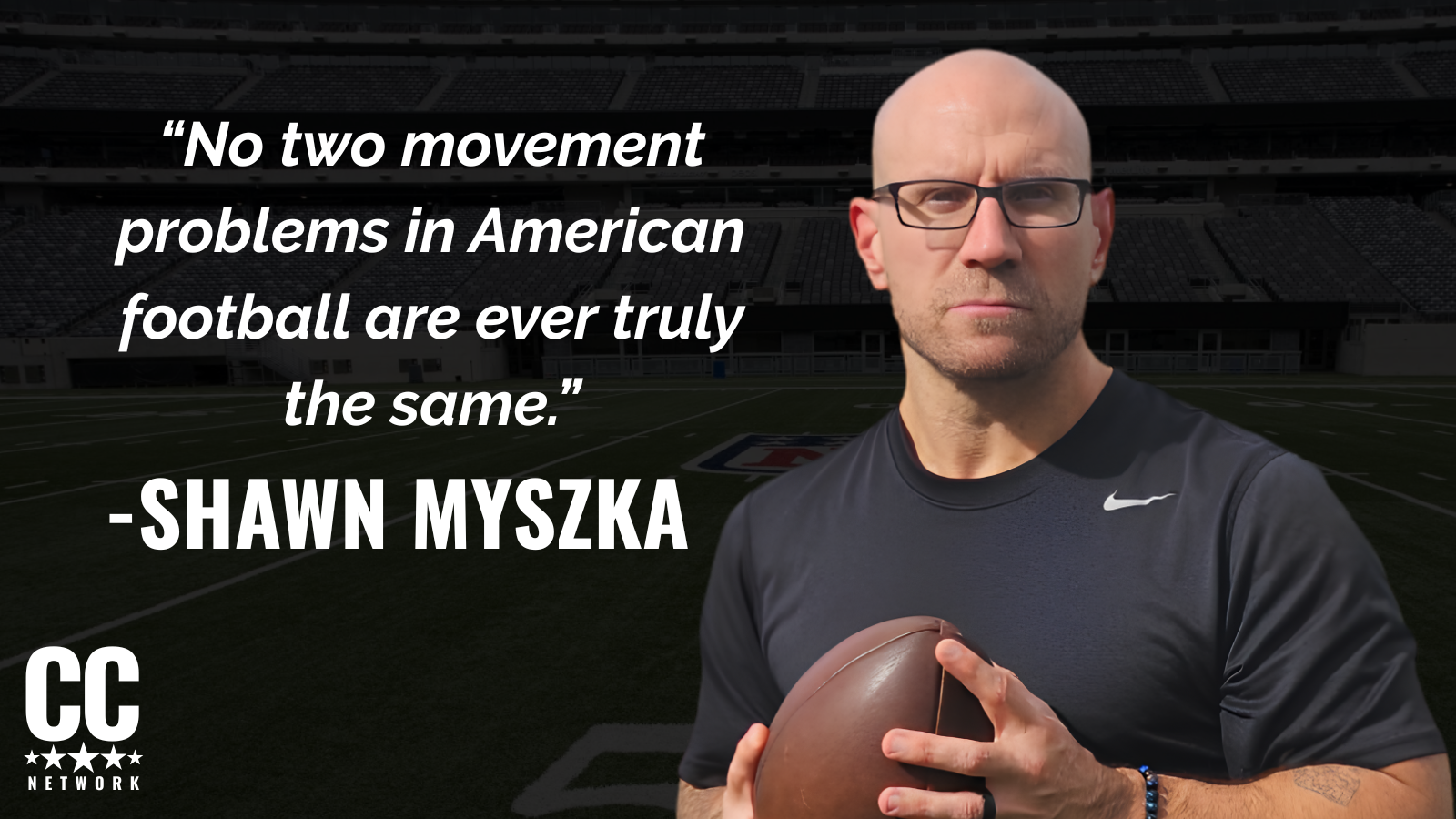
As Shawn Myszka explains,
“No two movement problems in American football are ever truly the same.” (08:45)
Because of this, players never see the exact same situation in a game. Even a small change in alignment, speed, or leverage creates a different play. When practice is built on identical reps, it trains players for a version of the game they usually will not see on Friday night. As a result, players learn to repeat instead of react.
Shifting from Repetition to Problem-Solving in Football Practice
So what should replace repetition?
Great coaches design practices that focus on problem-solving. Rather than giving players every answer, they set up situations where players have to figure things out for themselves.
Myszka reinforces this idea:
“Skill to us is about an adaptive functional relationship with what’s unfolding and what’s emerging.” (10:32)
True skill is not memorizing. It is adapting to the game.
For example, a running back never hits the same hole the same way every time. He reads defenders, changes his path, and reacts in the moment. Practice should reflect this reality.
When players get used to solving problems in practice, they become more confident, more aware, and quicker at making decisions, allowing them to play faster as a result.
Using Constraints to Improve Practice Design in Football
How can coaches create these problem-solving environments?
The key is to change the constraints in practice.
A few constraints include:
- Space (tight vs. open)
- Time (fast vs. controlled)
- Numbers (2v1, 3v2, etc.)
- Starting positions
- Player intentions
This is where coaching with better data makes a difference. With Modern Football Technology, coaches can track tendencies and outcomes as practice unfolds. That makes it easier to adjust constraints in real time and build more game-like situations.
By changing those factors, coaches can guide player behavior without scripting every rep. A staff can stagger defenders to change pursuit angles, add a blocker to change spacing, or slow the drill down to sharpen perception.
That gives players repetition without repetition, where they see similar situations but learn to handle them in different ways each time.
Why Slower, Controlled Practice Creates Faster Players
At first, slowing things down can feel counterintuitive. Many programs value intensity, but always going full speed can actually limit learning.
When players move too fast, they stop processing and fall back on old habits.
Myszka makes this distinction clear:
“Practices are for learning. Practices are for adapting.” (33:55)
So coaches should build in controlled “sparring speeds” at times. At roughly 70 to 85 percent intensity, players can better recognize cues, experiment with movement, and make better decisions.
Over time, this helps players process faster, so when the game speeds up, their actions feel natural.
Game-Like Practice, Game-Ready Players
At the highest level, football rewards players who can adjust fast. That is why practice has to do more than rehearse assignments. It has to prepare players for the always-changing game they will face come game time.
That does not mean running full scrimmages every day. It means building drills and situations that reflect the timing, spacing, leverage, and decisions players see in real games.
For example, instead of using a chaotic drill, coaches can shape the environment by staggering defender entry points, varying player speeds, and adding simple decision-making constraints. That makes the work more game-like and teaches players to read cues, solve problems, and respond under pressure.
Conclusion: Better Practice Design Builds Better Players
The goal is simple: prepare players for what actually happens on game day.
Better practice leads to better players because it matches the game, builds problem-solving, and teaches players to adapt. When coaches stop controlling every detail and start designing better practice, players become more confident and play faster under pressure.
So when something unexpected happens on Friday night, they are ready for it.
Elevate your game with Modern Football Technology!
Modern Football Technology helps identify patterns and unlock hidden insights with real-time self scout and opponent tendencies while eliminating strenuous hours of manual data entry.

Book Your Demo with Modern Football:
Related:
Building Speed into the System: Practice Design That Transfers to Game Day
Practicing Like You Play: How Ben Dixon’s Game-Like Practices Lead to Game Day Success