

In today’s fast-paced game, the best defenses don’t just survive—they anticipate. For defensive coordinators, innovation isn’t optional. It’s essential. You can’t build a top-tier unit by clinging to outdated ideas. Success demands a mix of conviction and creativity—believing in your system while staying ready to evolve it.
Trevor Warner, defensive coordinator at Colgate, gets this balance. In a recent episode of The Passing Lab Podcast, he broke down his offseason approach, showing how firm vision and open-mindedness can work side by side. His perspective offers a real blueprint for coaches determined to stay one step ahead.
Conviction Without Stubbornness
Having a clear defensive identity matters. But locking yourself into one way of thinking? That’s a problem. Warner didn’t hold back:
“Anybody can be convicted about anything if you’ve seen it play out, but being naive to that conviction being the only or the best way in the future is… stupid.” (47:27)
It’s not enough to believe in your scheme. You have to ask why it works—and whether it still will. Offenses evolve. Personnel changes. Your plan needs to keep up. That may mean walking away from concepts you once loved. Warner welcomes that process:
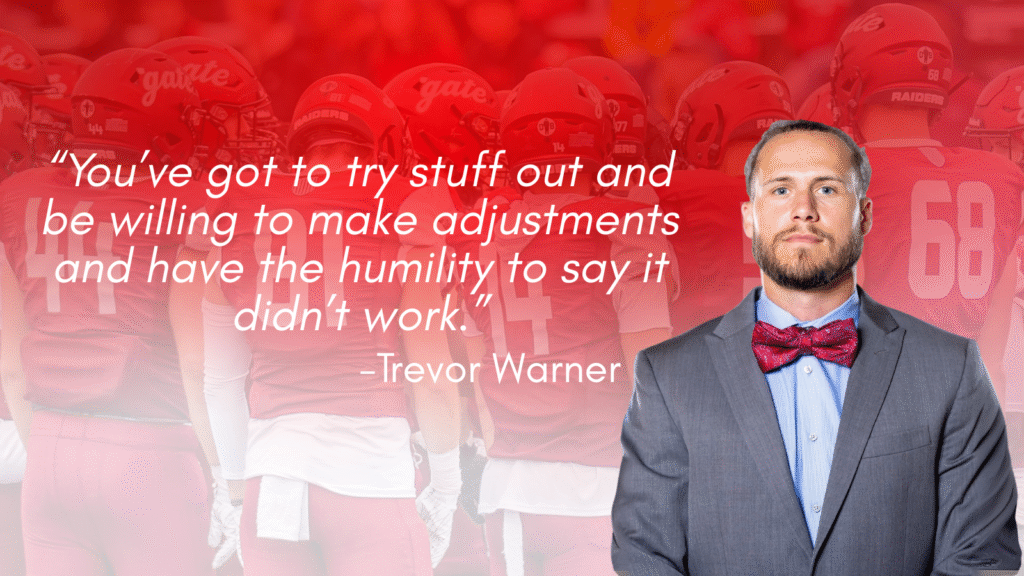
“You’ve got to try stuff out and be willing to make adjustments and have the humility to say it didn’t work.” (49:48)
The job isn’t to prove your system right. It’s to build the best defense for this team, this season.
Offseason Work That Fuels In-Season Success
Warner doesn’t use the offseason to relax—he uses it to reflect. He digs deep into every call, every decision, and every breakdown. He asks tough questions and expects his staff to do the same.
“What’s wrong with what we did? Why is it wrong? What can be corrected?” (36:19)
This isn’t theory. Warner and his assistants break down tape, study footwork, check eye discipline, and talk through how players think. They don’t just review what failed—they figure out why it failed. Sometimes it’s technique. Sometimes it’s the wrong call for the personnel. Either way, the process sharpens the entire operation.
Reflection doesn’t mean losing your identity. It means refining it. The more intentional the offseason work, the more trust your staff and players build in the plan.
Innovation with a Purpose
Creativity doesn’t mean overcomplicating the playbook. It means solving real problems before they hit you on Saturday. Warner watches other teams not to steal, but to prepare.
“There’s always somebody doing something different… and if you’re not accessing it, you’re just not growing to your potential.” (44:58)
He looks for trends, pressure packages, and structural tweaks that might apply to his own defense. But he filters everything through his core philosophy. His goal isn’t to chase fads. It’s to stay prepared—so when something new hits the field, his defense already has the answer.
Final Thoughts: Stay Ahead by Staying Humble
True defensive innovation doesn’t come from ego or gimmicks. It comes from coaches who reflect honestly, adjust willingly, and keep learning no matter how much they already know.
Warner doesn’t reinvent his scheme every offseason. He sharpens it. He stays convicted—but never complacent.
The takeaway is clear: Build your system on sound principles. Test it. Question it. Adjust it. Because in today’s game, the edge belongs to the coach who prepares for tomorrow—not the one stuck in yesterday.
Overcoming Struggles and Seeking Growth – Kurt Warner, Hall of Fame Quarterback
If You Build It: The Self-Taught Journey of Drew Chance and the #1 Offense in America