

You don’t earn a promotion under the lights on Friday night.
You build it during the unnoticed moments—when you’re breaking down film late, setting up the field before anyone else shows up, or helping a player push through a tough practice.
As Coach Adam Harvey put it:
“Coaching coaches is just as important as coaching players.” (01:32)
The assistants who move up don’t just show up—they bring something extra. Head coaches notice more than you think. Here’s what they’re really watching, and how you can start earning more trust and responsibility.
What Gets a Coach Noticed?
Adam Harvey, head coach at Long Creek (TX), knows exactly what to look for when deciding who’s ready to lead.
He starts with dependability. He needs assistants who follow through, handle their roles without being reminded, and bring purpose to every task.
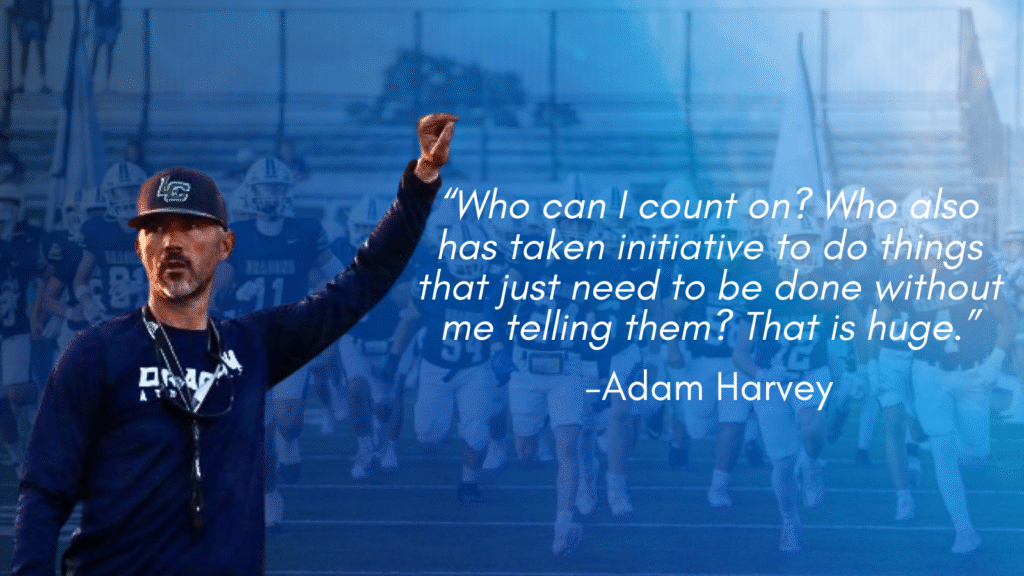
“Who can I count on? Who also has taken initiative to do things that just need to be done without me telling them? That is huge.” (01:32)
Reliability sets the floor. Energy raises the ceiling. Whether you’re organizing scout team cards or watching film, your attitude tells the staff what kind of coach you are.
If you want more responsibility, don’t wait for permission. Take control of your current role. Do the small things with pride, especially when no one’s watching. That’s how you show you’re invested.
Taking Initiative Matters
The coaches who move up don’t wait—they act.
Keith Grabowski, now a podcast host, talked about his early years on staff. He used to join the head coach during lunch film sessions, quietly taking notes and learning the system. That consistent effort helped him land a coordinator role just one year later.
Coach Harvey shared a similar moment:
“I went back, sat down with my head ball coach… and said, ‘Hey, what about this? I think we can implement this.’ It was a really good conversation because then he felt like he could trust me more.” (04:31)
These kinds of actions don’t draw attention. They don’t rely on big speeches or flash. They come from preparation, awareness, and a genuine desire to help the program grow.
Promoting Yourself—Without Being “That Guy”
Younger coaches often hold back, afraid that speaking up will look like self-promotion. But Harvey sees it differently:
“Everything is self-promotion. It’s about how you do it.” (06:33)
You don’t need to talk about yourself—just let your actions speak clearly.
Be the first one there. Stay after practice. Offer ideas in meetings because they improve the team, not because you want credit.
The staff won’t elevate you for being loud—they’ll elevate you for being consistent, dependable, and committed to the mission.
Final Thought: Earn Trust Before You Earn a Title
Head coaches pay attention to more than just results. They watch how you carry yourself every day.
When you bring energy, consistency, and initiative to your role, you earn trust. That trust leads to new opportunities—and eventually, to a promotion.
Don’t chase a title. Prove through your work that you’re already ready for it.
Promotions aren’t handed out. You earn them.
Related:
Don’t Just Watch Film—Go Watch Coaches: A Sideline Education in the Game- Lane Kirkland
Insight into the Preparations and Teachings of a Top Defensive Passing Game Coordinator