

Every offensive coordinator faces the same question: how much is too much? The urge to install every play and concept you’ve ever learned is strong. But in today’s game, it’s not complexity that separates good offenses from great ones—it’s clarity. Without a clear filter for what fits your system, you’re not building execution; you’re inviting confusion.
Mason Espinosa, Offensive Coordinator at DePauw University, understands this deeply. His approach revolves around intentionality—from how he installs, to how he trims, and most importantly, how he teaches. If you want your offense to play fast, efficient, and confident, filtering is not optional. It’s essential.
Offensive Filters Guide Better Teaching
At the heart of any successful system is a clear teaching progression. Espinosa emphasizes the importance of having a consistent filter to guide what gets installed—and more importantly, what doesn’t.
“We really try to teach from a quarterback-first perspective and build the offense around the quarterback’s eyes. That’s the filter we use.” (16:44)
Teaching through that lens keeps your install process simple and connected. It also reinforces decision-making consistency across the offense.
Espinosa breaks teaching into four categories: rhythm throws, reset throws, reaction throws, and off-platform. This structure gives players repeatable frameworks to solve problems during live action, not just in the film room.
Installing With a Purpose
Coaches often mistake volume for preparedness. Espinosa flips that mindset. His offense doesn’t install everything just because it worked on film or because they repped it in spring. Each concept has to serve the overall filter—and fit the quarterback’s eyes.
“We don’t put in everything we worked in the spring. We’ll always come back to: does it fit our philosophy? Can the quarterback own it?” (21:05)
That question becomes the gatekeeper for installation. If it doesn’t meet the standard, it doesn’t make the cut.
This filter-driven install process reduces mental clutter and accelerates reps where they matter most. The players don’t just learn plays—they internalize concepts that connect.
Trimming to Streamline Execution
Offensive bloat kills tempo and player confidence. Espinosa believes in pruning just as aggressively as planting. During the season, he regularly evaluates what stays and what gets shelved.
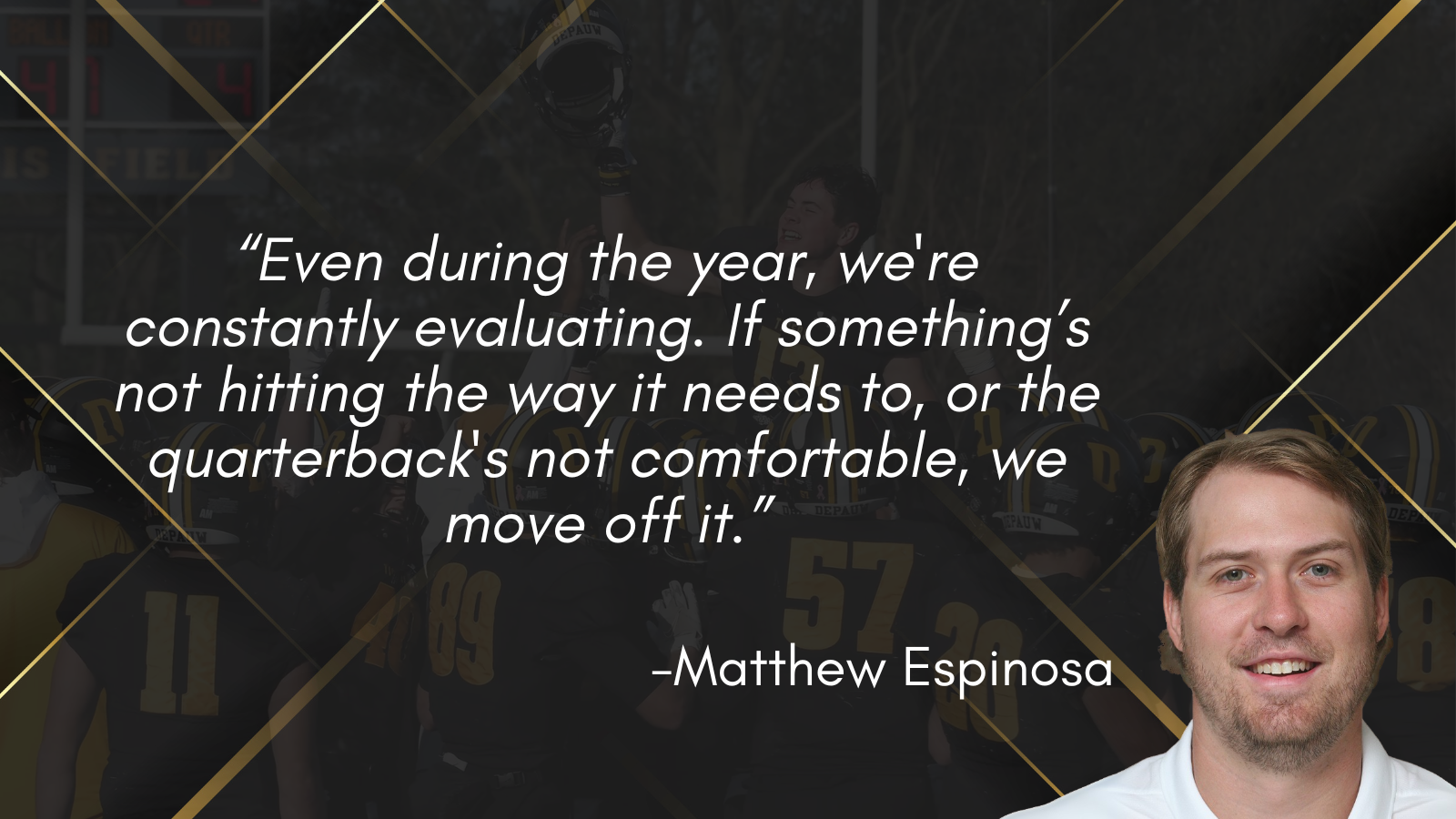
“Even during the year, we’re constantly evaluating. If something’s not hitting the way it needs to, or the quarterback’s not comfortable, we move off it.” (25:42)
That discipline creates an adaptable offense without becoming a chaotic one. It also reinforces to players that everything in the game plan matters—and that their feedback matters, too.
By trimming with intention, you increase the impact of every rep, install, and film session.
If you want your offense to play faster, make better decisions, and develop quarterback trust, start with a filter. Use it to guide your teaching. Let it determine what gets installed. And don’t be afraid to trim anything that doesn’t belong.
Filtering isn’t about limiting your playbook. It’s about maximizing what matters.
Related:
D3 Coach and Coordinators of the Week- Eric Jendryaszek, Mason Espinosa, Mark Carey
How Chet Walters Uses X to Learn Football at an Elite Level (And the Tools to Do It Yourself)