

Every football coach hunts for an edge. Hours are invested in strength work, film study, and game plans. Still, one of the most powerful performance drivers appears every day in plain sight—the food athletes put on their plates. Fueling the program means more than passing out snacks. It requires shaping a nutrition culture that sustains focus, speeds recovery, and protects long-term health.
Why Nutrition Shapes Performance
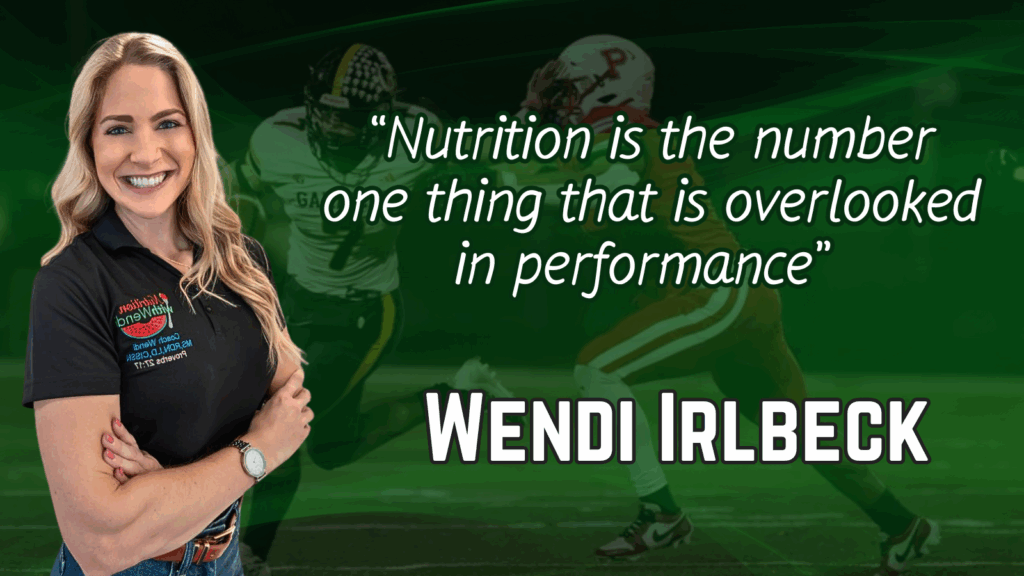
Players often think that heavier lifts or longer practices guarantee growth. In truth, poor fuel breaks them down instead of building them up. As one coach explained, “Nutrition is the number one thing that is overlooked in performance” (00:02:41).
When athletes grasp that reality, the program shifts. Treating nutrition as preparation creates momentum on and off the field. Players show up sharper in the classroom, recover faster after competition, and raise their level when the lights come on Friday night.
Practical Steps for Coaches
You don’t need a Division I budget to build a nutrition culture. Start with education. Show athletes the difference between eating for convenience and eating for performance. One coach noted, “You’ve got to get these kids to understand food is fuel” (00:11:05).
Small, consistent actions create real change:
- Stock grab-and-go foods, such as Greek yogurt, jerky, or string cheese.
- Teach players to read nutrition labels and evaluate their own choices.
- Treat breakfast as a non-negotiable part of preparation.
- Replace soda and candy in the locker room with water and fruit.
Even these adjustments give athletes more stable energy and sharper consistency.
Coaches Must Lead by Example
Culture begins with the staff. Players notice what their coaches do long before they listen to what they say. If the message is “fuel well,” the behavior has to match it. That means eating real meals and avoiding the crutch of constant caffeine. As one coach stressed, “You can’t lead kids if you’re having a C4 and not eating until nine o’clock at night” (00:37:24).
Coaches who stay fueled show that discipline doesn’t stop at the field or the weight room. By taking care of their own health, they send a clear message: winning matters, but the long-term well-being of the program matters more.
Sustaining Success Through Nutrition
Programs that succeed year after year understand that culture cannot stop at effort or accountability. True sustainability comes when players treat food as part of their preparation, recovery, and mental sharpness. Transitioning athletes from a “fast food first” mindset to a “fuel first” approach takes persistence, but it reaps rewards that last beyond one season.
In the end, fueling the program builds more than strong bodies—it builds resilience, focus, and belief. That foundation wins games on Friday nights and develops healthier men for life.
Related:
Pratik Patel, Be a Healthier Coach in 2025- Former NFL Coach
Building a Winning Culture After a Downturn: Strategies for Reviving a Struggling Program
More on Coach Wendi Irlbeck
Track your Athletes Movements today with Titan GPS!
Podcast transcript
Tony Holler (00:08)
Hi, this is Tony Holler and this is the Sprint Based Football Podcast. I’m really excited to have an interesting person today named Wendy Erlbeck, who is not a football coach. But I think that we need to learn from people outside of our strength. And Wendy is a dietitian, a nutrition specialist.
Wendy, me how you got inspired to do what you do now.
Wendi Irlbeck (00:46)
First off, thank you for having me, Tony. And no matter if you’re a coach, a parent, an athlete, what we’re going to talk about today is valuable information for you. So I have always been an athlete. Growing up, I played softball, ran cross country, played basketball, farm work, chores, things that a lot of kids don’t know about that. Actually, that discipline, that grit has helped me be where I’m at today. And I just think there’s a lot of athletes out there that the training, the conditioning that you’re doing in your youth with
pay off. It’s an investment. So I took heed to that information when I was younger. I realized that there was a direct connection with some of the foods that I ate, how I felt, even sleep. I knew that if I had cereal for breakfast, I was hungry within 45 minutes and had no energy. But if I actually had some eggs and some fruit and peanut butter, I had more stable energy. I was able to focus more. And so as a former college softball player too, I wish that every single athlete would, you know, take heed to
some of the advice we’re gonna talk about today. So I absolutely love nutrition. Obviously I went on to go be a sports dietician. I was a personal trainer. We’ve worked with coaches, athletes, parents on improving their strength, speed, and power through nutritional changes.
Tony Holler (02:01)
So did you trial and error? you, were you an experimenter with your diet or did you read certain things that turned your direction towards something else?
Wendi Irlbeck (02:16)
Absolutely, Tony. when I was 11, I kept a food log, pen and paper. I was journaling what I was eating, even green beans. I remember writing down green beans and ketchup because I did not like green beans, but I read on…
I was a kid and even today that’s why I am so passionate about giving out information because there are still sparse amounts for high school and college athletes. And so I did trial and error. I journaled things. kept records logs. I referred back to certain days when I remember counting my calories, even carbs and protein. And there were days Tony that, you know, I’ve always been tall, but
but I was only eating about 50 grams of protein and praise God, I never had stress fractures. I didn’t experience broken bones. I did break my leg when I was six, but that was part of my journey too, is that I just, wanted to be healthy and strong and I wanted to have good energy. And so I have those food logs, actually they’re still at my dad’s house in Minnesota in a closet and I had Jillian Michaels books. I I picked up everything that I could possibly consume. And what I found was that fruits, vegetables helped me feel less sore. And then when I didn’t eat enough,
of protein, I just felt lethargic. didn’t feel well. And so I just found what worked well for me. And then I shared that information with, you if you ask anyone from Stuartville that I graduated with.
I was all about nutrition and I didn’t want people eating candy and I think a lot of kids right now too, Tony, there’s kids out there doing candy pre-workout and that’s a big no-no because yeah, you’re getting quick sugar but if you actually did grapes or watermelon, you would be getting antioxidants which would actually reduce muscle soreness and there’s citrulline and watermelon so there’s just better approaches for kids and obviously you can tell I’m very passionate about helping them not make the mistakes that I made specifically under fueling.
not eating enough actually passed out during my high school anatomy class and so a lot of football players out there you think you’re eating enough until you actually start journaling your nutrition whether it be in my fitness pal doing it in an app you will quickly find out you are not eating enough calcium vitamin D protein and even carbohydrates which is often leading to muscle cramping and I know there’s a lot of discussion around that right now so
Tony Holler (04:38)
Yeah, I think your experience and mine were very similar. I don’t think I journaled, but I read stuff. ⁓ This is before your time, but I read a book called Fitter Fat, which was really, it’s interesting because I don’t think it was really good information ⁓ in many ways. And then I read like two years later, I read Protein Power, where they basically said, if you only eat protein, you’ll lose a lot of weight.
Wendi Irlbeck (04:48)
Yes.
Tony Holler (05:07)
And I’m interested, have you read like books that you recommend to other people? And also have you read books that you would not recommend?
Wendi Irlbeck (05:19)
Good question.
I did read a lot of books. mean, it was fitness magazines, bodybuilding, you know, I read a lot of that stuff and I found it was all nonsense too because it was all supplement supplements and I’m not against supplements, but I was like, I’m a kid. I don’t have any money. Like I need to eat real food, right? And so yes, there were a lot of magazines, a lot of articles that I read, you know, big pioneers in sports nutrition that I look up to. Susan Kleiner, amazing. She has a sports nutrition guidebook. So does Nancy Clark. ⁓ I was at the University of Florida, Liz Fox. She wrote a book on
on
adolescent nutrition. I mean, there’s not a lot of adolescent, like high school, middle school athlete focused nutrition information. That’s why I have my health.
playbook, I’ve taken a lot of the data from position stand papers, what we know studying adults and carbohydrate needs and energy needs, but it’s still very difficult to measure the specific caloric needs of a young athlete because you’re factoring in their maturation, hormones, things like that and growth and development. But I have found that there are, I’ll be honest, there are no good books because I’m optimistic. I believe there’s always something to take away. And so some of the books I would discourage people
from reading is nothing actually. don’t believe in censorship. I believe that when you read more, leaders are readers and you can actually say, some of the books I listed off, Why We Sleep by ⁓ Mark Walker.
such a good book. I would say for a lot of people if you’re not reading something you’re behind and you’re regressing. ⁓ But I’ll be honest I’ve never read a bad book. Nothing that I didn’t think was helpful because there’s always published data but as scientists right we’re always questioning and we should remain curious and we can compare. But I’ve never actually read a bad book.
Tony Holler (07:05)
Yeah,
that’s a good way to put it because even those two books I think were flawed. I think it’s important to read stuff that you disagree with, right? So let’s get right to football. ⁓ If you’re a football coach and you only have your kids two hours a day or three hours a day, hopefully not three or four hours a day, hopefully it’s a two hour practice, ⁓ they have 22 hours left in them during the day.
And I think sometimes football coaches put all their life into those two hours and none of their life in the other 22 hours of their athletes. So if you were a football coach and you were going to have a meeting Monday with your kids about nutrition, what are some of the big rocks of nutrition for let’s say a high school teenage boy athletes?
Wendi Irlbeck (07:57)
Sure, Tony. so great example is we partner with high school programs and when we’re doing our presentations, we will speak on a Monday typically, right? Because game day is Friday. But technically, I think I want coaches first off, you’re amazing people. You sacrifice a lot. I want as a sports dietician, we want to help take that off your plate. We make an average of over 35,000 decisions per day. And so you are not expected to be a dietician, a parent in addition to their own parents.
coaches take on too much. what I would recommend, is coaches, you have a meeting on Monday, you should plan to have some sort of sports nutrition education within that meeting, because it’s really about the meals and snacks, hydration, hours slept leading up to game day that have the largest effect. And so what I what we address in that initial meeting is nutrition 101. Here’s how you build a plate, protein, carbohydrates, fruits, vegetables, balanced plate equals balanced energy. And so three to four balanced meals per day, we discuss what that plate looks like right up
performance plate for male boys, we’re going to have to increase the amount of carbohydrates. And so that’s why I have been recommending a second breakfast, my team and I for many years, right? And so two breakfasts, and it could be something as simple as an extra jerky and pair that with an apple or banana and peanut butter, but you need additional fuel. You’re going to need anywhere between 3000 and 5000 calories per day, right? The more mass an athlete’s carrying, the better off. So we address the basics, the fundamentals.
and then pre-workout post-workout, know, four to one is my chew nibble set fueling strategy. Coaches, if you don’t have some sort of education just with those, you know, we could spend hours on just that, but we make it simple. I have graphics. So we lay out three to four balanced meals, discuss the nutrient timing, you know, how, should we be eating leading up to practice game day, right? Because you can’t have certain foods right before training or a game like fat. think this is one of the most
Tony biggest frustrations I have is when I see people telling, know, whether it’s coaches, they just don’t know, but peanut butter jelly sandwiches right before a game or practice when fat takes longer to digest. It would be better off for you to recommend the PB &J three to four hours out because if you don’t have time to digest and break down those nutrients, it is no good to you. You’re also going to experience stomach aches and cramping because the blood flow is going to your stomach and not your extremities. And so that’s something that I address.
in some of those talks. And then also the recovery because a lot of athletes, they take a beating, right? You go to camp. Camp is brutal. Maybe you didn’t condition well. You’re not sleeping the best. We need to make sure that we’re eating enough nutrients like calcium, vitamin D to help with some of those bumps, bruises, vitamin C, antioxidants. That’s why I’m always talking about, you know, pomegranate, tart cherry juice, blueberries. Like those are things that you should be consuming before and after.
having some protein and carbs immediately after a game or training session, that’s going to help facilitate the recovery process. Those that don’t consume carbs after training are going to experience greater fatigue the next day. So you’re basically cutting yourself off at the knees. leaving your gains on the table. so talking about the science behind why, right? We could shove all of this down the athlete’s throats, but if we don’t explain why it matters to them, why it’s going to help them complete more passes, why
it’s gonna help them stay healthy, strong, less injury prone, but also score touchdowns, right? What’s the task at hand is how can we get as many points on that board as possible? And your nutrition, what you’re eating directly influences that because… ⁓
You know, we explain that in these meetings. as you can tell, I get really passionate, but I think there’s coaches, Tony, I get asked all the time like, Hey, can you come do a talk? They have no budget for it, but they just spent a half a million dollars on a new stadium, weight room, extra training. Okay. Well, how do you expect your athlete to rise to the occasion? If you’re doing additional training intensity, the volume’s all there, but then the kid doesn’t know how to eat before and after training, you’re going to have them run down and injured. And that’s why we’re seeing these kids, you know,
bonk out third, fourth quarter, they’re absolutely destroyed. And so a way to combat that too is let’s get some halftime snacks in there too. That’s also something we would address in that initial meeting. Let’s get some coconut water, fruit slices, orange slices, the quick sugar, obviously carbohydrates, minerals, and then that’s going to help them delay that fatigue and then replenish some of the glycogen that’s been depleted during play.
Tony Holler (12:38)
Many of the ⁓ sprint based football coaches out there have learned some tricks, actually sideline snacks as well. They don’t wait till halftime. ⁓ I know ⁓ University of Oregon actually was making out gummy bears, know, quick sugar type stuff on the sideline. so all those things are really important. I wanted to pivot a little bit. I know you’ve done a lot of talk and work about parents. And as you know,
Wendi Irlbeck (12:46)
Yes. Yes. Good.
I
Yeah.
Tony Holler (13:08)
Parents today don’t have as many kids as they used to. And so if you have one or two kids, you pour so much more into those one or two kids rather than the five kids or six kids that people eat. So parents, they put a lot of money and a lot of work into their kids, but yet they have a hard time getting their kids to eat, right? And for the parents out there, for their coaches,
Let’s look at what a ⁓ good breakfast situation would look like compared to the problem breakfast situation that you see all the time.
Wendi Irlbeck (13:48)
Absolutely, Tony. So parents, too, you’re doing the best that you can. again, that’s why I share so much free information. I want to help you. want to simplify, remove the guesswork. ⁓ Let’s just start off with what a typical standard teen athlete football breakfast would look like before they get the education. Because when we know better, we do better. I would say it’s nothing. Breakfast is skipped. They may grab a candy bar or a protein shake on the way. Then they go to school. Then they eat half their lunch, which is incredibly low in nutrients.
Tony Holler (14:05)
Yes.
Wendi Irlbeck (14:18)
Let’s just go to breakfast. What we would recommend is number one if a kid says I don’t have time I don’t have an appetite Let’s look at the schedule the night before you can take five minutes and you can put together a Greek yogurt parfait That’s going to provide you with protein calcium and vitamin D high quality carbohydrates You can make that the night before while you listen and watch your silly social media videos Because most kids are telling me like miss Wendy I just don’t have time and I’m like show me your phone They’re on their phone for over four hours a day. And so put on a podcast put together
Five mason jars, can do some protein overnight oats, very easy, Oatmeal, protein, or even just milk and Greek yogurt, real food, right? Berries, honey, put that into mason jars for three to four days and you have your breakfast laid out. Pair that with an apple or even a banana, you’re out the door. Something very simple like that. Breakfast burritos are really good for male high school football players, right? They need a lot of calories, so we always recommend as a family, do some meal prepping, it will save you money. Put together breakfast burritos.
that have ground turkey or beef, great source of iron, right? With some cheese and some veggies, have a breakfast burrito, right? Pair protein with produce. Have an orange, you can do kiwi, pomegranate, blueberries, mixed berries. I love mixed berries, Tony, because they are high in antioxidants and they also boost brain function, right? Student first, athlete second. And so you can put eggs in that too. I mean, that’s a number of breakfasts right there. So that’s an easy way, right? Or if you’re gonna say, I just,
I’m not gonna cook, I’m not gonna do any of that. All right, fine. Let’s at least start with a banana and peanut butter. It’s not the best breakfast, but something is always better than nothing. And then same thing if we go to lunch. A really good lunch would be a grilled chicken wrap. Or if you’re gonna eat school lunch, they have certain guidelines. I’m not gonna knock on school lunch, because I’ve seen a lot of school lunches. They do the best they can. That’s why if you’re a student athlete and you wanna be great, you’re going to have to pack your own lunch. You’re not gonna be normal. You’re gonna do things differently. That’s where discipline comes in.
Tony Holler (16:06)
you
Wendi Irlbeck (16:17)
want to be great, well then make your lunch at home. Do a grilled chicken wrap. You could do a turkey sandwich with avocado. Double up on the turkey. You need that added protein. And then you could also pair that with some trail mix, 100 % fruit bar, jerky. You could do a number of English muffins. Just simple grab and go options, Tony. But I do think that cooking is a life skill. And a lot of the athletes that we’ve worked with, they tell me all the time in college,
I wish I would learned this when I was in high school. So cooking and knowing how to eat properly, that’s a life skill. And don’t look at it as a sacrifice. Look at it as an investment because it’s going to help you out-compete your competition in the future. a number of kids, when you start packing your lunch, you’re going to start to feel better. You’re going to perform better. And there you get the buy-in from it. Well, it’s worth it. It’s worth it to put together those Greek yogurt parfaits, to make those turkey sandwiches, to add in that extra jerky, the core power.
A lot of these Greek yogurts, Tony, have 25 grams. And so if you’re struggling to hit your protein goals, you can easily do that with two Greek yogurts. We did that at the University of Florida after a lift. These kids would grab two yogurts and some fruit. Look at that, simplified.
Tony Holler (17:33)
Yeah, it seems like the common thread among the people that I listen to, especially you, ⁓ is that the real food is what you’re looking for. That an apple pie that comes in a wrapper is not as good as an apple. so, and we live in this world. I heard one person say one time, don’t eat anything out of a wrapper or a box. And I think what they’re trying to say is,
try to eat real food. So what things that do come in wrappers that you can grab quickly are pretty good.
Wendi Irlbeck (18:13)
Yeah, great question. do want to say something just so that people hear it. So a lot of people don’t know this, but for example, eggs are the highest biological value, right? Of protein, leucine. We break them down, digest them, absorb them better than any other, like the bioavailability of the egg. Just remember that because when people tell me that it’s fine, had a protein shake, no, they are not the same thing. A protein shake is like that added insurance, but eggs, beef, steak, chicken,
Greek yogurt, cottage cheese, you want to eat those as a top priority ⁓ and those things come in a wrapper. So it answers your question too. So I want to challenge people, right, unless you’re living on a farm which most of us are not right now, we’re not going out and butchering our own cows and saying, all right, let’s wrap it up in a package and stick it in our freezer. Some are. But for example, in a wrapper, if you actually go, you look at the ingredients, for example, I have my coconut water here as an example. ⁓ These things are not bad. I want to challenge people that, you
foods fit there are tools and that you can easily pick out options if you look at the ingredient list on whatever item it should have fewer ingredients you should see that it you know for example forever or what is it Beyond Meat it’s this fake pea protein burger look at the label compared to real beef that comes in a package you will see a laundry list of
ingredients that would not be a good option. So look at the ingredient list of your Greek yogurts. Look at the ingredient list on your protein bars too. RX protein bars for example, come in a wrapper Tony. That’s a great two hour out option to have for football players because it has dates, has peanut butter, honey. You can obviously make your own but jerky same thing. have you know these chomp’s beef jerky, excellent source of six grams of protein. Grab that in the you know put that in the car if you’re on your way. I really want to make sure that people
know.
It’s about what works well for you. And don’t be afraid to give your kids something out of a wrapper. Look at the ingredients, make an informed decision, but something is always better than nothing. And no, I don’t want them eating pop tarts, right? Pop tarts in comparison to jerky, completely different set of nutrients. So we can always do better, but the benefits, Tony, right, of eating more nutrient dense foods, higher quality protein is we have less inflammation in the body because when you’re training at a high level, as you know, these kids get beat up from games,
today is Saturday, if you played last night, you really should be prioritizing your hydration, your carbohydrates, lots of fruits, extra protein, and if you want to do an extra core power that comes in a container, core power is an excellent source of protein, calcium, vitamin D, if you look at the ingredient on core power, it’s milk. The first ingredient is the highest amount in that container, so that’s what I would recommend to people when making certain decisions.
Tony Holler (21:03)
I think that ⁓ the football coaches and the football players are pretty aware of protein. Now protein is kind of a hot topic in today’s world. Seems like they’re adding protein to everything. ⁓ You mentioned protein goals. If you are a 17 year old high school running back, what are your protein goals for a day?
Wendi Irlbeck (21:26)
Well, would depend on how much that running back weighs, how tall he is, how much he’s training. I look at, you know, we have the Mifflin Sator as dietician. So you take your weight in pounds divided by 2.2 to get it into kilos. and your protein should be 1.4 to 2.0 grams per kilogram of body weight per day. And you can reference the ISSN. They have a great position stamp paper on protein, carbohydrate needs. If you go to my website, I have all of this laid out. You can just plug your information in. And so for example, that average kid, you
Most of the examples I’ve used to, have a wide receiver specific blog as well. Most of these kids are going to need between 165 to 200 grams of protein. I would say that most kids are probably hitting their protein goals, Tony, but the challenge is they’re getting those protein grams from poor quality sources. They’re not getting it from beef, chicken, eggs, steak, fish, Greek yogurt. It’s often bars and shakes. Just because it says on their 25 grams, that doesn’t mean that
you’re absorbing it all and it also doesn’t mean that you’re getting the high quality losing. So what I would encourage for parents and kids and coaches is make sure you’re having the reminder whether it be up on the screen during a lift or have a two minute conversation with your athletes. Hey, these are the best protein sources. Use some of my graphics up there. You’re hitting your protein likely, but I would challenge people that area for improvement. Make sure that the protein sources are higher quality and then carbohydrate needs are significant.
higher than what most kids, parents, coaches think. It’s anywhere between 300 and 500 grams for some of these kids. If they’re super lean, they’re losing weight during season. That’s a key indicator too. You could need anywhere between four to six grams per kilogram of body weight for carbohydrates. Very easy to hit actually if you’re doing rice, beans, oats, honey, and I love honey right before a game and even on the sideline those little honey sticks. I have one right here. We have a lot of the kids that we work with who put those have those on the side.
Quick grams, know 30 grams for every hour of training you need 30 to 60 grams of carbohydrates. I think that’s an opportunity for kids also, right Tony, to feel less pain, less fatigue and then their speed, power, strength, stamina, all the things that start to decline third, fourth quarter. You can actually maintain those and that could be the difference in winning the game, kicking the field goal, completing the pass, whatever it is. that focus and concentration is directly related to our blood sugar levels which is influencing
by carbohydrate intake, as you know.
Tony Holler (23:58)
That’s my mind flashback. My dad was a coach and I remember one of my earliest memories. I was like seven years old and I was on the, on a bus going to a track meet. This would have been in the mid sixties. And I saw somebody drinking honey, an athlete drinking honey in the sixties. Um, and, you know, like my brain was like, that’s weird that somebody could drink honey. But, but here you are confirming 60 years later.
Wendi Irlbeck (24:14)
Yes.
Brilliant.
Yes!
Tony Holler (24:25)
that honey is was really a smart thing to do as you are headed to attract me.
Wendi Irlbeck (24:27)
Yes.
Yes, yes. And one other thing, Tuni, I love that. get so excited because if you can get local honey, can also support seasonal allergies. We live in Texas now, but everywhere I’ve lived, I’m like, my goodness, I have allergies now. I never did in Minnesota. But local honey is in the data. It’s not my opinion. But for a lot of the kids that are getting sick and run down, get local honey because that will actually help with your immune function as well. And it will decrease some of the inflammation. So it’s a win-win.
Tony Holler (25:00)
Wow. Okay. Another thing for my, as I was growing up, I was a quarterback. was a skinny, lanky, basketball player type of quarterback, you know, and not one of those. Yeah. So, so, so I was ⁓ constantly as a teenager, I wish I was still living this era where I, I just had to think about eating constantly. So what are the differences?
Wendi Irlbeck (25:13)
to yourself. ⁓
Tony Holler (25:30)
when you are not just trying to fuel performance, but you’re also trying to change your body shape, gain weight, you know, get thickened up. How do do that?
Wendi Irlbeck (25:39)
Absolutely.
Yes, Tony. So body composition, you can lose body fat and build muscle at the same time if you’re eating the right foods at the right time in the right amounts. So the nutrient timing is really critical of it too, because we know too that, you know, protein post-workout can help repair, rebuild. And so that’s just something for folks to remember that not all calories are the same. And a dirty bulk, I get this all the time from coaches, like, I need my kid to have 10 pounds on his frame in two weeks. And it’s like, okay, but the scale is one thing.
But if we want to improve his body composition and make that good weight so that he’s faster stronger less prone to injuries and he can hit people ⁓ Let’s get it good weight on him. And so what I would recommend is we do double up on you know protein and carbs So you could do extra chicken two ounces of extra chicken, right? Nothing too crazy It’s hard to eat a lot but if you go from four ounces of chicken to six ounces of chicken or Four ounces of steak to eight ounces of steak do a lean steak right lean protein
will help with satiety so that you can be in a modest calorie deficit and then consuming your carbohydrates before and after training, that’s when you’re gonna use them most. But I would say that if most people, right, you’re trying to get weight on your kid, you wanna really increase your carbs and protein and I would avoid any excess calories that are… ⁓
they’re not nutrient dense, I get a lot of hate for this if you will, but I would say again, okay, if you want to eat a Pop-Tart, fine, but you’re more likely to gain body fat from that because it’s not going to fill you up and it’s not going to provide you nutrients. What I’d rather you do if you want to have good quality carbs, let’s do some oatmeal with some Greek yogurt and blueberries. Same amount of calories, but you’re getting protein, calcium, vitamin D, quality carbohydrates that are actually going to help you build muscle. And so you add a little bit of body fat sometimes, but when
your training, that’s where strength training comes in. Proper strength training, adequate hydration, getting enough sleep because that also affects testosterone levels. I know everybody wants to just say, ⁓ I’m going to crush myself and do my workouts and then they fail to get enough sleep. It’s really difficult to grow your body if you’re not getting adequate sleep and recovery. So it’s really important that you’re doing the nutrition component, you’re getting enough sleep, hydration and then just being consistent. I think a lot of people give up. Tony, ⁓ they just don’t stick with it.
long enough, but we’ve successfully helped many kids gain muscle and improve their body composition ⁓ by eating with our specific strategies. And so one other thing too, how do know that you’re building muscle? Test, don’t guess, always, even with labs, but get a DEXA scan. So get a DEXA scan so that you have baseline data so you know how much visceral subcutaneous fat you have in addition to bone density and then even lean mass. And then in three to four months, get a retest
so that you can say, we decreased our body fat, we increased our lean mass, the scale didn’t move too much, but look, you can see the data doesn’t lie, and DEXs are the most accurate way for you to measure your body composition.
Tony Holler (28:45)
And
that’s DEX.
Wendi Irlbeck (28:47)
Yes, D-E-X-A. ⁓ And I actually have, yeah, there’s blogs on the website too. I’ve spoken at many conferences about this as well, like the calories, the protein, carbs around training. So if you just did all of that, if you followed all the advice, you did it and you put in your calories, just like I said, with the equations, you can do it. But again, that’s where it’s nice to have a coach, right? Every coach needs a coach. And so we wanna be that coach for parents, athletes, and kiddos.
Tony Holler (28:49)
Next one.
Now there are a lot of fads out there and you know kids sometimes here we need a lot of protein and so you know they go carnivore or something. What’s your feelings on carnivore?
Wendi Irlbeck (29:38)
You know, it always depends. believe any good practitioner would say context is key. For a student athlete, a football player specifically, I would not recommend doing the carnivore diet. And here is why kids are still teens are still going through the tanner stages. They’re still growing and developing a body. They need critical micronutrients, which are co-factors for macronutrient metabolism. So you cannot just eat beef. You know, they do animal proteins, butter and water and salt. That is not a good
way to set yourself up for success from a nervous system standpoint. need carbohydrates. Carnivore eliminates ⁓ fruit. And then some of these guys are doing, you know, it is a fad because it’s just like Atkins. It goes through cycles every 30 years. So you’re hearing it straight from me. This is not my opinion. According to the data and I’ve posted about this, if you just search my name, I’ve addressed keto carnivore for student athletes and why it is not advised because they experience greater onset fatigue, a reduction in recovery,
more likely to have low focus in the classroom as well. And the digestive properties to higher risk for cancer. Fiber is protective too. And if we don’t have fiber, your gut health is your second brain. So if you’re not regularly going to the bathroom too, you’re going to feel that and you’re going to feel less focused. You’re going to feel lethargic and it’s so difficult to digest such a large amount of protein without any fiber as well. You’re going to experience a lot of bloating and brain fog and it’s not
going to be good for you long term. I wouldn’t recommend it, but I do want to share Tony, I have had coaches and parents, adults who don’t need all the additional nutrients for autoimmune diseases. Specifically, we have advised people on a carnivore diet and they have been successful for a period of time, but then they started to integrate back in fruits and vegetables. And I always go back to if it works for you, great, but I would say most kids feel like absolute trash doing it when they have tried it and their performance suffer.
their health suffers and it’s very expensive and it’s not sustainable and so I just want to empower anyone out there you know I’m not here to tell you what to do you live your life but I’m saying the data doesn’t support it and if you really you only get so many years to play sports I would not waste your time with fad diets I would dial in and get on the consistent plan of eating protein fruits veggies healthy fats carbohydrates those balanced plates at each meal because we
that that works.
Tony Holler (32:10)
Your gut is your second brain.
Wendi Irlbeck (32:12)
It is Fes.
Tony Holler (32:15)
Explain.
Wendi Irlbeck (32:16)
Yeah, so we have.
specific neurotransmitters that connect our brain to our gut that elicits, say, tidy, graylin and leptin, specifically knowing when to stop eating, when to keep eating. And so if you mess up your gut microbiome with ⁓ inflammation as caused by the stress, any kid out there, any parent, when you’re stressed about something, you’re either going to overeat or under eat because you have poor appetite or it’s a response of like, need to feel something. So we’re driven specifically by hormones,
And it’s really important that we take care of our gut health because those neurotransmitters are communicated to our brain for specific messages for telling us what to do, how to do it and fear. And obviously with ⁓ adrenaline, I think for a lot of people, if we’re eating a lot of ultra processed foods, fried foods, we aren’t eating enough of the right foods. We tend to get gas bloating and that causes brain fog. It’s directly connected to and I think a lot of people
get really confused. I’m not here to fear monger anything, but I would just say if you’re not drinking enough water too, your gut is going, your gut lining is going to be damaged over time. You’re going to be less likely to break down nuts, seeds. You’re going to find that you’re more bloated when you’re eating some of those things when you’re not drinking enough water. That can also damage your gut. Fried foods like the pizza, things like that over time, constantly eating that without enough fiber, without enough antioxidants that reduce inflammation, right? Those gut
⁓
I just go back to all the amazing microscopy we did but like that the lining of your gut
those lining, the little follicles can be damaged. And so I just want to remind people that if you are not drinking enough water, you will feel it. You will feel bloated. You will feel then the headaches, the brain fog, which then decreases your performance. And so I just really want to remind you that you’re not a waste can or trash receptacle. Your body is your temple. And that if you put good things in it, you’re going to feel better. You’re going to have less bloating. You’re going to feel better on the field for the football players out
there. So just treat your body well and you’ll perform well.
Tony Holler (34:29)
Okay, brain fog. When you said brain fog, I thought to myself, know, coaches, we’ve already said, you know, they take too much on. ⁓ I say they, all of us coaches suffer from the disease of more. And we just do more and more and more. And we end up not being very good at what we do because of we’re tired, we don’t sleep enough, too many coaches drink too much. ⁓
Wendi Irlbeck (34:51)
Right then.
Tony Holler (34:56)
and they get overweight and then they go on a carnivore diet maybe and they have brain fog because they’re not treating their gut well. So help out coaches. Let’s say you got a football coach who’s 30 pounds overweight, highly stressed and not sleeping well. What little things can he do because his diet could make him a better coach, right?
Wendi Irlbeck (35:18)
Correct. Yes. Number one, make a list. What are your priorities? And then.
Tony Holler (35:19)
So what does he do?
Wendi Irlbeck (35:25)
reverse engineer from there again going back to what is your why? What’s most important to you? And you know this too, Tony, during different seasons, right? And phases, it’s football season. So you may have less time with your family. You may have less time for training. There may be times, right? Where things shift. So I always recommend, know, coaches we’ve worked with, make a list. What’s your priority? If you say, I want to be the best football coach I need to be. All right, well then you need to delegate things. You need to say no to certain things so that you can say yes to what your ultimate goal is. So you skipping
breakfast, not eating all day, living off monster energy drinks, then binge eating fast food at night. That’s not going to help you be a better coach. And I’m just sharing this because I love you and I care about people. I know that you’re spread thin. But if you say, well, I just don’t have time for me. Well, you don’t have time for your players then because you won’t be alive. You’re going to have a heart attack. We see it all the time. A lot of coaches are admitted because they didn’t take care of themselves. They had too much caffeine and then they end up stroking out and it’s a horrific thing to happen. And so
Just remember you’re no good to anyone if you don’t take care of yourself be good to yourself So what you could easily do is have something at the office have something in your fridge in your office, right? Have a strategy coaches are fantastic at making plans making plays. You got to make place for yourself You got to say non-negotiables you commit to it. I’m gonna have Greek yogurt and fruit as a snack I’m not gonna have monster energy drinks at breakfast and lunch. I’m gonna eat real food. I’m gonna have a grilled chicken
in sandwich. I’m going to cut down my portions maybe. I’m going to drink more water. I’m going to bring a string cheese and some grapes out to the field with me. If I’m going to be breaking down plays, I’m going to be coaching for many hours, I probably need to bring a core power with a banana. Lead by example. ⁓ So many coaches, right? You’re expecting a lot of your players. You’re expecting them to make sacrifices and to discipline themselves and prioritize the routine. You need to do the same thing because I’ll tell you
what many kids write they’re not going to listen to you if you’re huffing and puffing down the field trying to tell them what to do and you’re not in shape yourself and that’s again as a dietitian I know I’m criticized too they’re not going to take advice from a fat sports dietitian like it just is what it is and I’m not picking on other sports IDs people have things going on but I make a priority to care for my fitness my nutrition even if I’m working 12-hour days because I know how important it is that we lead by example and so coaches have a plan get a grocery
We have so many free resources out there have things in your office have things in your vehicle a beef jerky hard-boiled eggs Non-negotiables the deal has already been done. You do not negotiate like ⁓ it’s fine. I don’t need to you know grab this I’ll just do fast food No, you can go into a grocery store grab a Greek yogurt and some fruit you can do a string cheese You can get a grilled chicken sandwich even if you go through the drive-thru at Chick-fil-a there are ways you can do it
Tony Holler (38:25)
We’re about out of time. have two other subjects that maybe you can expound on. One is the energy drink thing. Energy drinks are just everywhere now. I mean, like it’s amazing to me. ⁓ There are schools selling energy drinks from vending machines. No, I mean, that’s nuts. Coaches are absolutely, you know, they’re drinking C4s and stuff. then there are supplements as well. And so,
Wendi Irlbeck (38:31)
Yeah.
Tony Holler (38:55)
bad diets, but paying a lot of money for supplements, paying a lot of money for energy drinks. Tell me about those two issues, supplements and energy drinks.
Wendi Irlbeck (39:05)
Tony, I’m okay with going over for a few minutes if you have time, because he’s, struck nerve. I have so much to say about these energy drinks. They’re like a cancer. And if you need an energy drink for energy, you didn’t eat enough food, you didn’t get enough sleep, and you didn’t hydrate properly. It’s like rearranging furniture on a sinking ship. If you think you need an energy drink to get through life, you’re absolutely destroying your health. These things are full of lots of ingredients, and we don’t even know proprietary blends.
There’s a dangerous amount specifically in the context of adolescence the American Academy of Pediatrics recommends no more than a hundred milligrams of caffeine per day some of these c4s bangs They have over 300 milligrams in addition to other sources like coffee and soda that they’re drinking too And then they do another energy drink there’s kids that have died. and so what I want to tell parents kids coaches is It’s the marketing madness of it right there pink they look flashy whatever even girls
are drinking them too, but for football players keep this in mind. You do not get energy from caffeine. It blunts the fatigue response and hey I’m a sports statistician I’m not against caffeine. I’m against energy drinks because they are literally like putting a band-aid on a gunshot wound. You’re gonna bleed out. It’s not going to end well and so these kids right if you have energy drink that has a six hour half-life it’s still gonna be in your system later on in the day. You’re not gonna sleep well and then the cycle repeats. You have another one in the morning to get your
yourself going and it’s horrific. And so just keep in mind that too much caffeine leads to heart palpations, stress, which can lead to anxiety, depression. Then you add in these kids think that they ⁓ have a condition and then they go to the doctor, then they’re prescribed a medication. That’s a whole nother thing. But the reality is, I would rather you do if you’re going to do some caffeine, do a cup of black coffee, you could add a little bit of milk in it, about 80 milligrams of caffeine. Great, you get that quick ⁓ jolt.
But just remember again, we don’t get our energy from caffeine. We get it from carbs and protein, proper sleep and hydration. And so that’s for the kids and then for the adults too. Please just if you’re gonna drink these things, fine. But don’t do it in front of the kids because they’re connecting that, I need an energy drink to have energy. The adults do it, I need to do it. And so it’s not a good thing, Tony. And obviously, I’m not gonna say I never had them. But I would say that I did not sleep well. I had headaches. also, gas, bloating, things like that, those artificial
sweeteners, they do break down the gut lining as well and it decreases your appetite. So you talk about kids not having enough fuel in the tank, oftentimes too much caffeine decreases our appetite. So there’s really, look at the cost benefit analysis of a decision. I would say that little bit of jolt you get in energy from the caffeine is not worth the outcome of poor sleep, no appetite, all the things that are missed and so I don’t want people drinking energy drinks.
eating real food. A good pre-workout meal would be a Greek yogurt parfait or you could do some oatmeal with some honey. Very quick and easy. English muffin with some turkey. I just really want to help kids because people have died ⁓ and I think it’s absolutely horrible that we’re having energy drinks be in schools because people are putting profit before people and I don’t like that. People first. ⁓ And so just be mindful of your caffeine intake and if you’re currently doing a lot of
I want you to slowly reduce it and then eventually eliminate it. If you are weaning off caffeine, just know there will be headaches because those adenosine receptors are so used to that and you’ve built up a tolerance, but you can eliminate it slowly over the next couple of weeks and you’re gonna feel better, you’re gonna sleep better, you’ll have a better appetite, you’ll get into a better routine. ⁓ Everything will improve if you reduce your caffeine and energy drink consumption.
Tony Holler (43:00)
was a great answer. Now supplements, that’s a big, industry now. And kids, I mean, since the beginning of time, back to the muscle and fitness magazines, you know, there was a supplement catalog basically. So tell me about supplements.
Wendi Irlbeck (43:17)
You know, am not against supplements. Again, as a sports practitioner, I do have one here, CreaT-Modulhydrate. It’s third party tested. Make sure, as always, read the label because anybody can make something in their garage. They can go sell it on the market and until the FDA proves that there’s been harm, always use number one.
third party tested supplements. know a lot of people that I’ve given talks, they still go right to GNC and they still get the supplement. But I just want to empower you, okay, if you’re going to get the supplement, you’re going to get the pre workout, at least make sure it’s third party tested, at least do that for me. Because otherwise it can damage your liver, ⁓ kidneys, if it has again, some unknown substance, and there are a list of banned substances to you want to play at the next level, you’re going to be drug tested. And so you don’t want to have something show
your urine sample. So supplements, food first, supplement second works for the general population but when it comes to sports nutrition, Tony, football athletes specifically, right? They need more calories, they need more protein. I’m not against an added core power or even a whey protein powder. I bring up creatine just because there are so many benefits. It’s low cost, it’s convenient, it’s obviously three amino acids, arginine, glycine, methionine. We would have to consume
pounds of meat to get the equivalent of five to seven grams of creatine so it only makes sense right meat is expensive it’s very difficult to eat that amount of meat ⁓ we aren’t able to sufficiently increase our intramuscular creatine stores from the dietary sources so I want you taking creatine I want if my grandmother
I this anyone with a beating pulse you should be using creatine or hydrate. It’s not a steroid. It will help you recycle ATP, which is the cell’s energy currency. It can help decrease ⁓ injury, risk of stress fractures. It’s neuroprotective for brain health, right? Concussions, right? Talk about football, soccer, these sports. You should be using creatine with a carbohydrate source. So that’s one supplement, Tony, that I’m like, no, everybody should be using it. I got my family using it. I wish I would have used it growing up. There’s so much data.
I’ve looked at over 500 plus ⁓ RCTs on creatine monohydrate, even kids as young as, well, infants, six months old. So I cited in the blog as well. Yes, folks, there is data out there. And no, I don’t work for big creatine. They should pay me though. I’m like their biggest marketer. ⁓ But no, I just simply, I’ve read so much data, Tony. And so when people ask me about supplements, my go-to supplements, again, looking at the juice, is it worth the squeeze? Absolutely, it’s creatine monohydrate.
Tony Holler (45:38)
No.
Wendi Irlbeck (45:53)
Third party tested whey protein if you’re going to use it Fish oil vitamin D3 because we know that every single cell in our body has a VDR receptor Very passionate about vitamin D3 and then zinc and magnesium because it helps with wound healing recovery immune function and magnesium to muscle contraction relaxation Those are the supplements that you know ride or die those are those are the recommendations that I have not a good supplements But I do think a lot of kids ⁓ Football players to don’t be using
these pre-workouts, the C4s, some crummy fish oil too. If you cut your fish oil in half after it’s been in the freezer, this is an example, your fish oil supplement may not be pure. Put it in the freezer, allow it to freeze, take it out after 24 hours, cut it in half. It should ooze out. If it does not, it’s low quality. It’s not pure. And so don’t waste, it’s like a $14 billion industry at this point. ⁓ And so I just want you to be empowered with the information. Supplements aren’t bad,
but you need to use them properly and safely.
Tony Holler (46:57)
Yeah, I think that, I wanted to tell you, I think I take every single thing that you mentioned as my supplements. So I, I five, ⁓ yeah. So I’ve just absolutely loved this entire talk and I think we could probably talk an hour a day for the next hundred days. and right there is just a, a huge, huge performance based thing. And I think I sent you my pyramid of, of that, that you do not.
Wendi Irlbeck (47:04)
Great work, Tony.
You
Tony Holler (47:26)
give yourself a chance to go up the pyramid unless you rest, recover, sleep, which is really three different things. Nutrition, and sometimes I say hydration, but hydration is really a part of nutrition. Those things give us a chance to gain athletic qualities. And another thing that you mentioned that I love is that winning is not normal. That you cannot be like everybody else.
and expect to be better than everybody else. That winning is not normal. So you have to actually say that winning is abnormal. It’s different. The person up on the mountaintop did not do the same thing as the people down the valley. And I hope that people hear this podcast and start looking into your stuff. Where can they find more stuff about you? I know we’re gonna put your stuff in the program notes, but…
Tell us right now where they can find you, what you offer.
Wendi Irlbeck (48:29)
Absolutely, Tony. So 100 % agree with you.
If you want to out compete your opponent, have to do it takes what it takes. Champions do things differently than the common person. And so I’m that lady on nutrition with Wendy on Instagram. I’m the one telling you it takes what it takes. And on Twitter, Wendy Erlbeck nutrition with Wendy is my website. We have a free newsletter. We have a membership. do, you know, speaking engagements. We can work with you, whether you’re in the state of Texas or outside of that. know you’re in Illinois. We do a lot of virtual stuff.
But the biggest thing Tony is that just connect with us, know, let us engage with you. Let us prove to you. Let us earn your trust because we can get in there and we can speak to your athletes in a way that maybe they will receive the message and they’ll actually apply the information because we could often say the same thing but they may listen to us because we’re an external source. And so I just want to echo that that, know, Tony, you do such a great job. I really admire your work and you bring a lot of value.
to your audience and to those that work with you. So, blessed to be here.
Tony Holler (49:32)
Well, thank you. I think that this is not gonna be the last time we speak. And so ⁓ it’s been great meeting you face to face through ⁓ the computer and we will talk again someday. Thank you, Wendy.
Wendi Irlbeck (49:45)
Sounds fantastic.
Thank you so much.