

Every defensive coordinator understands one thing: if you can’t stop an offense from moving the chains, you won’t win. Yet today’s game goes beyond that simple truth. Modern football analytics now reveal deeper patterns that determine outcomes. Consequently, the best defensive minds rely on data—often drawn from offensive studies—to craft sharper, more efficient game plans.
As one coach put it, “After the score, down series success rate is the most important thing for offense”. That realization completely reshapes how every defense prepares to compete.
Reverse-Engineering the Offensive Blueprint
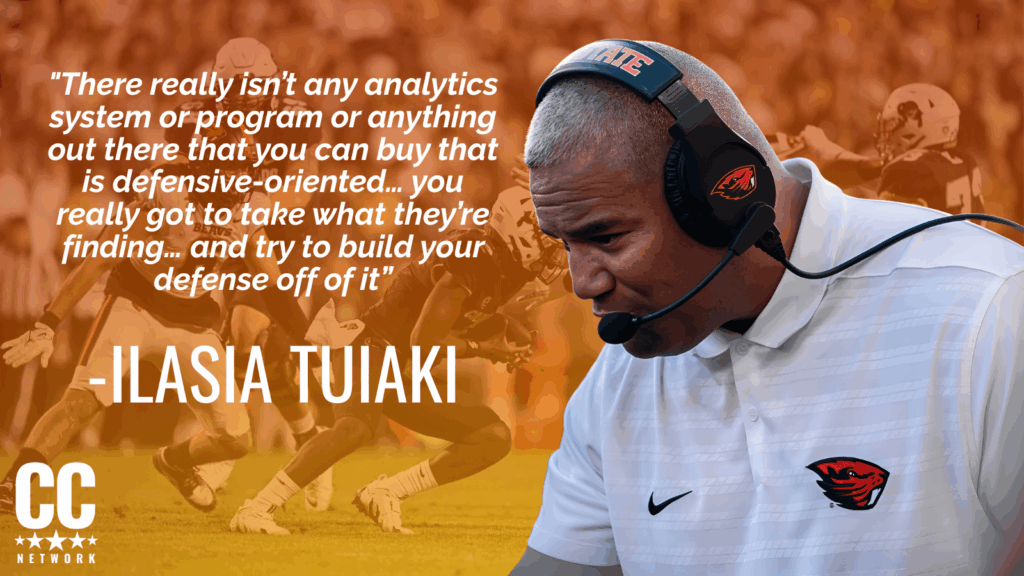
Most analytics tools favor offenses, leaving defenses without many ready-made solutions. Because of that, sharp coordinators now “reverse-tool” those same offensive metrics to build their own defensive strategies. As the coach explained, “There really isn’t any analytics system or program or anything out there that you can buy that is defensive-oriented… you really got to take what they’re finding… and try to build your defense off of it”.
By breaking down offensive data, defensive staffs can pinpoint exactly where to attack. They also learn when to disguise coverage, where to apply pressure, and how to create third-down opportunities that shift momentum. Moreover, this analytical approach transforms every layer of preparation—from setting weekly goals to organizing practice scripts and designing game-day call sheets.
Early Down Disruption and Third Down Creation
Every defense wants to “win first down.” Analytics confirm why that’s vital. Offenses that gain five or more yards on first down drastically increase their Down Series Success Rate (DSSR). If they reach third-and-three or shorter, their conversion success skyrockets to around 80%. Therefore, defensive coaches must design calls that disrupt early downs—tight coverage, disciplined run fits, and well-timed pressures that create second-and-long situations.
In contrast, the offense’s goal is to avoid third downs altogether. As the coach put it, “For an offense to avoid third down and continue to turn over a new set of downs… is a big thing for them”. Defensively, that means every first down should aim to force a third down. Each third down, in turn, provides a chance to reset, regroup, and get off the field. As a result, defenses that consistently create third downs build rhythm, confidence, and control over the game’s tempo.
Limiting Explosive Plays: The Hidden Key to Winning Drives
Analytics also make one thing clear: explosive plays win possessions. A single explosive play can push a drive beyond field goal range, while two almost guarantee a touchdown. Consequently, limiting those plays becomes a cornerstone of any defensive plan.
Modern defenses, therefore, must strike a balance between aggression and discipline. They rely on deep safeties, pattern-matching coverage, and situational blitzes designed to apply pressure without exposing the back end. Furthermore, the data show that zero explosives typically result in less than one point per possession, and only 7% of such drives end in touchdowns. That’s powerful evidence—and motivation for every defensive meeting room.
Bringing It All Together
Ultimately, the analytics behind defensive game planning aren’t just numbers—they’re insights that redefine defensive philosophy. By reverse-engineering offensive success metrics like DSSR, defensive coaches can determine how to win early downs, create third-down opportunities, and eliminate explosive plays.
In today’s data-driven era, great defenses don’t just react—they anticipate. Therefore, analytics give them the blueprint.
Related:
Reed Florence’s Step-by-Step Approach to Game Planning
Mastering Off-Season Study and Game Planning- Cody Alexander, Rob Everett, Mike Giancola
More on Coach Ilaisa Tuiaki
About Coach and Coordinator Media
Coach and Coordinator Media is the leading daily football coaching podcast and educational platform, featuring interviews with elite coaches from the NFL, NCAA, and high school ranks. With 1.5 million downloads per year and a community of 20,000 coaches, we’re committed to developing the “10% Coach”—those dedicated to excellence and continuous growth.
Podcast transcript
[00:00:00.13]
We talk more about the role of defense in winning. After the score, the second most important stat, and I’m really still in this idea, this quote, this phrase from CAI, which is Championship Analytics, Inc. And in the world of football, especially in the last 5-7 years where people have gone to analytics, CAI has coined the term DSSR, which stands for Down Series Success Rate. And that’s just the offense’s ability to gain another first down until they kick a field goal or score a countdown. And that’s an offense’s ability to continue to get a new set of downs, get a new set of downs until they can score. And so we’ll refer back to that. But what CAI has come up with in the last however many years is after the score, down serious success rate is the most important thing for offense. And so we’re talking about defense. We’re going to start to reverse-tool everything that goes into what DSSR is.
[00:00:01.25]
So reverse tooling, the offensive analytics side of it, because when you think about analytics, there really isn’t any analytics system or program or anything out there that you can buy that is defensive oriented. Everything is offensive oriented. And so you really got to take what they’re finding, statistics that they’re finding, things that they’re doing analytically on offense and reverse tool them and try to build your defense off of it. And so in an In offensive DSSR, these are three of the things that are important. Early down success. On first down, what they deem as successful is five yards on first down or more. On second down, you’re trying to get two or more yards. And then if you can be third down and three or fewer on offense, your success rate is really high. It’s something in the 80 something %. The next one is third down avoidance. In theory, if you think about it, all a defense has to do on third down is get one stop and you’re off the field, assuming that the offense doesn’t go for it on fourth down. And so for an offense to avoid third down and continue to turn over a new set of downs on first, second down is a big thing for them.
[00:01:21.09]
So they’re trying to avoid third down, whereas on defense, for every first down you face, you want to face a third down, unless you’re taking the ball And so third downs are good for us because it gives us a chance to get off the field. And for offenses, it’s something that they’re trying to avoid. So explosive plays, the last thing that goes into DSSR, when you look at these, zero explosives is going to give you less than a point per possession, and 7% of those drives end up in touch downs. One explosive play is a huge change where you’re over, you’re past the field goal as far as points per possession, and over half of your drives end up in touch downs. And then obviously, two explosives basically almost guarantees that you’re going to score a shutdown. And so offenses are trying to get explosives. It’s really difficult. And you think about the academy schools. Academy schools are really good at just managing early down success and just doing a good job of just moving the chains, whereas most offenses are built… They’re not built like that. They’re not built to do what some of the academy schools are doing.
[00:02:32.26]
They’ve got to have explosives or else they’re not scoring. And so when you talk about defense and retooling and setting up your goals as well as just the way that you’re setting up your menu and calling a game, I think it’s important to just think about those things when you’re doing that.