

Friday night lights tell part of the story, but what happens in the weight room before kickoff matters even more. If you want faster players, tougher teams, and steady results, you need more than just a good program. You need a system that starts with culture.
At Lake Catholic High School, strength coach Jimmy King didn’t focus on chasing max lifts. Instead, he built the program on buy-in, accountability, and daily consistency. Now every athlete in the school is part of it, and the results speak for themselves.
Why Athlete Development Culture Drives Results
Most coaches obsess over sets, reps, and percentages. However, King focuses on something deeper: behavior.
From the beginning, he understood that numbers don’t matter if athletes don’t show up. In fact, his entire system starts with one foundational principle:
“We’re not getting those data points if the kids aren’t showing up.” (01:31)
Because of this mindset, attendance became the first metric that mattered. Once athletes consistently showed up, everything else—strength gains, speed improvements, and performance followed naturally.
Furthermore, this approach reframes success. Instead of chasing numbers, athletes chase consistency. And over time, consistency compounds into elite performance.
Building Buy-In Before Performance Metrics
Early in his tenure, King didn’t try to overhaul every program overnight. Instead, he started small; first with football, then wrestling. As success became visible, other teams wanted in.
But the real turning point wasn’t about numbers. It was when athletes started speaking up in support of the program.
Players began telling their coaches about their progress, energy, and confidence. Consequently, coaches became more open to strength training, even in sports that traditionally resisted the weight room.
Additionally, King emphasized patience. He didn’t push too hard, too fast. Instead, he focused on building trust first:
“If I had come in and done year one, I don’t know if I would still be working with the volleyball team.” (20:10)
Because of this, he scaled intensity over time. First, he built relationships. Then, he raised standards. Ultimately, that progression created long-term buy-in across every sport.
Simplifying Systems to Scale Athlete Development
As the program grew, complexity could have become a problem. Instead, King simplified everything.
Rather than writing dozens of sport-specific programs, he created just three:
- Football
- Volleyball
- Athlete Development Program (ADP)
Even then, the core training stayed the same.
Athletes sprinted, jumped, lifted, and developed explosiveness. The only difference was the organization was based on the schedule and sports demands.
King showed an important lesson: real athlete development isn’t about specializing. It’s about being consistent and following through.
Using Data to Reinforce Culture
While King tracks thousands of data points, the program is still built around the people in it. Data supports the standard, reinforces behavior, and helps the staff coach with greater intention.
For example, he tracks:
- Attendance
- Progress (PRs)
- Effort over time
At the same time, he personally collects the data, creating daily interaction with every athlete. This builds accountability and connection simultaneously.
More importantly, he uses data to celebrate improvement, not just top performers. A 10-pound increase matters, whether it’s from 85 to 95 or 315 to 325.
As a result, every athlete feels seen and valued.
Consistency: The Real Competitive Advantage
In the end, King’s philosophy comes down to one simple truth: culture wins.
He doesn’t define success by numbers on a board. Instead, he defines it in terms of daily habits, effort, and team accountability.
That belief shows up in how he teaches, leads, and evaluates his program:
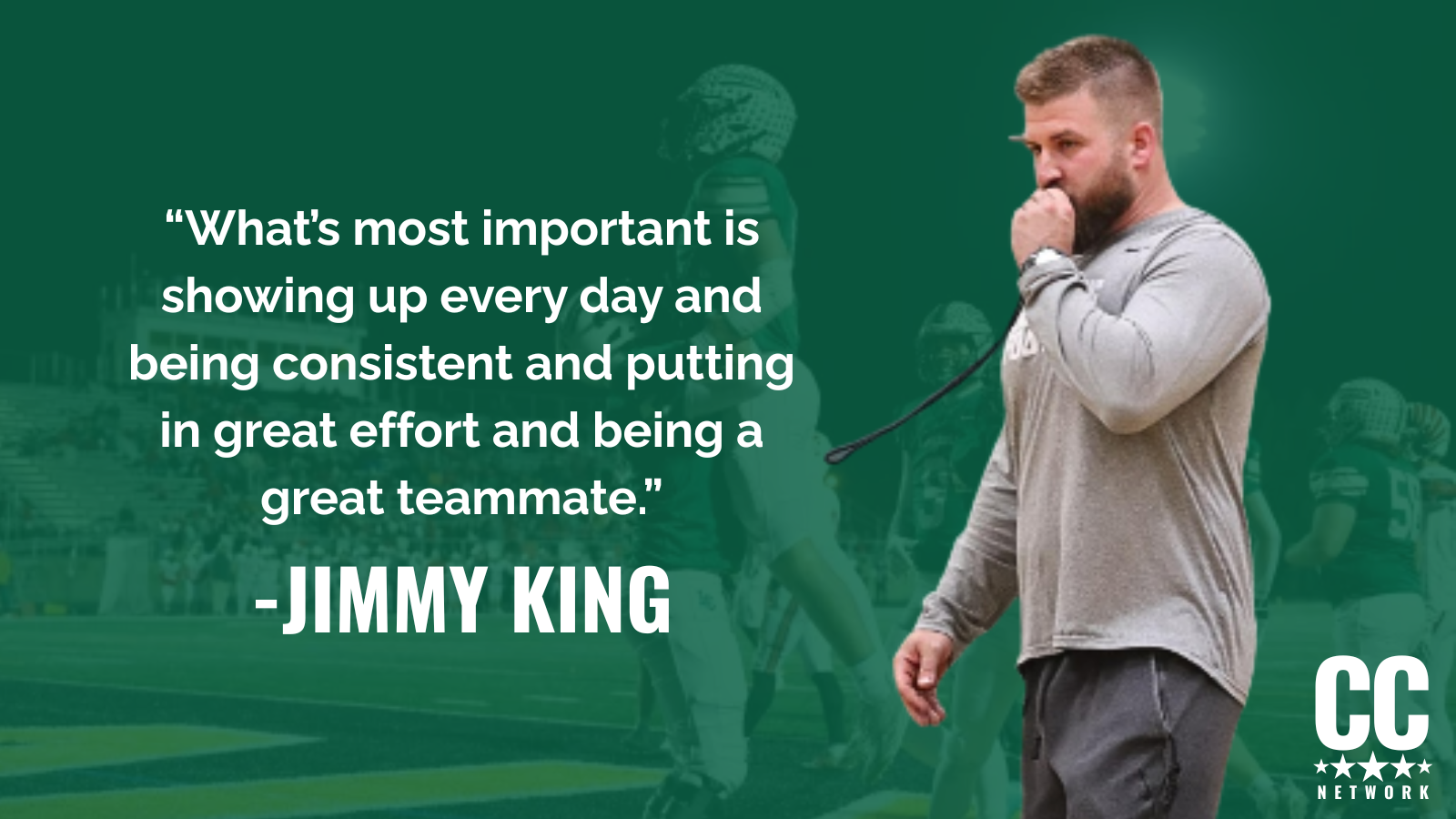
“What’s most important is showing up every day and being consistent and putting in great effort and being a great teammate.” (37:09)
Because of this, athletes buy in, not just to the weight room, but to something bigger than themselves.
How to Apply “Culture Before Numbers” in Your Program
If you want to replicate this model, start here:
- Track attendance first – Make showing up the standard.
- Build relationships with sport coaches – Work with them, not against them.
- Scale slowly – Earn trust before increasing intensity.
- Simplify your system – Focus on universal athletic qualities.
- Use data to motivate – Highlight improvement at all levels.
Final Thoughts on Athlete Development Culture
Numbers matter, but only after you have built a strong culture.
Jimmy King’s formula proves that when athletes show up, trust the process, and compete daily, the results take care of themselves. Therefore, if you want to accelerate your program, stop chasing numbers and start building culture.
In the end, the strongest teams aren’t just built in the weight room. They’re built through consistency, accountability, and belief.
Track and improve your athlete’s progress with Tully!
Schedule a meeting to learn more about Tully today!

Related:
The Power of Buy-In: How Coach Nick Codutti Builds a Program Where Every Player Matters
Kurt Hester and the Responsibility of Preparing Athletes