
Seeing Football Is Not the Same as Understanding It
Players see more football than ever. They watch cutups, sit through film sessions, trade clips in group chats, and scroll highlights every day. Even with all of that exposure, plenty of players still struggle to truly understand what they are seeing.
It’s something that coaches at every level are noticing.
A player can recognize the concept, repeat the call, and tell you where the ball went, yet still miss why the play worked, what the defense was trying to remove, or how the picture changed after the snap. Coaches deal with that every season.
Football IQ goes beyond recognition. It comes down to how quickly a player can sort information, connect it to a rule, and make a sound decision once everything starts moving. When that piece is missing, the issue usually is not effort. More often, the game goes faster than the player can process, and coaches end up hoping that processing will develop on its own rather than teaching it directly.
Will Shields Learned the Game Through Rules, Not Memorization
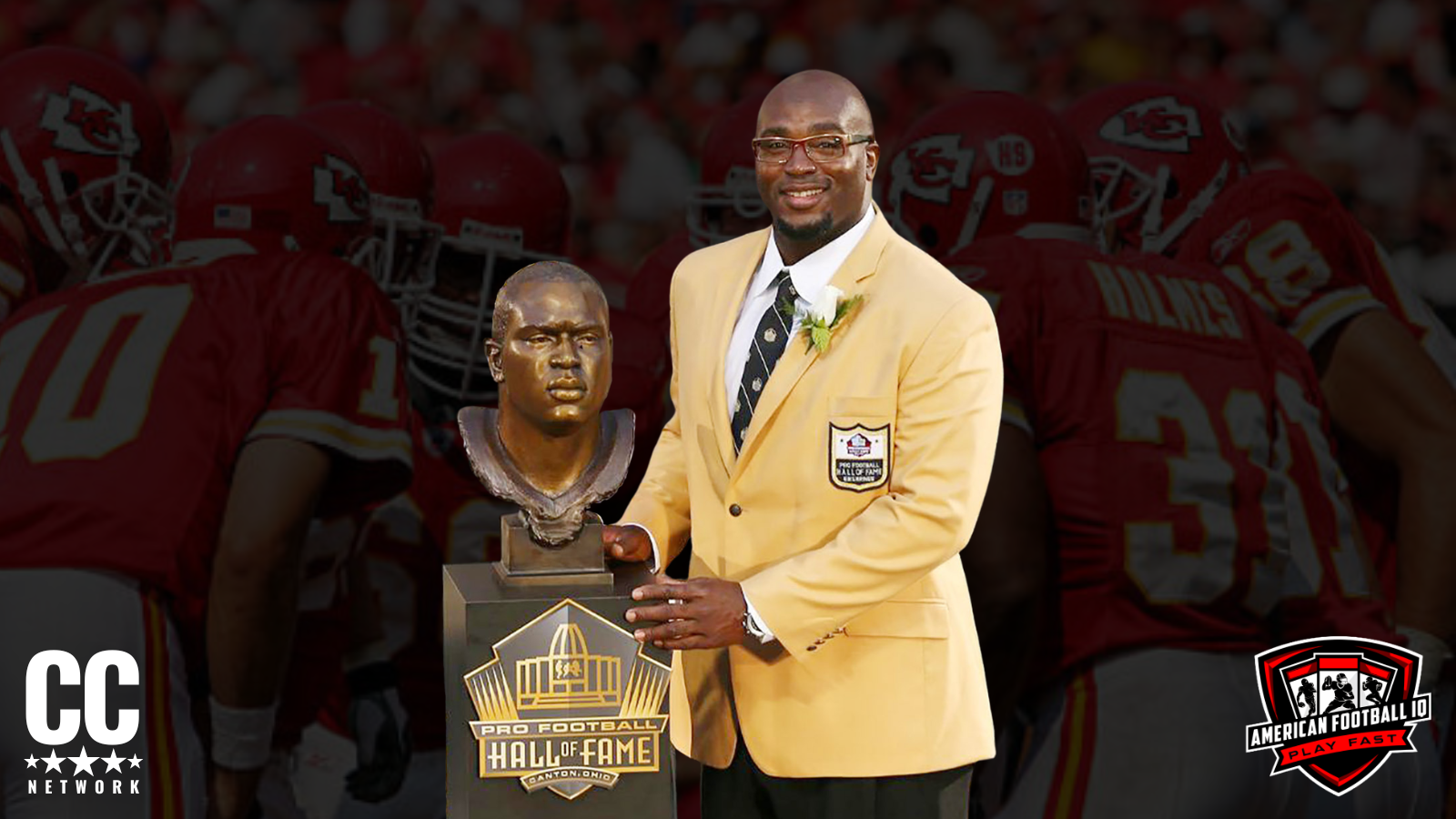
Will Shields never built his game around memorization.
The Hall of Fame guard for the Kansas City Chiefs learned early to trust rules over sequence. Young players commonly start by learning football in order. Learn the play. Learn the steps. Hope the defense gives the same look on Friday that it gave on Tuesday. That approach works only until the defense changes the picture.
Shields explained his own experience in simple terms:
“I had rules and rules to follow… So let’s say we’re running a simple play… I mean, in high school, I’m learning right seam on left seam help center.” (06:05)
That kind of learning gives a player something more reliable than recall. When a lineman is grounded in rules, front movement does not wreck the play. He is not guessing, and he is not waiting for someone on the sideline to rescue him with an answer. He already has one. Coaches want players who can explain their job in reactive terms: if they do this, I do that. Once a player can think that way, the coach is building football IQ instead of assignment recall.
Why Rules Matter More Than Memorized Plays
Good offensive linemen cannot survive on scripted football for very long. Defensive movement forces them out of that comfort zone almost immediately, which is why rules become so important in the trenches.
A rule gives the player something he can carry from one look to the next. It provides structure when the defense changes the picture, keeping the player anchored in responsibility. Many players who appear to play faster are not simply more talented. In many cases, they are just playing with more clear rules.
“Losing Slow” Changes How Players Think About Pass Protection
The same principle carries into pass protection.
Coaches talk all the time about winning the rep, and of course, that remains the standard. But great pass protection is not always about dominating the pass rusher. Sometimes the real job is keeping the pocket alive long enough for the quarterback to do his.
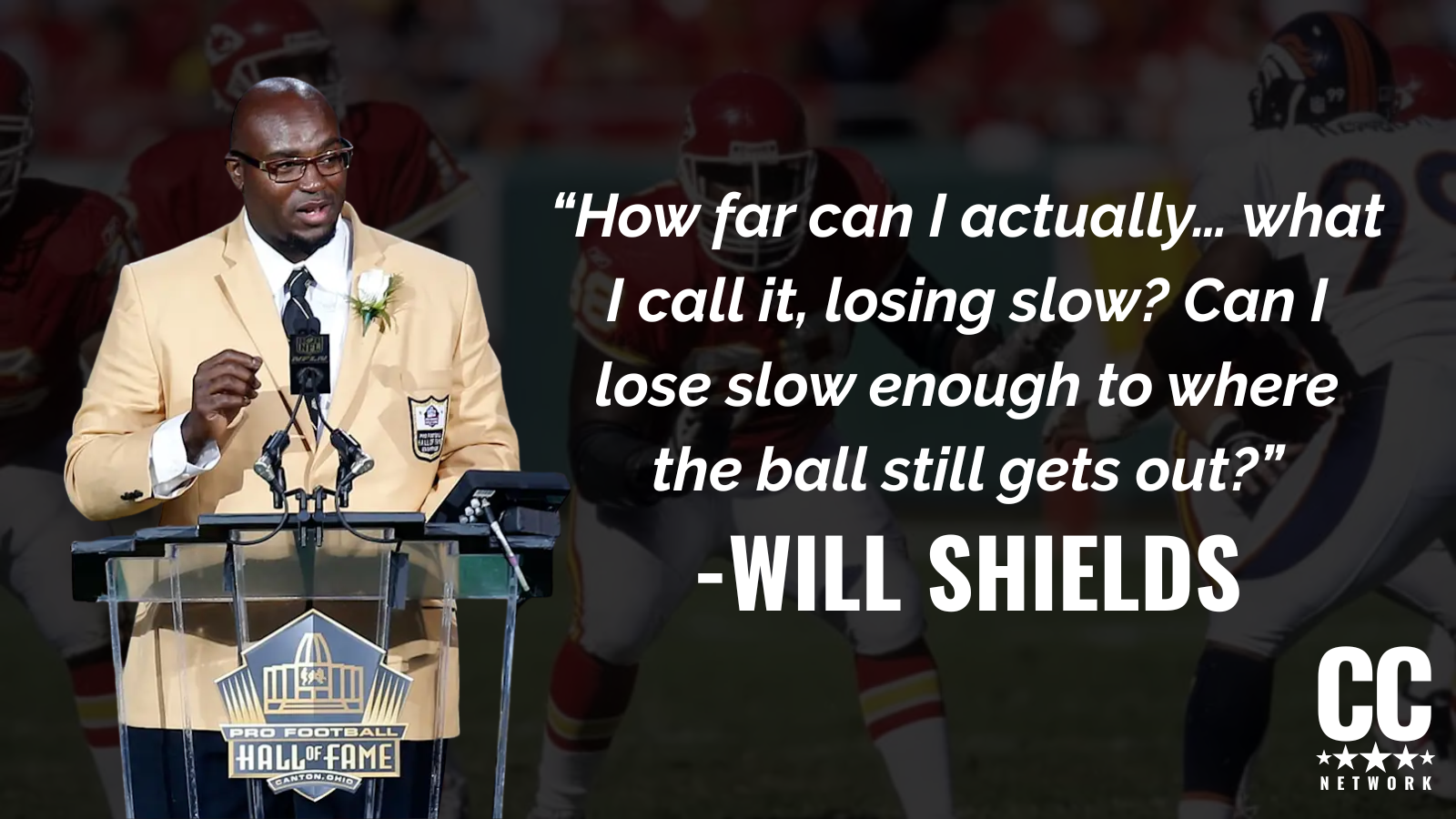
Shields called it “losing slow.”
“How far can I actually… what I call it, losing slow? Can I lose slow enough to where the ball still gets out?” (10:05)
Shield’s coaching point changes the picture for a player. Instead of thinking only about flattening the rusher or landing the perfect strike, the lineman starts to think in terms of time, space, leverage, and connection. He begins to understand the rep in relation to the quarterback and the play itself, which gives him a much more useful definition of success.
Film Study Builds Anticipation, Not Just Recall
Film study creates another divide between players who know football and players who really understand it.
Many players watch film and can tell you what happened in the clip. Fewer players know what to look for. The best ones search for patterns. They want to know what keeps showing up, what usually comes next, and what small details can reveal intent before the ball is snapped.
Film becomes useful once the player learns to study it with a purpose.
Shields did not just study plays. He paid attention to where ideas came from, how coaches thought, and what habits kept recurring. That kind of study gives a player a chance to anticipate instead of simply react.
A simple framework can help shape that habit: What keeps showing up? What usually comes off it? What can you confirm early in the game? Those questions train a player to look for structure rather than just watching clips.
Instinct Comes From Preparation
Coaches love to talk about instinct, but it usually develops long before it appears on Friday night or Saturday afternoon.
What looks natural on game day is often the product of a lot of invisible work. Shields talked about writing things down, rewriting the playbook, and going back over information again and again.
“When I write it down, I remember it better… I want to write it down so I could go over it again and again and again.” (20:45)
He was building ownership over the information so it would come back faster once the game sped up. The more ownership a player has, the less time he needs to move from recognition to action.
Football IQ Gets Tested When the Defense Gives You a New Look
At some point, every offense gets a look it did not exactly prepare for. A front shifts late. Pressure comes from an unexpected place. The safety rotates, changing the numbers. In those moments, raw talent alone is not enough. Players need a process they trust.
Shields put it well:
“You might not have film work the first time you’ve ever seen it… then you’re hoping that you’ve put enough preparation into those players or their rules that get them out of trouble.” (34:17)
Rules travel well. They hold up when the look is unfamiliar and keep players from freezing or turning to the sideline every time the picture changes after the snap. Coaches who want smarter football need to build it into how they teach.
Coaches Have to Teach Football IQ on Purpose
If a coach wants smarter football, he has to coach it on purpose. That does not mean piling on more information. It means teaching rules that players can actually repeat, using film to build pattern recognition, and creating practice situations where players have to make decisions within a structure.
Players do not get smarter by hearing more information. They get smarter by learning what to look for, seeing it repeatedly, and solving problems within a framework that gives them answers without spelling out every answer. Real growth starts there. Players need room to think, adjust, and recover, because that is how understanding turns into ownership.
Football IQ Wins Late in Games
Fourth-quarter football always feels different. Players get tired, execution slips, pressure builds, and the game appears to speed up. The teams that hold together in those moments usually are not the ones with the thickest call sheet. They are the ones with players who understand timing, space, patterns, and rules well enough to keep functioning when everything gets messy.
That’s football IQ.
A Tool that Teaches the Foundational Concepts of Football IQ
American Football IQ is a leading platform dedicated to helping players, coaches, and fans truly understand the game, not just memorize it. Through film-room style breakdowns, tactical education, and widely used training flashcards, AFIQ teaches you how to read defenses, recognize coverages, and process the game faster so you can play faster. Trusted by thousands worldwide, it is built for anyone serious about elevating their football IQ.
Learn more at AmericanFootballIQ.com.

Connect on X:
Founder, Doug Brady: @CoachDougBrady
Will Shields: @Wshields68
Keith Grabowski: @CoachKGrabowski