

Every coach has seen it. A player looks great in practice, runs through drills with confidence, and has all the physical tools. Then the game starts, the picture changes, and he hesitates.
That is where football IQ separates players. Talent gives a player a chance, but understanding the game helps him play fast when it matters.
The higher a player climbs, the less he can survive on talent alone. Eventually, every roster has athletes who can run, jump, and hit. The players who separate are the ones who recognize formations faster, anticipate concepts earlier, and process information quicker than everyone else. That is why studying the game matters.
On the Football IQ podcast, former NFL defensive back, return specialist, and Super Bowl champion Will Blackmon explained how learning to study film transformed his career. A Boston College standout who now works as an analyst, coach, and mentor, Blackmon offers a valuable lesson for coaches who want players to think faster, prepare better, and play smarter.
Why Football IQ Matters More Than Ever
Football is moving faster than ever. Offenses spread you out, get the ball out quickly, and force defenders to make decisions in space. Defenses are doing the same thing in their own way, disguising coverages and holding their looks until the last possible second.
Players need to recognize situations before the ball is snapped. They must understand tendencies, formations, leverage, and situational football. As a result, football IQ becomes a major competitive advantage.
Blackmon learned that lesson the hard way during college. After earning recognition early in his career, he began facing double teams and offensive game plans designed specifically to beat him. Suddenly, athletic ability was not enough.
That experience forced him to evolve from an instinctive athlete into a true student of the game.
“The NFL is all situational football.” (22:23)
That mindset changed everything. Instead of reacting, Blackmon began searching for patterns and understanding why offenses called certain concepts in specific situations. The more he understood, the faster he played.
Learning How to Study Football Film
Many young athletes watch highlights, but very few actually study the game. There is a major difference between consuming content and learning from it.
Effective film study requires players to search for details that keep showing up on tape. Coordinators may change formations and motions, but most offenses revert to their core tendencies in critical moments.
Blackmon learned this while studying with Hall of Fame defensive back Charles Woodson in Green Bay.
Woodson studied film by situation and tendency. He looked for the calls, formations, and concepts that offenses came back to when the game mattered most.
That approach changed the way Blackmon studied the game.
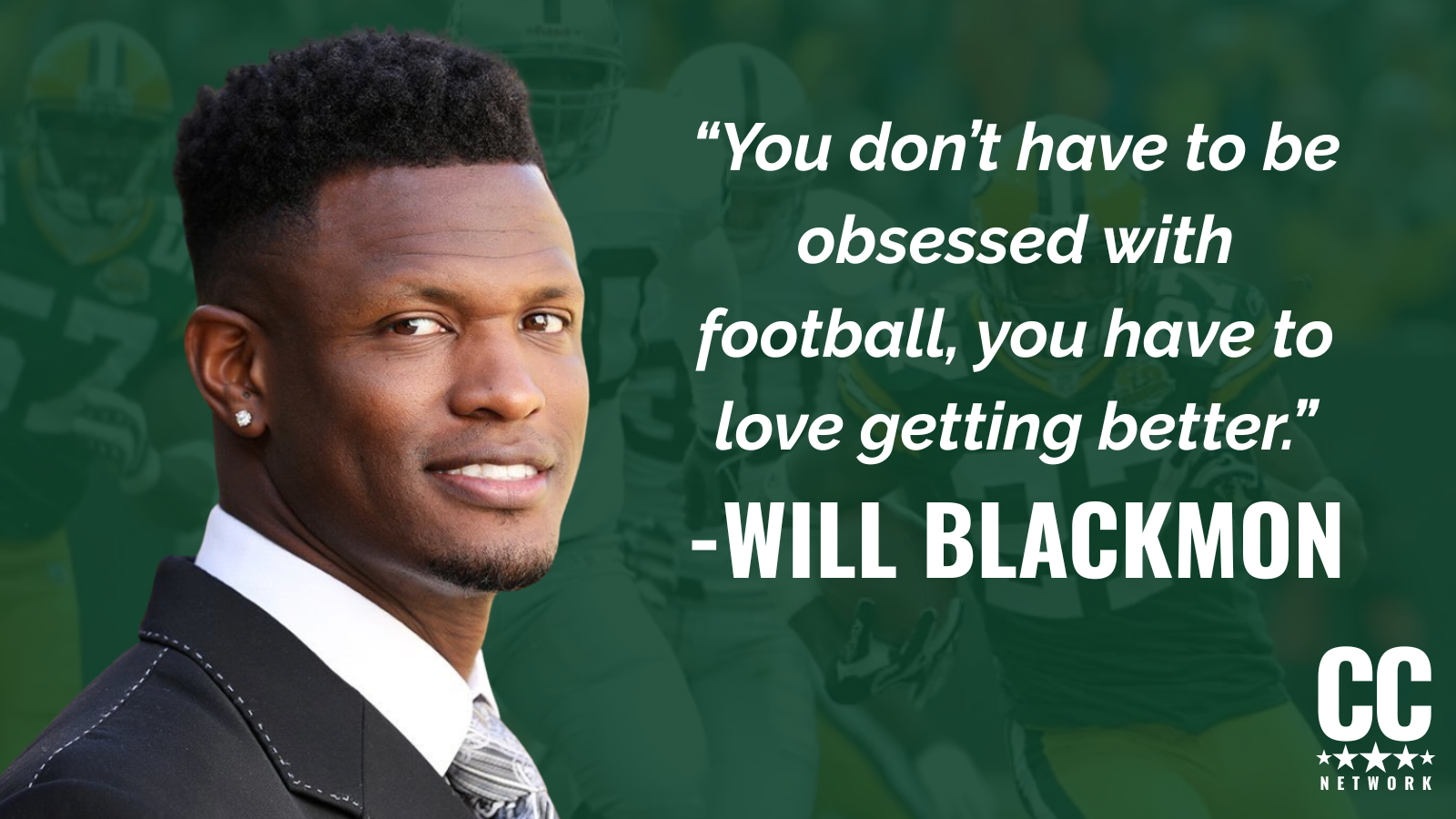
“You don’t have to be obsessed with football, you have to love getting better.” (09:37)
For coaches, that is an important lesson. Not every player has to be obsessed with football, but every player can learn how to prepare. If they care about improving and competing, coaches can teach them habits that help them study, recognize, and, in turn, play faster.
Turning Film Study Into On-Field Performance
Studying the game only matters if players can apply it on the field. Therefore, coaches must help athletes connect classroom learning to real game situations.
Blackmon discovered this while developing as a punt returner. As a punt returner, Blackmon did more than catch the ball and trust his instincts. He studied punter tendencies, coverage structures, and rush patterns. That preparation helped him simplify the game before the ball was in the air.
He narrowed his focus. Instead of trying to process the entire coverage unit at once, he learned to find the one player who could ruin the return.
“I stopped looking everywhere and started keying one guy.” (29:22)
That small adjustment improved his confidence and production.
The same principle can be applied to every position:
- Quarterbacks identify leverage and coverage rotations.
- Defensive backs recognize route combinations.
- Linebackers diagnose blocking schemes.
- Receivers anticipate defensive spacing.
When players understand what they are seeing, the game slows down and their reactions speed up.
Coaching Players to Develop Football IQ
Coaches spend hours building schemes and teaching plays, but showing players how to study can have even more lasting value.
Players build strong football IQ when coaches always explain the reasons behind techniques, adjustments, and game plans. Players learn faster when they understand the purpose behind everything they do.
When coaches help players develop football IQ, they give them the tools to become their own best coach.
Effective coaches also change their teaching style for each athlete. Some players learn best by seeing, while others need repetition and walkthroughs.
Blackmon uses that approach when coaching youth players and defensive backs. His focus is on putting athletes in positions where they understand the job, trust what they see, and play with confidence.
Football IQ Creates Long-Term Success
Athletic ability may get a player noticed, but preparation is what keeps him on the field. Coaches trust players who know what they are looking at, make fewer mistakes, and can adjust when the game changes. during games.
Will Blackmon’s NFL career shows this clearly. He played multiple positions well because he understood the game deeply and could adapt to any role teams asked him to play.
“I didn’t play 12 years because I was a Pro Bowler… I played because I knew what I was doing.” (45:50)
This lesson is true at every level of football.
In the end, football IQ means learning how to study the game. Players who prepare, anticipate, and understand what they are seeing will always have an advantage over those who rely only on talent.
For coaches, teaching that process may be one of the most valuable ways to help players grow.
That is also the mission behind American Football IQ. AFIQ helps players, coaches, and fans understand the game at a deeper level through film-room style breakdowns, tactical education, and training tools built to teach foundational football concepts. From reading defenses to recognizing coverages and processing the game faster, American Football IQ gives learners a clearer path to play faster, think faster, and truly understand the game.

Related:
Defensive Football IQ Starts Before the Snap
Teaching Quarterbacks to See the Game Faster: Building Faster Processing and Field Vision
More on Coach Will Blackmon