

Every coach has seen it happen. Your team looks explosive early in the week, but by Friday night, they look a step slow and aren’t finishing plays they usually make. Effort isn’t the issue; the plan is. If you want consistent performance, you must build a practice plan that keeps players fresh on Friday night.
Many programs try to build toughness by pushing players to the point of exhaustion. But today’s football values speed, clear processing, and having everyone available. The smartest teams work hard, but they also plan the week so players are fresh when it matters most.
The best ability is availability. Stewartville High School football has won back-to-back Minnesota Class AAA state championships in 2023 and 2024, and Garrett Mueller’s approach shows how intentional practice planning can help keep a team fresh, fast, and ready to play on Friday night.
Fresh Legs Win on Friday Nights
First, understand this: your best players can’t help you if they’re not on the field. Talent matters, but availability wins games. That is why every practice plan has to protect player health.
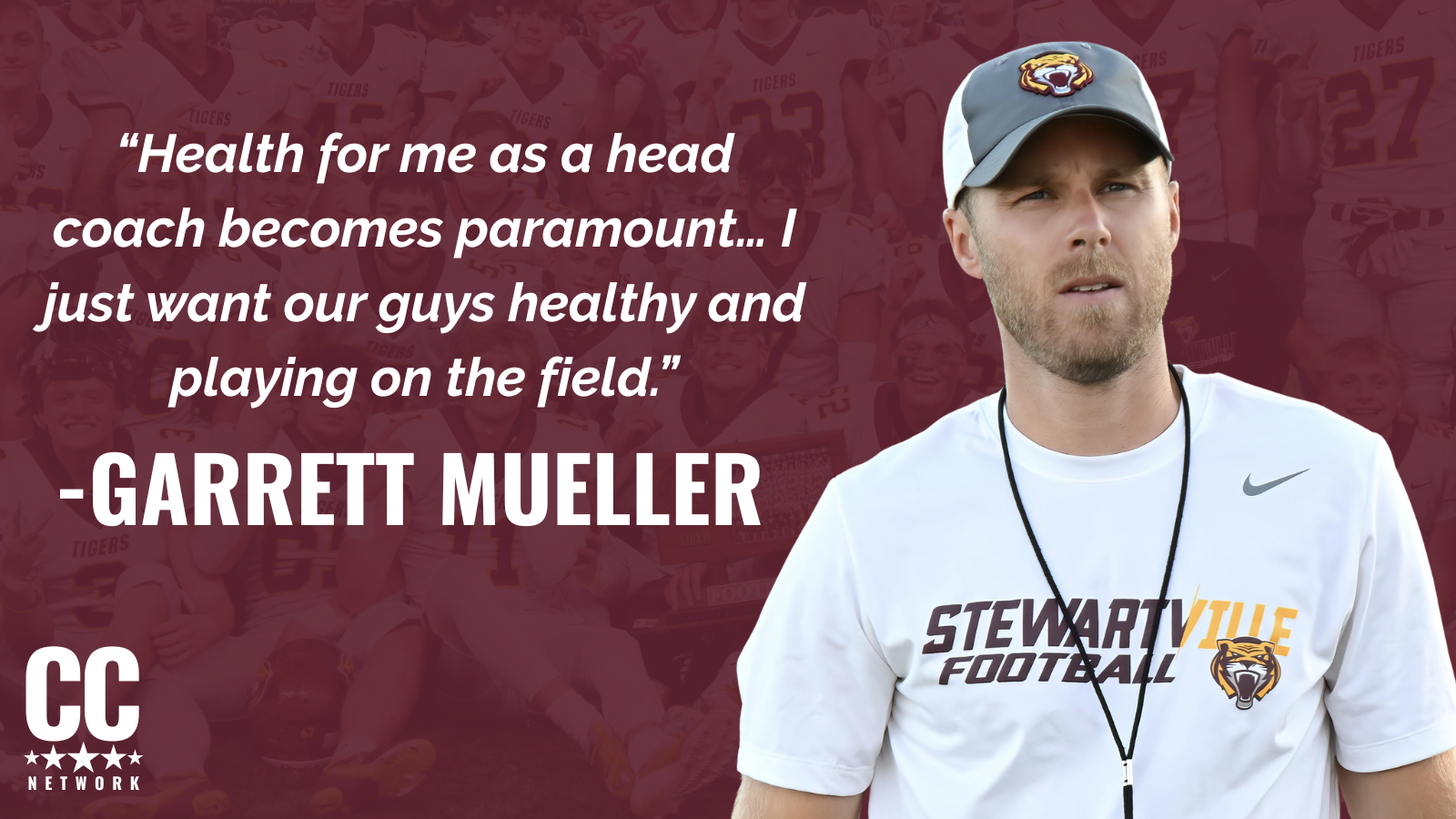
As Coach Mueller explained:
“Health for me as a head coach becomes paramount… I just want our guys healthy and playing on the field.” (03:19)
When you look after your players’ energy and recovery, your team has a real shot at performing at its highest level. When you look at it this way, keeping players fresh becomes a real competitive edge.
Weekly Practice Structure for Peak Performance
At Stewartville, Garrett Mueller structures the week with purpose. Every day is not treated the same. Some days are built for lower-volume teaching, technique, and short-area execution. Others are designed to let players feel game speed without overloading them.
Early in the week, Stewartville focuses more on scheme, technique, red zone, RPOs, screens, and short-yardage work. The intensity is still there, but the volume and distance are controlled.
By Wednesday, they ramp up the CNS load with more game-speed work, one-on-ones, vertical throws, seven-on-seven, and situational team periods. The goal is to prepare players for Friday without “redlining” them before the game.
As Mueller explains:
“We don’t burn the steak and kind of ruin or redline these kids to a point where now the engine is going to blow on a Friday when they need to play again.”
Practice Fast, Stay Fresh, Finish Strong
Many coaches talk about wanting to “practice as we play.” But that only works if your practice plan actually supports it.
Coach Mueller emphasizes that point:
“What are you doing then during the week… to allow your kids to practice as they play?” (09:45)
At Stewartville, Mueller builds practice to feel like the game without draining players before Friday. His staff controls the volume, keeps the tempo intentional, and makes sure every period has a purpose.
When you align preparation with performance, your athletes step onto the field confident, fast, and ready to execute.
Designing Smarter Team Periods
At Stewartville, Garrett Mueller structures team periods to mirror the rhythm of a real Friday night game. Instead of stacking random reps, practices are organized around drives, situations, tempo, and recovery.
During team periods, starters may take a six-play series to simulate a normal drive before rotating out briefly while backups take reps. Then the starters return for situational football like red zone, third down, or two-minute work.
That structure allows Stewartville to practice at game speed while still managing player load throughout the week. It also creates meaningful varsity reps for younger players, helping build depth across the roster
Rethinking Mental Toughness
Mueller believes football has confused exhaustion with toughness for too long.
“I’m gonna be able to do that because of my preparation… not because I’ve done some arbitrary hard conditioning.” (08:27)
At Stewartville, mental toughness comes from preparation, understanding, and repeated exposure to game-like situations. Players build confidence because they know what they are seeing and have practiced executing it at full speed.
The goal is to prepare players to perform when the game gets hard.
Building Connection Through “Two-Minute Drills”
Even the best plan won’t work without good communication.
Mueller’s staff builds intentional time into practice for communication.
During preseason camp, Stewartville coaches hold short “two-minute drills” with players outside of normal practice periods. These conversations allow coaches to give direct feedback, define roles, and explain where players fit into the program.
For younger or backup players, those conversations matter. They know where they stand, what they need to improve, and how they can earn a bigger role in the program. Allowing players to understand the vision for their development.
That communication helps strengthen buy-in across the roster.
Build Depth While Keeping Players Fresh
For Mueller, keeping players fresh and building depth work together. When backups get meaningful reps during the week, they are more prepared when their number is called.
That matters late in games, late in the season, and when injuries or rotation demands show up. Over time, the whole roster becomes stronger, not just the starters.
Learn more about our sponsor Signature Championship Rings:

Signature Championship Rings is a leading designer and supplier of championship rings, serving over 10,000 teams and organizations. With a focus on quality craftsmanship, easy team ordering processes, and affordability, Signature Champions celebrate every champion and their achievements, making their moment last a lifetime. For more information, visit www.signaturechampions.com/podcast.
Related:
A Sprint-Based Football Approach – Garrett Mueller, Head Coach, Stewartville High School (MN)