

Imagine if your athletes competed every day, not just on Friday nights, but in every rep, jump, and lift. At Austintown Fitch High School, this is the reality. Their focus on data, consistency, and competition has changed how athletes train, how coaches communicate, and how performance improves all year.
Austintown Fitch’s program doesn’t rely on occasional tests; instead, they use daily feedback, visible progress, and steady routines to help athletes improve. This approach has created one of the most engaged and successful high school strength programs in the country.
Building a Data-Driven Training System That Scales
At first, Fitch’s program faced a challenge familiar to many high schools: managing hundreds of athletes who play multiple sports with limited time. Instead of making things complicated, they simplified their system and focused on what matters most.
They focused on:
- Core lifts (squat, push, pull)
- Foundational power metrics (vertical jump, broad jump)
- Consistent tracking across all teams
With this approach, they train more than 500 athletes from different sports while keeping structure and accountability.
They also ensure every athlete trains at least twice a week, which establishes a consistent routine for long-term growth.
Turning Data Into Daily Competition
Many programs collect data, but few use it to change how athletes act.
At Fitch, coaches include testing as part of regular training. Because of this, athletes don’t worry about ‘test day.’ Instead, they compete every day.
“Not testing just for testing sake… we’re doing a rep out in some regards every day with one of our main strength metrics.” (07:05)
Instead of waiting weeks for results, athletes see progress instantly. As a result, they stay engaged and motivated because they always know where they stand.
In addition, coaches use:
- Leaderboards
- PR tracking
- Daily performance metrics
This constant feedback loop transforms effort into measurable progress.
Why Consistency Beats Complexity
Although many coaches search for the perfect program, Fitch proves that consistency beats complexity every time.
In fact, Wallace tested multiple teams on the exact same program. Interestingly, the team with the highest attendance and effort improved the most.
Because of that, the program emphasizes two non-negotiables:
- Show up consistently
- Train with intent
“There’s a difference between being here and being present, putting in that effort.” (15:10)
Furthermore, this mindset eliminates excuses. Athletes cannot hide behind programming, they must take ownership of their development.
Using Data to Drive Athlete Buy-In
Buy-in often determines whether a program succeeds or fails. Therefore, Fitch uses data as a communication tool, not just a measurement tool.
Athletes track their own performance. Coaches share trends. Parents even see progress.
As a result, everyone stays aligned.
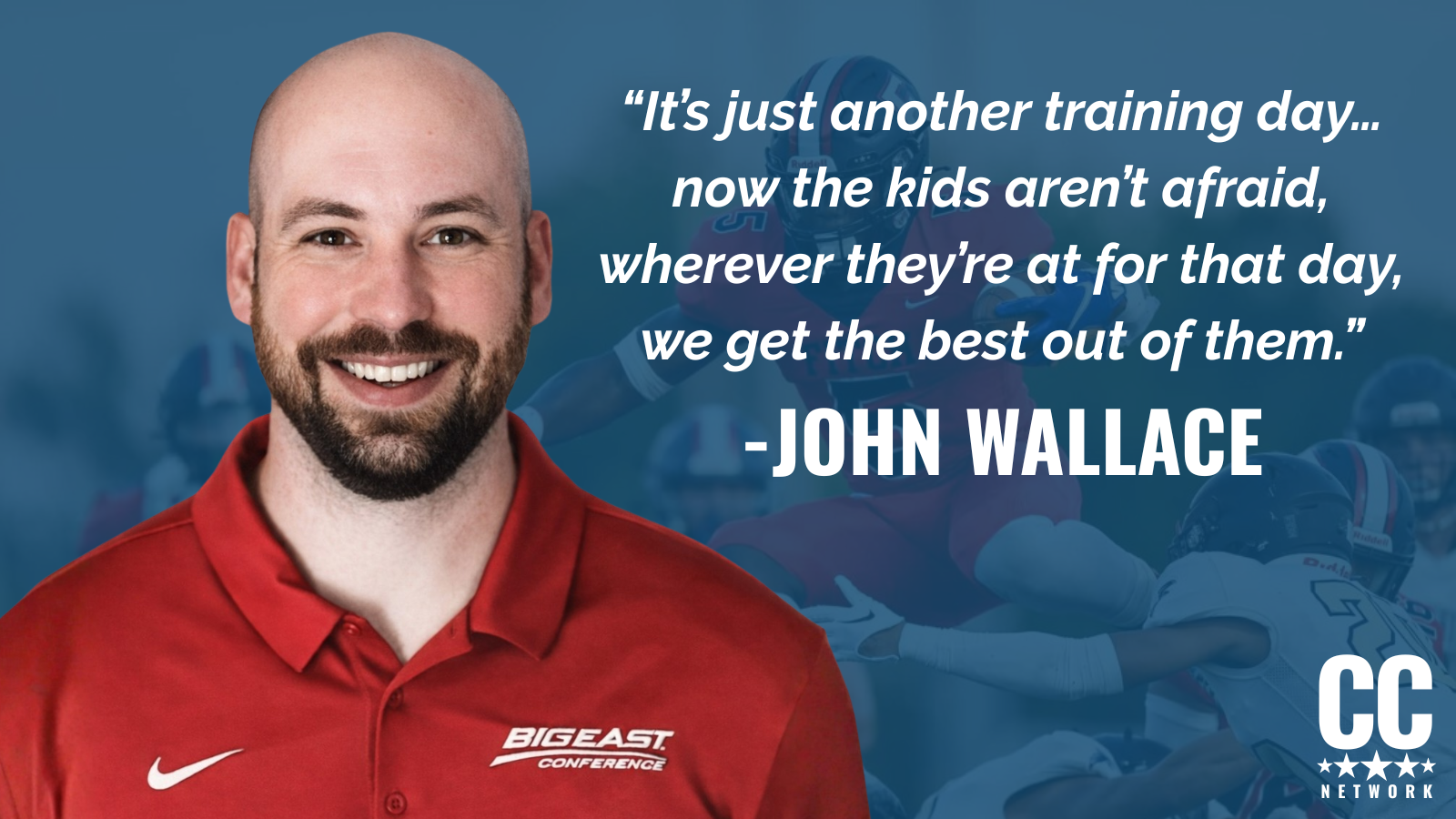
“It’s just another training day… now the kids aren’t afraid, wherever they’re at for that day, we get the best out of them.” (38:45)
Additionally, frequent testing helps athletes understand a critical truth: performance isn’t linear.
They learn:
- Fatigue is part of training.
- Bad days happen
- Progress builds over time.
Because athletes see their long-term growth, they trust the process more.
Simplifying Success with Key Performance Indicators
Rather than tracking everything, Fitch focuses on a few key metrics.
This aligns with a powerful principle:
You don’t need more data, you need better data.
By prioritizing:
- Strength progress
- Power outputs
- Attendance
They identify trends quickly and act on them immediately.
Therefore, coaches spend less time managing spreadsheets and more time coaching athletes.
Practical Lessons for Football Coaches
If you want to build a similar system, start simple and stay consistent.
First, define your core movements and track them regularly.
Next, make performance visible to athletes.
Then, create daily opportunities for competition.
Most importantly, hold your athletes accountable for effort and attendance.
Although resources may vary, the principles remain the same.
The Real Outcome: Better Athletes and Better Habits
Ultimately, Fitch’s data-driven culture of consistency and competition does more than improve numbers, it shapes athletes.
They develop:
- Discipline
- Accountability
- Work ethic
Because of this, success extends beyond the weight room.
And in the end, that’s what truly matters.
Track and improve your athlete’s progress with Tully!
Schedule a meeting to learn more about Tully today!

Related:
How Data Drives Motivation in High School Athletes
Building a Winning Culture: Preparing Your Team for Success