

Every football coach eventually faces the same question: How do you turn a struggling program into a winning one?
Sometimes the issue isn’t effort. It isn’t even talent. Often, the problem is identity. Without a clear system, players hesitate, the staff over-coaches, and your program never builds the day-to-day consistency that winning teams are built on.
That’s why many coaches searching for answers eventually discover the Slot-T can turn a program around. This system doesn’t just provide plays, it establishes structure, discipline, and culture. As coaches across the country have learned, implementing the Slot-T can transform everything from practice habits to player development.
Building an Identity with the Slot-T Offense
First and foremost, successful programs establish a clear identity. The Slot-T gives teams exactly that.
Unlike offenses that rely heavily on constant adjustments or high-level quarterback play, the Slot-T thrives on repetition, timing, and precision. As a result, players quickly develop confidence in their assignments.
Coach Paul Kilby describes the offense as a rep-based system that rewards discipline and repetition. Because every player must execute with precision, the offense forces teams to practice with purpose.
“It’s such a rep-based offense, it’s such a unique whole order of football as a system.” (18:33)
Consequently, teams that commit to the system often see rapid improvement in execution. Players understand where they fit within the scheme, which reduces mental errors and increases physical confidence.
Over time, that identity becomes the foundation of the entire program.
Why the Slot-T Creates Immediate Momentum
Many coaches worry about installing a new offense. However, the Slot-T often produces results faster than expected.
Kilby has used the system several times in his career and always sees strong early results, especially with younger teams.
“Everywhere I’ve been… lower levels in the first year… have been even more impressive.” (18:52)
There are a few reasons for that early success.
First, the offense makes decisions easier for young players. Instead of worrying about complex offensive schemes, they just focus on their jobs. Second, the system is all about physical football, so teams can compete even if they don’t have top speed or size.
Most importantly, repetition drives mastery. When players run the same concepts every day in practice, they naturally develop timing and confidence.
As a result, younger teams often experience quick success, which builds belief throughout the program.
Culture: The Hidden Power of the Slot-T System
While the scheme itself matters, the culture surrounding it often becomes the true difference-maker.
Teams that use the Slot-T usually focus on being physical, disciplined, and working together. Every player has to block, carry out fakes, and do their part for the offense to work.
As a result, players learn that success depends on collective effort rather than individual performances.
Former Liberty Hill player Andan Thomas, who later became a captain at Army, credited the system for shaping his football mentality.
“What was his most memorable thing? He said offseason… I don’t think many kids would say that.” (22:49)
That comment reveals something deeper than scheme design. The system demands commitment year-round, which builds resilience and leadership within the program.
When players embrace that culture, the impact extends far beyond Friday night.
Simplicity That Allows Coaches to Teach
Another reason the Slot-T can turn a program around lies in its teaching structure.
Rather than forcing coaches to install dozens of concepts, the offense builds around a core group of plays and blocking rules. Because the system relies on consistent rules, players learn faster, and coaches teach more efficiently.
Furthermore, repetition allows players to improve their technical skills.
For example, offensive linemen practice the same blocking techniques daily. Meanwhile, backs refine their timing and ball handling through constant repetition.
Eventually, the offense becomes second nature.
Turning a Struggling Program Into a Winner
When teams struggle, many coaches look for complicated solutions. But the Slot-T shows that having a clear plan and mastering the basics is often more important than being complex.
Kilby experienced this firsthand when installing the offense at a new program.
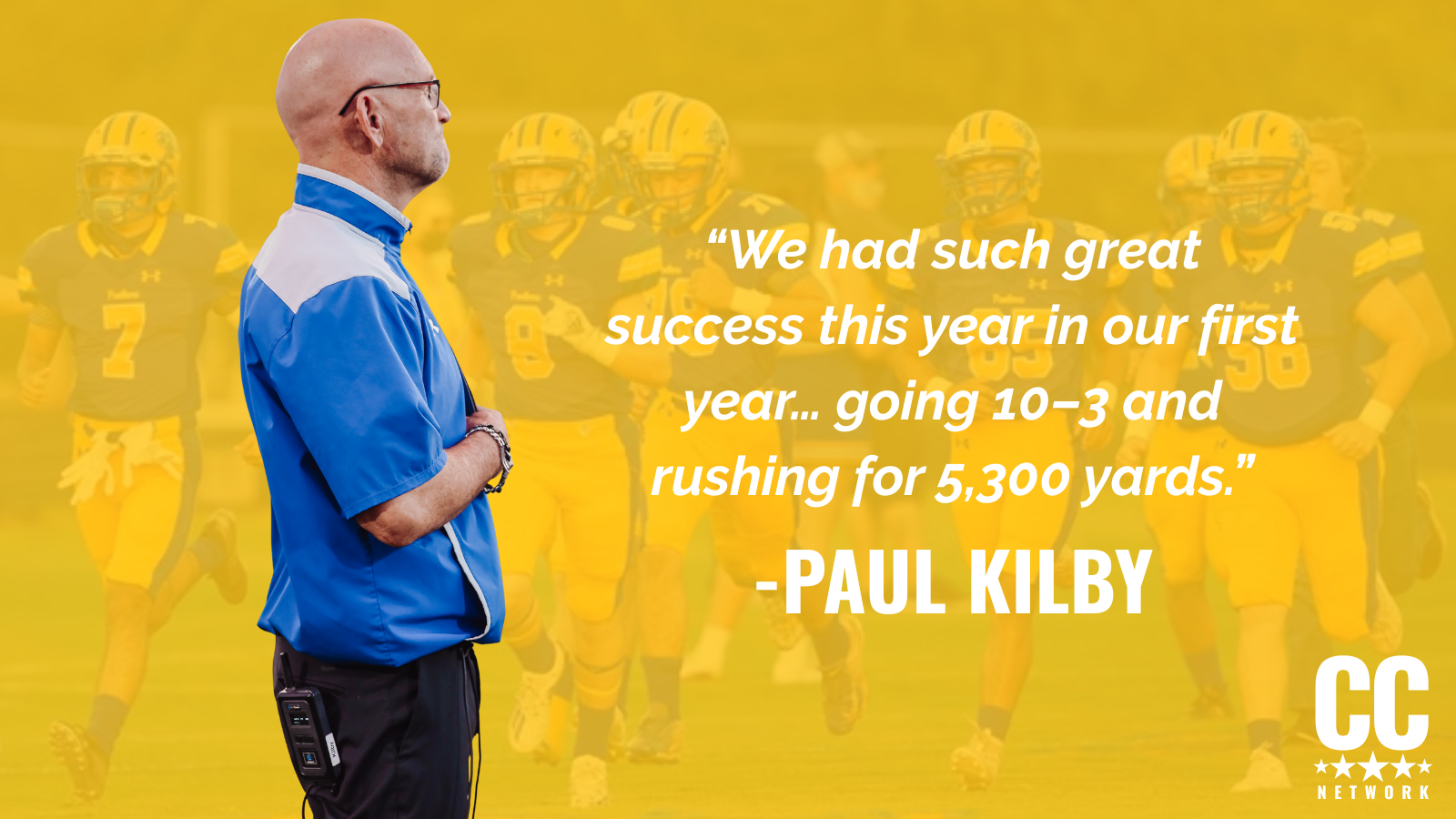
“We had such great success this year in our first year… going 10–3 and rushing for 5,300 yards.” (16:12)
That type of turnaround doesn’t happen by accident.
It happens because the Slot-T gives a framework that organizes everything, from drills and practice routines to player growth and team culture.
Once players buy into the system, improvement compounds quickly.
Why More Coaches Are Turning to the Slot-T
Today, many offenses chase the latest trends. Spread concepts fill the highlight reels, and teams often feel pressure to copy what they see on TV.
High school football rewards a different kind of football than the college game: execution, toughness, and consistency.
The Slot-T delivers all three.
For teams looking for a fresh start, that kind of structure can make all the difference.
This episode is paired with the Slot-T Basics AI Companion — a free coaching tool built to help you master the language and structure of Paul Kilby’s Slot-T offense. From splits and alignments to numbering, formations, motion, and defensive identification, it helps you teach the system clearly and install it the right way from day one.

Join the Slot-T Mafia today | Learn the Slot-T With Paul Kilby
Slot-T is about more than just moving the ball. It teaches athletes that discipline, repetition, and trust give them an edge—lessons that last beyond football.
Learn all the details of the Slot-T with a Slot-T Mafia Membership – Whiteboards, Game Film, Practice Film, All the Drills plus Q&A, Office Hours and all the interaction you need to succeed with the offense and join the Slot-T Mafia today.

Related: