

Forget the gut feeling. Today’s elite quarterback coaches know that film alone isn’t enough. In an era where every rep matters, relying on subjective observation to evaluate your quarterbacks leaves too much on the table. The game has evolved—and so must your approach.
Quarterback evaluation has entered a new age, one where real-time grading and contextual data turn guesswork into growth. It’s not just about watching film; it’s about knowing exactly why a quarterback is late on a throw, off on a read, or thriving under pressure. This revolution is being led by tools like the Modern Football QB app, which provide actionable insights tied directly to your playbook, installs, and concepts.
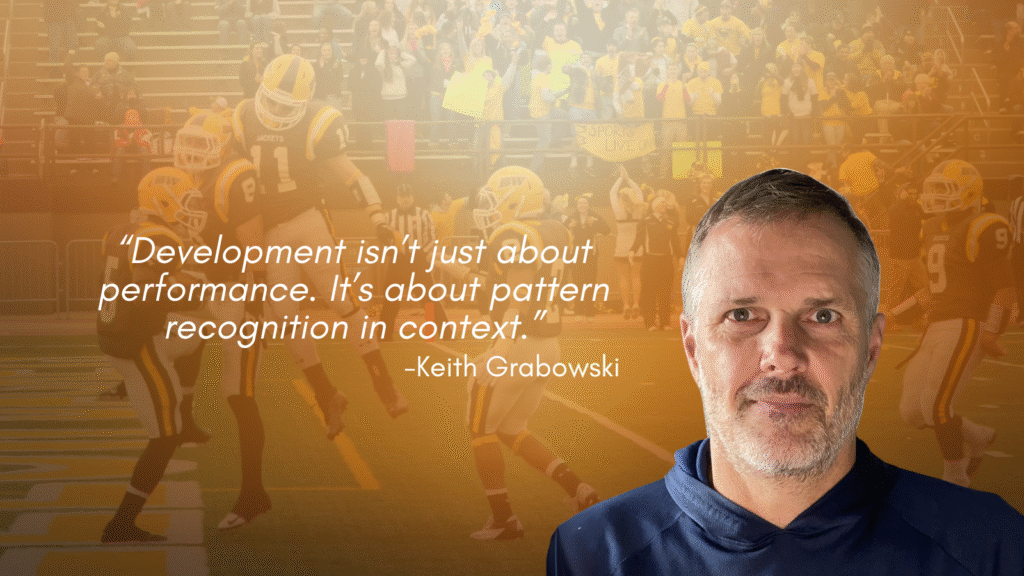
“Development isn’t just about performance. It’s about pattern recognition in context.”
— Keith Grabowski, Coaching Coordinator Podcast, (09:33)
From Film Room to Feedback Loop: The Evolution of Evaluation
Traditionally, coaches graded QBs by watching film, checking completion percentages, and going off intuition. Keith Grabowski, long-time coach and advisor to Modern Football Technology, began with a simple grading system based on release, accuracy, and decision. It gave structure to the QB room and reduced politics in starter selection. However, the real breakthrough came when he started tying these metrics to specific concepts and defensive shells.
Now, instead of saying a QB was simply “late,” coaches can identify exactly which concept and coverage caused the hesitation—and address it directly. This feedback loop accelerates learning and sharpens coaching.
“A quarterback might be late on four different plays, but if they were all flood concepts, we knew exactly where the teaching opportunity was.”
— Keith Grabowski, (09:50)
How Contextual Data Replaces Assumptions
When AJ Smith coached in the UFL, he brought in the Modern Football QB app and saw immediate results. Not only could he tell who processed faster and stayed in rhythm, but the system revealed a hidden inefficiency in his own play-calling: his quarterbacks thrived throwing over the middle, but he wasn’t calling enough of those plays. Real-time data exposed what film review had missed.
This isn’t just about selecting the right starter. It’s about unlocking each quarterback’s potential through targeted coaching, measurable growth, and system-based clarity.
“You’re not just coaching on instinct, you’re refining based on facts.”
— Keith Grabowski, (15:08)
The Coaching Advantage: Clarity and Confidence
By aligning decision-making with tools like R4 and grading systems that track results in context, coaches no longer need to rely on post-game film to identify weaknesses. They can adjust on the fly, create specific practice plans, and build QBs who understand not only what to do, but why.
This method also empowers players. With self-grading, transparent metrics, and role clarity, quarterbacks take ownership of their development. They know every rep counts—and they can see exactly how they’re improving.
Conclusion
The future of quarterback coaching is here—and it’s built on clarity, accountability, and real-time evaluation. Data isn’t replacing coaching. It’s enhancing it. By going beyond the film and embracing this revolution in QB evaluation, you’ll develop better players, faster.
Related:
Sprint Based Football with Tony Holler- Series Kick-Off