

When a head coach, athletic director, or hiring coordinator asks about your resume, they’re not just asking about your win-loss record. They’re not only looking at your scheme, your game plan, or the points you’ve put on the scoreboard. They’re asking, “Who have you helped become better—on and off the field?” Because in today’s coaching landscape, your players are your best resume.
Developing Players Builds Career Equity
Too many coaches chase the next job title or higher level, but Sam Sewell, Assistant Special Teams Coach for the Arizona Cardinals, argues that the real focus should be on something deeper.
“In my opinion, far more should be put into career equity,” Sewell explained. “And what career equity is to me, it’s how much you’re pouring into your players.” (01:05)
Hiring decision-makers don’t just scan your accolades—they listen for stories that demonstrate how you’ve impacted lives. Those stories showcase your values, your influence, and your leadership style. Anyone can put “All-Conference” or “Top 25 Offense” on a résumé. But when a coach tells a story about helping a player find his identity beyond football or graduate when no one thought he would, that’s memorable.
Building a Reputation That Travels
In coaching, your reputation travels faster than your resume ever will. Especially at higher levels, where players switch teams, and relationships matter more than paper credentials.
“People forget stats and numbers very, very fast…but what they remember are stories,” said Sewell. “They want to hear if you can talk about how you’ve developed players, how you’ve helped them grow, how you’ve gotten more out of them than they thought was even in there.” (02:00)
If you want to get hired, your player development must be authentic—and it must show. Coaches talk. Players talk. And when hiring committees ask around, they’ll find out if your influence is real or rehearsed.
That’s why Sewell emphasizes the importance of living what you preach. Your daily actions—the conversations in your office, how you coach during walkthroughs, and whether your players gravitate toward you—paint the clearest picture of your impact.
Small Moments, Big Impact
Some of the strongest resume lines don’t come from games—they come from life. Sewell recalled a former player who had to medically retire and called him, broken, unsure of who he was without football. Sewell told him:
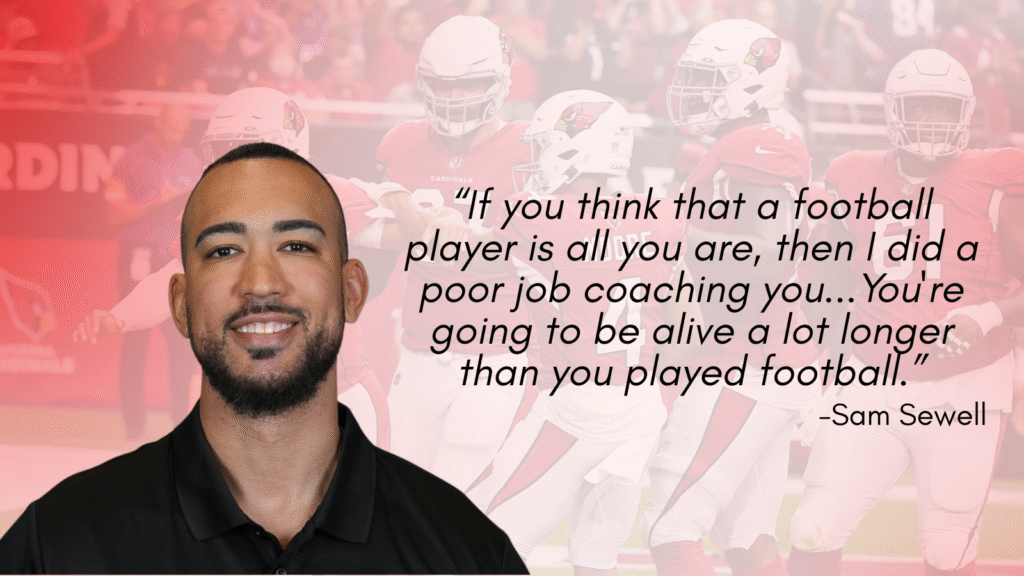
“If you think that a football player is all you are, then I did a poor job coaching you…You’re going to be alive a lot longer than you played football.” (08:04)
That moment didn’t involve a stat sheet. It didn’t make a highlight reel. But it reflected the heart of a coach committed to developing people.
Hiring coaches want to know what kind of man you are in moments like those. Your ability to show you care, to be consistent, and to invest in your players as human beings—not just athletes—is what sets you apart.
Make It Visible
If your players are your best resume, don’t hide it. When you’re interviewing, tell the stories. Show the growth. Talk about the relationships. Make it clear that the same way you build trust with players, you’ll bring value to a new program.
“You have to actually be living this,” Sewell emphasized. “If it’s real and you’re actually living it, then that’s going to come through.” (03:50)
Stand Out! A Game Plan for Your Next Coaching Job
Why Coaching Job Boards Fail—And What’s Replacing Them