

Jim Chapin and Authority Inside an Aligned Staff
When people talk about alignment within a football program, they often focus on vision. They talk about culture and buy-in.
What they talk about less is authority.
Authority is where alignment gets tested. Not when ideas are shared, but when decisions are made. Not when everyone agrees, but when responsibility has to land somewhere specific.
That is where the conversation with Jim Chapin begins.
Chapin is the offensive coordinator at Central Michigan Football, working under head coach Matt Drinkall during the program’s first season together. This episode of Alignment in Action does not focus on the scheme. It focuses on what it actually means to own an area of the program without turning authority into ego.
Authority Has a Shape
Drinkall describes his role as less about control and more about structure. He separates responsibility across the staff and treats coordinators as head coaches of their areas. That structure matters because it creates space for people like Chapin to lead.
But that space comes with weight.
Chapin does not talk about freedom in terms of doing whatever he wants. He talks about responsibility. He talks about making decisions that serve the program, not himself. He talks about clarity.
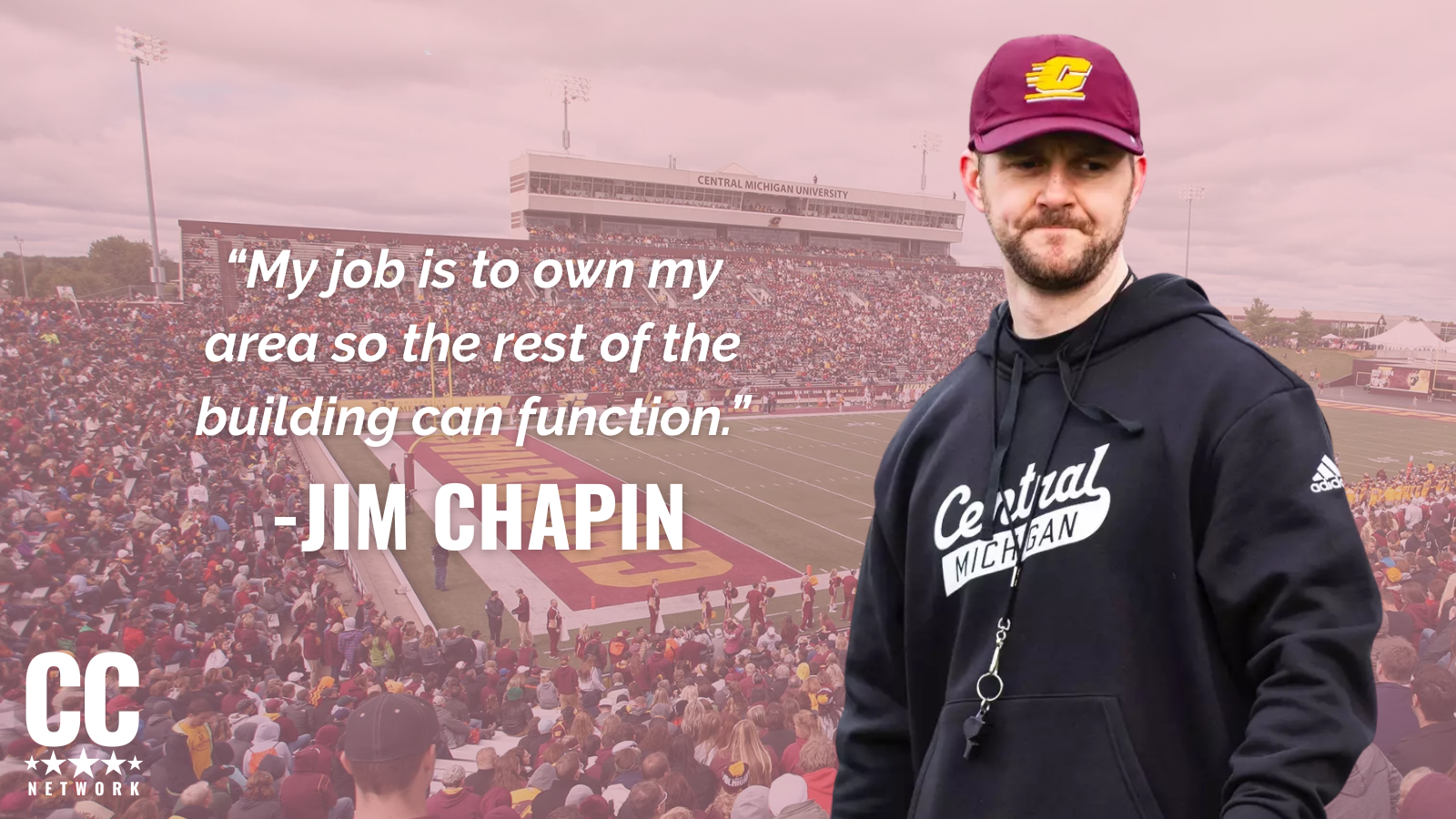
“My job is to own my area so the rest of the building can function.” -Jim Chapin
Ownership, in this environment, is not loud. It is steady.
Chapin understands exactly where his authority begins and ends. He runs the offense. He owns the quarterback room. He makes calls. But he does so inside a system where alignment has already been established.
That clarity allows him to operate without performing leadership.
Decision Making Without Theater
One of the most revealing parts of the conversation is Chapin’s discussion of decision-making. There is no dramatization. No talk of power struggles or control. He describes collaboration that ends in ownership.
People bring ideas. They talk through options. Then someone decides.
And once that decision is made, the staff moves forward together.
This is where many programs fracture. Authority either becomes centralized to the point of paralysis or distributed so loosely that nothing sticks. Chapin operates in the middle ground. He listens. He decides. He owns the outcome.
That balance only works when trust already exists.
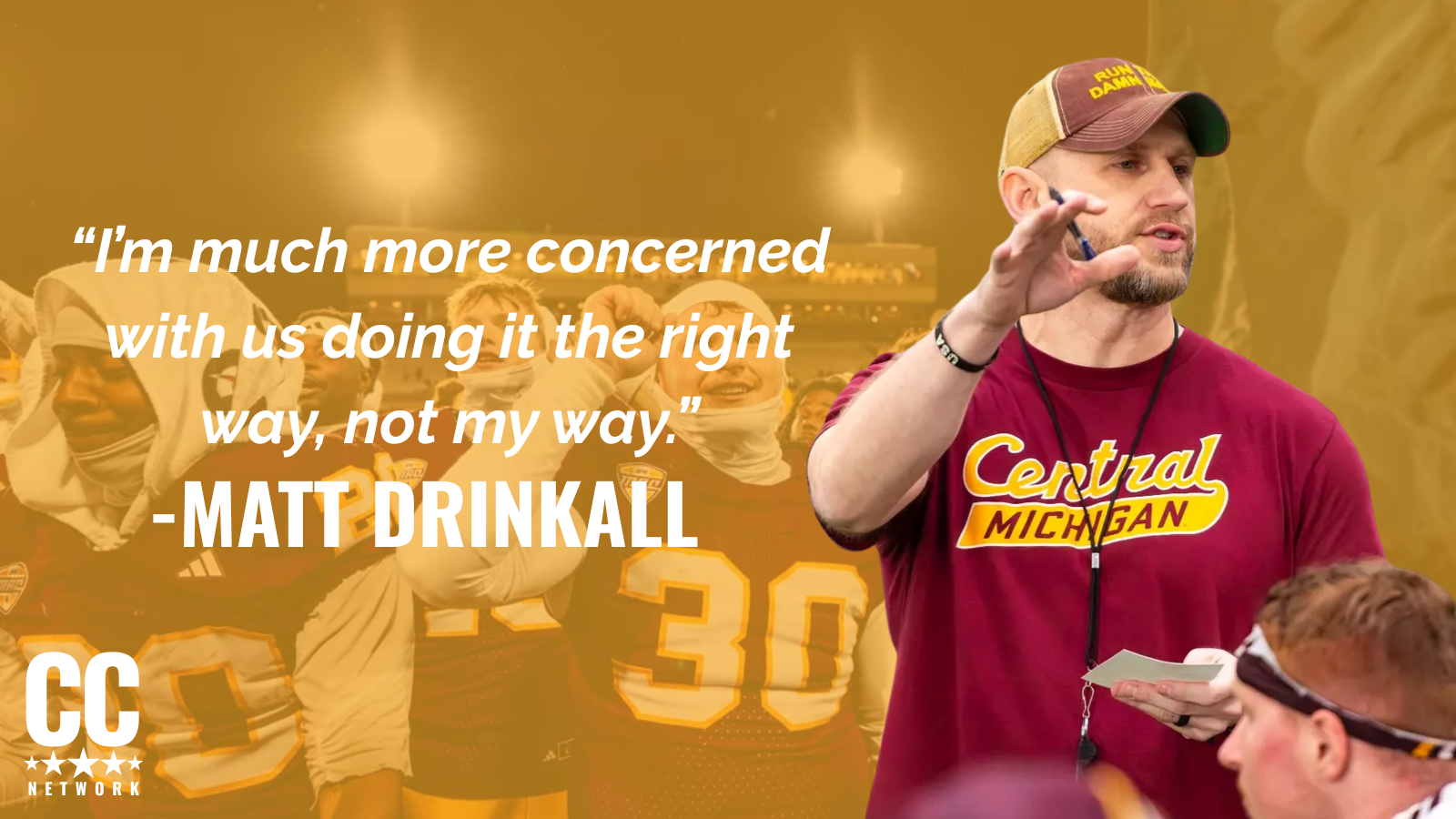
“I’m much more concerned with us doing it the right way, not my way.” – Matt Drinkall
That sentence captures the tone of the entire episode. Authority is not about being right. It is about being responsible.
Coaching Without Fear
Chapin’s approach shows up most clearly in how he talks about players. Especially quarterbacks.
He does not coach from fear. He does not panic when things go wrong. He emphasizes clarity, repetition, and calm communication. Players know where they stand. They know what is expected. They know what happens next.
That consistency matters in a season filled with change. New staff. New systems. New expectations.
Authority, in this context, becomes stabilizing rather than restrictive.
Players feel it. Other coaches feel it. The offense functions because the people inside it understand how decisions are made and why.
Alignment Beyond Language
One of the quiet strengths of this episode is how little time Chapin spends repeating the head coach’s language. He does not echo slogans or mirror phrasing.
Yet the alignment is obvious.
It shows up in how he describes accountability. In how he talks about collaboration. In how he frames success as collective rather than personal.
This is what alignment looks like when it is real. Not identical language, but consistent behavior.
Chapin does not need to reference Drinkall constantly to demonstrate alignment. He simply operates inside the structure that Drinkall created.
Authority That Scales
As the Alignment in Action series progresses, the focus moves from vision to trust to identity and now to authority. This episode matters because authority is where alignment either scales or collapses.
Chapin shows what it looks like when authority is exercised without insecurity. When ownership does not require attention. When leadership does not need to announce itself.
He owns his area. He protects standards. He makes decisions. And he does it without separating himself from the rest of the staff.
That is alignment under pressure.
Series Note
This episode is part of Alignment in Action, a documentary series examining how football staffs actually function. All interviews were recorded during Central Michigan’s first season under Matt Drinkall.
The full series, additional articles, and the Alignment in Action AI Companion are available inside the Coach and Coordinator Network. The companion allows coaches to apply the behaviors and structures discussed in this series to their own programs.
Coach and Coordinator AI – Alignment in Action Companion

The Alignment in Action Companion is built entirely from the Central Michigan Alignment in Action series. It is designed to help coaches examine alignment through behavior and apply those lessons to their own environment.
This tool helps coaches identify where alignment holds and where it breaks, clarify ownership and authority, and evaluate whether standards survive when responsibility moves away from the head coach. It focuses on real decisions, real behaviors, and real pressure moments.
The companion does not add outside leadership frameworks, invent examples, or offer generic advice. It only works off of the transcripts from the Central Michigan Alignment in Action episodes.
This tool works best when coaches describe what actually happens in their program. Avoid aspirational language. Be specific about situations, decisions, and behaviors. Use it to pressure test standards, expose dependence on your presence, and build alignment that functions without constant oversight.
Related
Alignment in Action: A Behavior-Based Leadership Tool for Coaches