

Every coach has seen it before: a player excels in practice drills but hesitates during the real game. Their technique looks great on its own, but it breaks down when the game speeds up. This gap is why coaches today should focus on drills that actually build game-ready skills.
Drills look clean when everything is scripted, but football is not played that way. The game requires quick decisions, constant adjustments, and reactions to unexpected movement. If your drills do not match that reality, your players will not be as prepared come game day.
Why Traditional Drills Fall Short
Traditional drills usually focus on repeating certain movements. Coaches teach things like steps, angles, and hand placement. This helps build a base, but it often doesn’t carry over completely to real games.
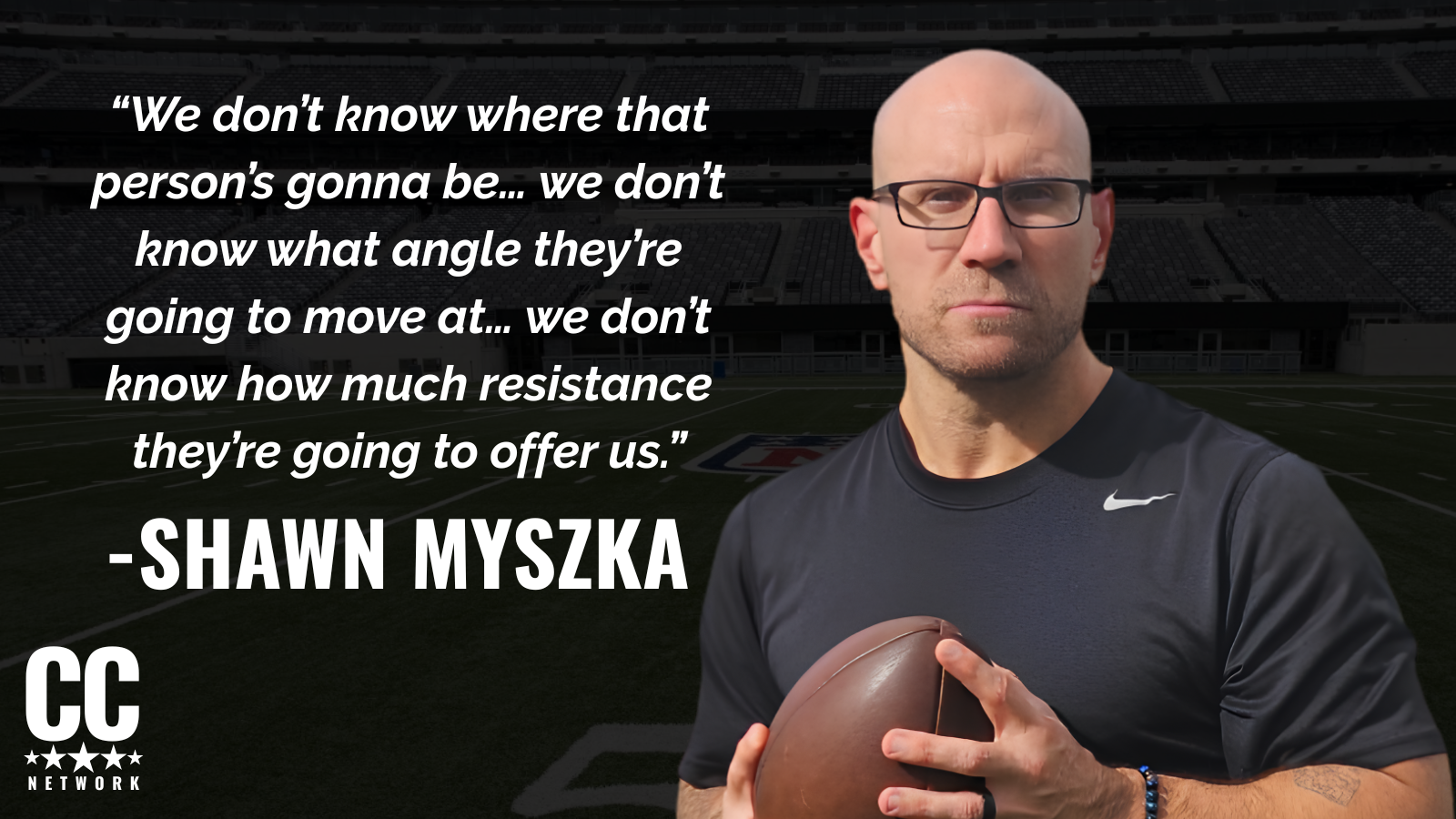
As Shawn Myszka explains, the game itself is far more complex:
“We don’t know where that person’s gonna be… we don’t know what angle they’re going to move at… we don’t know how much resistance they’re going to offer us.” (00:41)
On game day, players do not get a script. But too many drills remove the read, the reaction, and the problem.
That means players may learn the movement, but not when or why to use it, leading them to struggle under pressure.
Building Drills That Mirror the Game
If you want real transfer, your drills must have game-like timing and spacing. That doesn’t mean full-speed collisions every rep. Instead, it means creating environments where players must read, process, and react.
For example, replace static drills with controlled one-on-one reps. Now the player has to win against movement, leverage, and pressure from another player. You can also limit space or time to force faster decisions while still keeping the drill controlled.
Myszka reinforces this concept:
“It doesn’t look like the game. It doesn’t feel like the game. It doesn’t unfold like the game.” (05:42)
Coaches should design drills that copy the challenges players face in games, not only focusing on the movements they use.
Teach Players to Solve Problems
Traditionally, coaches often rely on repetition. But repeating the same movement, the same way does not build game-ready athletes.
Each rep should give players a slightly different picture. That forces them to read, adjust, and solve the problem in front of them.
Over time, they play faster because practice has already prepared them for the variation they will see on game day.
Add Game-Like Pressure to the Drill
Great drill design does not require more periods.
It requires better details inside the drill. Add a defender. Change the starting angle. Shrink the space. Give the player a read before he moves. Put a time limit on the rep.
Those small tweaks make the drill more like real football.
Let Players Own the Learning Process
Many coaches naturally want to control every detail. They tell players exactly what to do, correct them right away, and plan out every step. But this can actually hold players back.
Instead, let players try things out, process what happened, and make their own adjustments.
Ask questions that lead players to the answer. A few good examples are:
- What did you see, and why did you choose that action?
- What could you do differently next time?
This way, players become more aware and take more responsibility for their learning. That helps players understand their decisions instead of just waiting to be corrected and naturally they become better problem-solvers.
Myszka emphasizes:
“We are repeating the process of solving those problems… as opposed to repeating the techniques.” (14:32)
That distinction separates average development from elite growth.
Conclusion: Train for the Game
Football is not predictable. Players have to adjust in real time, not just repeat perfect movements.
When drills include decisions, pressure, and variation, practice may look less polished. But players will be better prepared when the game speeds up.
Elevate your game with Modern Football Technology!
Modern Football Technology helps identify patterns and unlock hidden insights with real-time self scout and opponent tendencies while eliminating strenuous hours of manual data entry.

Related:
Defensive Structure Wins Before the Ball Is Snapped
How Better Practice Design Builds Better Players