

In football coaching, many believe elite head coaches must call plays themselves to show control and expertise. High school and small-college coaches often fear that delegating play calling diminishes their authority or causes chaos.
However, consider the possibility that delegating play-calling is actually the key to becoming a more effective head coach. This approach might enable you to lead more successfully, manage games strategically, and build a stronger program.
The NFL offers compelling examples that show how not calling plays can contribute to a head coach’s effectiveness.
Nick Sirianni and the Philadelphia Eagles
Nick Sirianni led the Eagles to multiple playoff appearances and sustained success, delegating offensive play-calling to his coordinators while focusing on leadership and big-picture decisions.
As one viral post recently pointed out, you could praise coaches like Curt Cignetti or Mike Vrabel for massive success while noting they don’t call plays—and the same logic applies to Sirianni. Delegating hasn’t held him back; it’s helped propel sustained excellence with one of the league’s top rosters.
Early in his tenure, when Sirianni called plays himself, the Eagles stumbled to a 3-6 start with sloppy penalties and mistakes. Once he fully handed the reins to his offensive coordinator, things turned around dramatically. Delegating allowed him to adopt a true CEO role, overseeing both sides of the ball and making critical in-game adjustments without being buried in the play sheet.
Other Elite Delegators
Sirianni isn’t alone:
- John Harbaugh (Baltimore Ravens) → Super Bowl champion, consistent playoff contender.
- Mike Tomlin (Pittsburgh Steelers) → Never a losing season in nearly two decades.
These coaches don’t call plays on offense or defense. They hire great coordinators, empower them, and focus on leading the entire team.
A Recent Cautionary Tale: Dan Campbell’s 2025 Experiment
Dan Campbell had built the Detroit Lions into a legitimate contender largely by delegating play-calling to talented coordinators and focusing on culture and leadership. However, in November 2025, after early-season offensive inconsistencies under OC John Morton, Campbell took over play-calling duties himself, starting in Week 10.
The move produced an immediate spark: in his first game calling plays, the Lions exploded for 546 total yards and a 44-22 win over Washington, scoring on every possession before kneeling.
The offense struggled for consistency afterward, and a poor December eliminated Detroit from playoff contention.
Campbell later graded his own performance “a freaking F” for the playoff miss. In the offseason, the Lions fired Morton and hired a new offensive coordinator for 2026—signaling a clear return to delegation.
This real-world example from just months ago shows the risks when even a highly respected head coach takes on play-calling on top of everything else: initial excitement can give way to overload, inconsistency, and suboptimal results.
Case Studies: Delegation Success Stories from the Trenches
The NFL provides high-profile examples, but delegation pays off at every level—including high school and small college, where coaches often wear even more hats. Here are three real-world case studies from recent episodes of the Coach and Coordinator Podcast.
High School Case Study: Kyle Schmitt, Archbishop Spalding High School (MD)
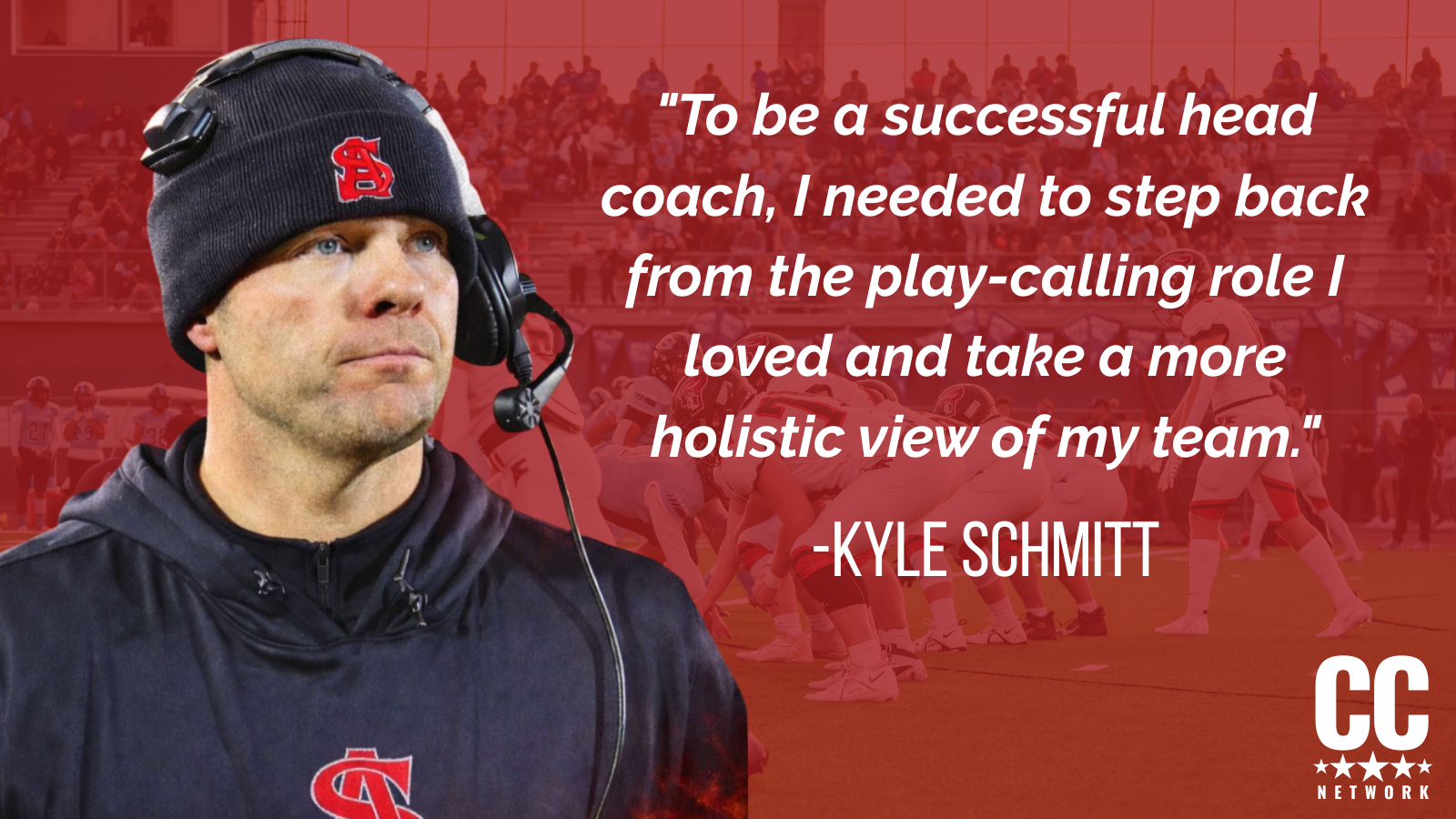
Kyle Schmitt built Archbishop Spalding into a Maryland powerhouse, winning back-to-back MIAA “A” Conference championships in 2022 and 2023, plus multiple titles during his tenure. A pivotal shift? Moving from calling plays himself to fully delegating while embracing a “design it and step back” philosophy.
By handing off play-calling, Schmitt focused on game management, incorporating analytics, and overall program leadership. This enabled clearer in-game decision-making, better sideline oversight, and a more empowered staff—contributing directly to championship-level execution and sustained success.
High School Case Study: Reginald Samples, Duncanville High School (TX)
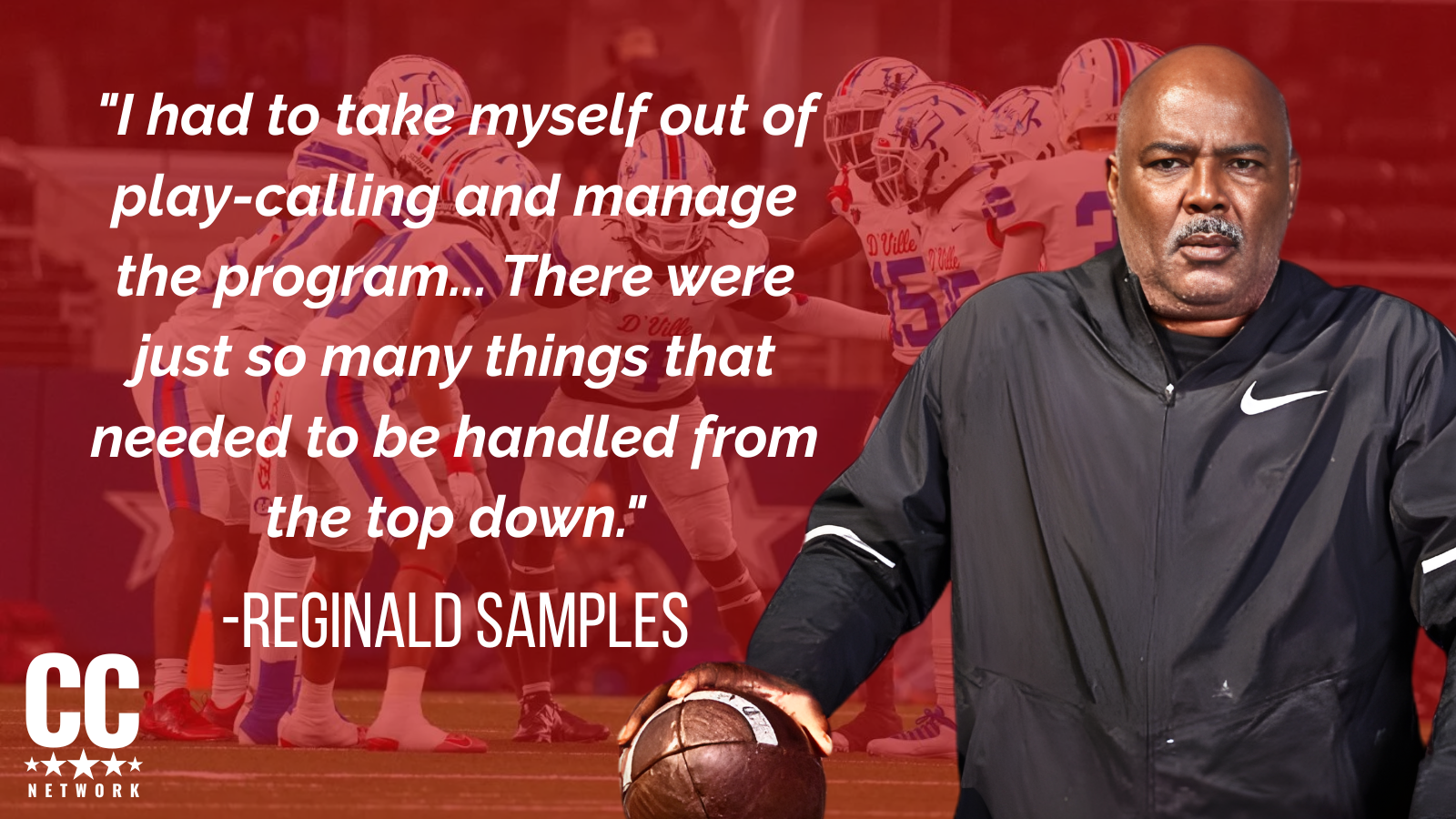
Reginald Samples has turned Duncanville into one of Texas’s premier programs, with multiple state championships, relentless intensity, and a reputation for developing elite talent. In his podcast appearance, Samples discussed his growth from offensive coordinator roots to head coach—and a defining evolution: stepping away from play-calling.
By delegating to trusted coordinators, he redirected his energy toward culture, program oversight, situational mastery, and overall leadership. The payoff has been unmistakable—consistent deep playoff runs, disciplined teams, and a powerhouse that competes for titles year after year.
Small-College Case Study: Tom Perkovich, formerly Susquehanna University (Division III), now University at Albany (FCS)
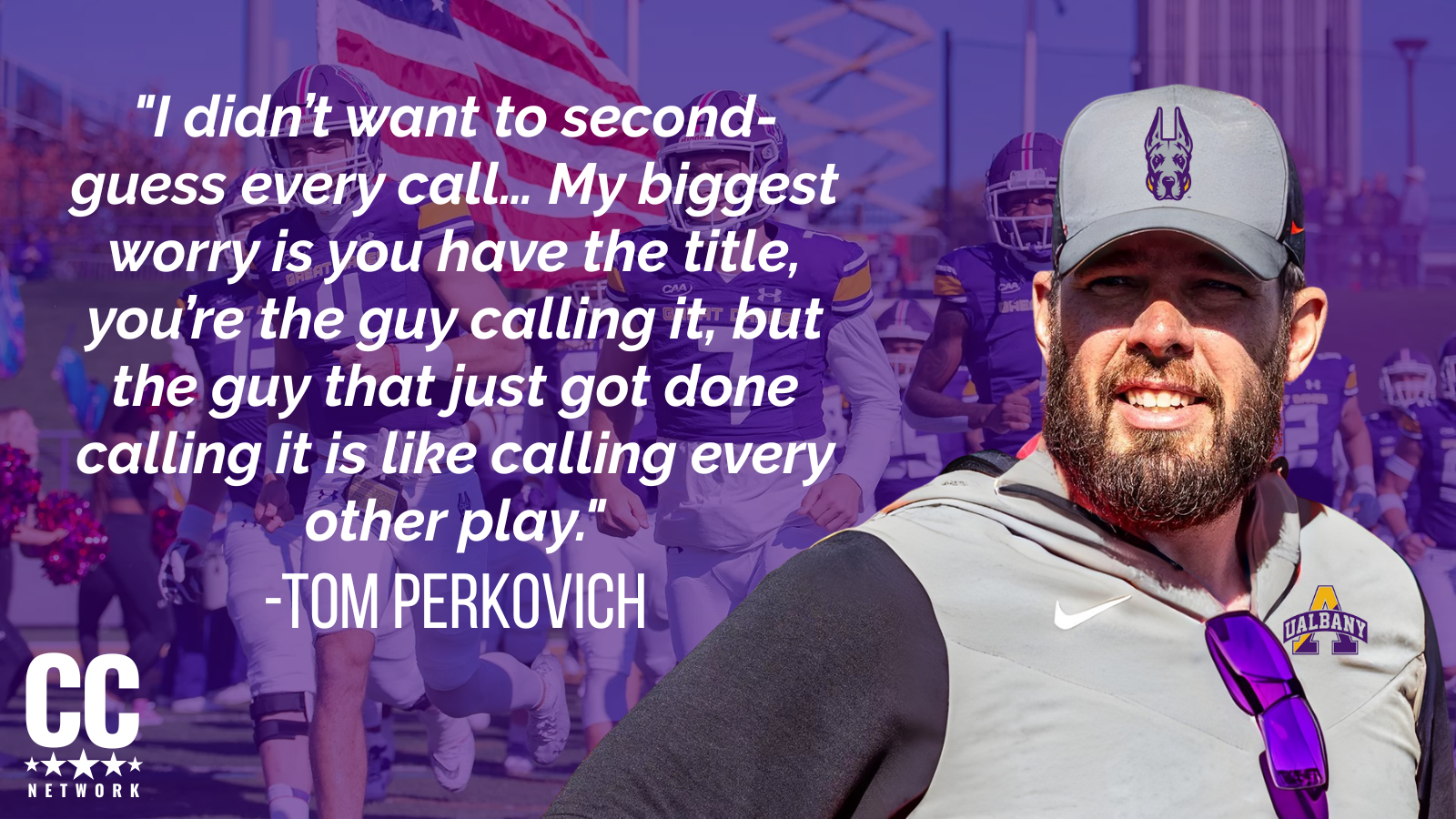
At Susquehanna, Tom Perkovich deliberately transitioned offensive play-calling to his coordinator, Mike Wiand. The handoff was gradual: starting with developmental practice segments, progressing to third-down packages over two seasons, and eventually full game responsibility.
Timing came late in the summer, driven by program needs (including defensive transitions) and Perkovich’s desire for big-picture focus. He stayed involved through collaboration without micromanaging or second-guessing, ensuring Wiand developed his own identity.
The results: deeper staff trust, empowerment, resilience, and growth—preparing assistants for bigger roles while sharpening program execution. This approach helped fuel success at the D3 level and contributed to Perkovich’s recent promotion to FCS head coach at UAlbany.
These coaches prove that thoughtful delegation isn’t just for the pros—it’s a proven path to better results at the levels most of us coach.
How to Earn Coordinator Responsibility: Building Trust So Your Head Coach Feels Comfortable Delegating
If you’re an offensive or defensive coordinator dreaming of taking over play-calling duties, the key is earning your head coach’s complete trust. Delegation rarely happens overnight—it must be earned through consistent performance and behavior. Here’s how top coordinators have positioned themselves for that responsibility, based on insights from successful handoffs:
- Master the Fundamentals First
Demonstrate flawless execution in your current role: game planning, scouting reports, player development, and in-game adjustments. When your head coach sees you consistently win the details—third-down calls, red-zone efficiency, situational awareness—he starts to trust your judgment on bigger decisions. - Show You Understand the Big Picture
Go beyond your side of the ball. Study clock management, special teams integration, personnel groupings, and how your calls affect the overall game plan. When you can speak intelligently about defensive tendencies or how your offense complements the defense, your head coach sees you as a true partner, not just a play-caller. - Be Proactive and Prepared
Come to every meeting with a detailed game plan, alternative packages, and contingency calls. Show that you’ve thought through every scenario. Head coaches delegate to people who make their job easier, not harder. - Embrace Gradual Responsibility
Start small: ask to handle third-down packages, two-minute drills, or goal-line situations. Prove yourself in low-risk moments, then build from there. Tom Perkovich’s coordinator, Mike Wiand, earned full play-calling by excelling in these phased opportunities over multiple seasons. - Communicate Transparently and Humbly
Never second-guess your head coach publicly. Instead, seek feedback constantly: “What would you like to see differently?” or “How can I support your vision better?” Show humility, loyalty, and a willingness to adapt your style to the program’s identity. - Protect the Head Coach
Take ownership of mistakes. If a call doesn’t work, own it without excuses. Defend the head coach’s decisions to players and staff. When your head coach knows you’ll have his back, the fear of delegation fades. - Build Relationships and Culture
Develop strong bonds with players and other assistants. When the entire staff and team respect you, your head coach feels confident that delegating won’t create division or loss of authority.
Earn this trust, and delegation becomes inevitable. Head coaches want to hand off play-calling—they just need to know the program is in safe, capable hands.
Why Delegation Works
The benefits are clear, especially for coaches juggling multiple roles (common at the high school level):
- Big-Picture Vision — When you’re not locked into calling every snap, you can better manage the clock, challenges, personnel groups, and sideline discipline. You’re free to scan the entire field, spot tendencies, and make strategic overrides when needed.
- Empowering Your Staff — Delegating develops your assistants into better coaches. It builds trust, loyalty, and a pipeline of future leaders. Great coordinators want autonomy—if you micromanage plays, you’ll struggle to attract and retain top talent.
- Reduced Burnout — Calling plays is mentally taxing. Adding head coaching duties on top can lead to tunnel vision and fatigue. Delegating lets you stay sharp for the moments that matter most: fourth-quarter decisions, motivation, and adjustments.
- Focus on Culture and Leadership — The best head coaches win with intangibles—building buy-in, handling adversity, and fostering accountability. That’s hard to do if you’re heads-down in the play script all game.
Of course, some offensive-minded geniuses like Andy Reid, Sean McVay, or Kyle Shanahan call plays and win big. That’s fine—if it’s your strength and you have the staff to cover the rest. But for most coaches? Delegation isn’t a weakness; it’s a strength.
Self-Assessment: Is It Time for You to Delegate?
Before making any change, take an honest look in the mirror. Answer these questions privately (rate yourself 1–10 or just yes/no):
- During games, do I ever feel mentally overloaded—missing clock situations, challenges, or defensive tendencies because I’m focused on the next offensive call?
- Do I spend most of my sideline time buried in the play sheet instead of scanning the field, managing energy, or talking to players/staff?
- Have I experienced burnout or frustration from wearing too many hats (HC + OC/DC + everything else)?
- Do I have at least one assistant who is capable, trustworthy, and eager to call plays—or could I develop one?
- In the past 2–3 seasons, have penalties, clock management errors, or situational decisions been recurring issues that might improve with a clearer head?
- If I handed off play calling, would my staff feel more empowered and invested, or would it create chaos?
- Am I holding onto play calling because it’s truly my biggest strength—or because it’s comfortable and feels like “my” program?
If you answered “yes” to several of these (especially 1–3 and 5), delegating could be a game-changer. If you’re scoring high across the board, that play calling is your unique superpower, and everything else is running smoothly, keep doing what works.
A Challenge to Fellow Coaches
If you’re a head coach calling plays on one or both sides, ask yourself: Is this truly helping my team win more games? Or is it feeding my ego while limiting my impact?
Maybe it’s time to trust your coordinators. Hire well (or develop the ones you have), collaborate on the game plan during the week, and let them handle Sundays. You might just find yourself with more wins, better staff retention, a stronger culture, and a clearer head on game day.
You don’t have to call plays to be an elite head coach. The NFL proves it every week, recent history warns of the risks when you don’t delegate, and coaches at every level are living it successfully. Maybe you should delegate—and watch your program reach new heights.
Related
Reginald Samples: Building Competitive Edge Through Situational Mastery
Transitioning Out of a Coordinator Role to Focus on Big Picture
Design It and Step Back – Kyle Schmitt, Head Coach, Archbishop Spalding High School (MD)
National Coach of the Week – Kyle Schmitt, Head Coach, Archbishop Spalding High School (MD)
Champions- Aligning Staff for the Year Ahead- Spencer Emerson, Kyle Schmitt
About Kyle Schmitt
Kyle Schmitt wass the head football coach at Archbishop Spalding High School in Severn, Maryland. He recently accepted the Tight Ends Coach position at the University of Maryland. He has transformed the Cavaliers into one of the top programs in the state, winning multiple MIAA “A” Conference championships, including back-to-back titles in 2022 and 2023. Schmitt is known for his forward-thinking leadership style, incorporating analytics into game management and fully delegating play-calling to focus on program-wide vision and staff empowerment.
About Reginald Samples
Reginald Samples iis the head coach at Duncanville High School in Duncanville, Texas—one of the most dominant high school football programs in the nation. A legendary figure in Texas high school football, Samples has amassed over 360 career wins across 36+ years as a head coach, making him the winningest Black head coach in Texas UIL history. He has led Duncanville to multiple Class 6A state championships (including in 2022 and additional titles), numerous deep playoff runs, and consistent production of elite college and NFL talent. A former offensive coordinator, Samples has excelled as head coach by delegating play-calling to trusted coordinators, allowing him to focus on culture-building, fatherhood mentorship, discipline, situational mastery, and overall program leadership. His teams are renowned for their relentless intensity and sustained excellence.
About Tom Perkovich
Tom Perkovich is the head football coach at the University at Albany (UAlbany) in the FCS (Football Championship Subdivision) of the CAA conference. He was hired in December 2025 after a highly successful eight-year run as head coach at Susquehanna University (Division III), where he compiled a 60-28 record (.682 winning percentage), led the team to three consecutive Centennial Conference championships (2021–2023), and guided the program to its first-ever NCAA Division III playoff appearance in 2022. During his tenure at Susquehanna, Perkovich transformed the program from a perennial underachiever into a consistent contender, emphasizing staff development, player culture, and a deliberate approach to leadership—including a multi-year, phased transition of offensive play-calling to his coordinator to allow greater focus on big-picture program building. His track record of sustained improvement, conference titles, and playoff success earned him the opportunity to lead at the FCS level, where he continues to prioritize trust, collaboration, and holistic program excellence.