
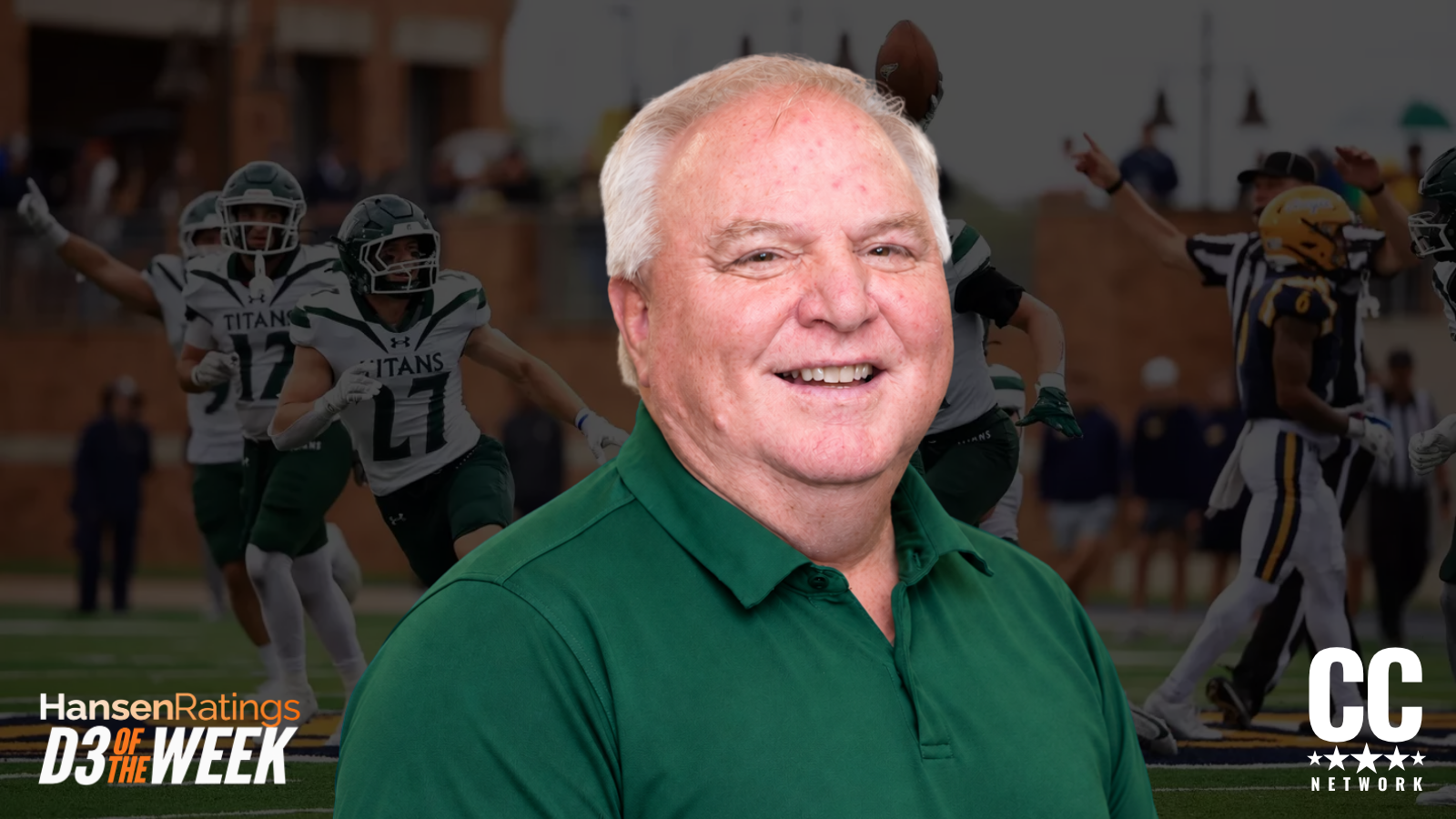
“We kinda do it a little bit backwards.”
That’s how Mike Murray, defensive coordinator at Illinois Wesleyan, describes how his defense ties a call to what the offense puts on the field. Keith Grabowski pointed out that defenses are always holding up big personnel boards on the sideline. Murray’s defense doesn’t. On game day, his staff communicates the relationship from the other end.
“When they’re in this personnel group, here’s what we’re gonna give you as a call,” Murray said. “And so we give the call and then it kind of reverses engineers itself to, ‘Well, hey, here’s a personnel group we should expect to see because this is what coaches put us in.'”
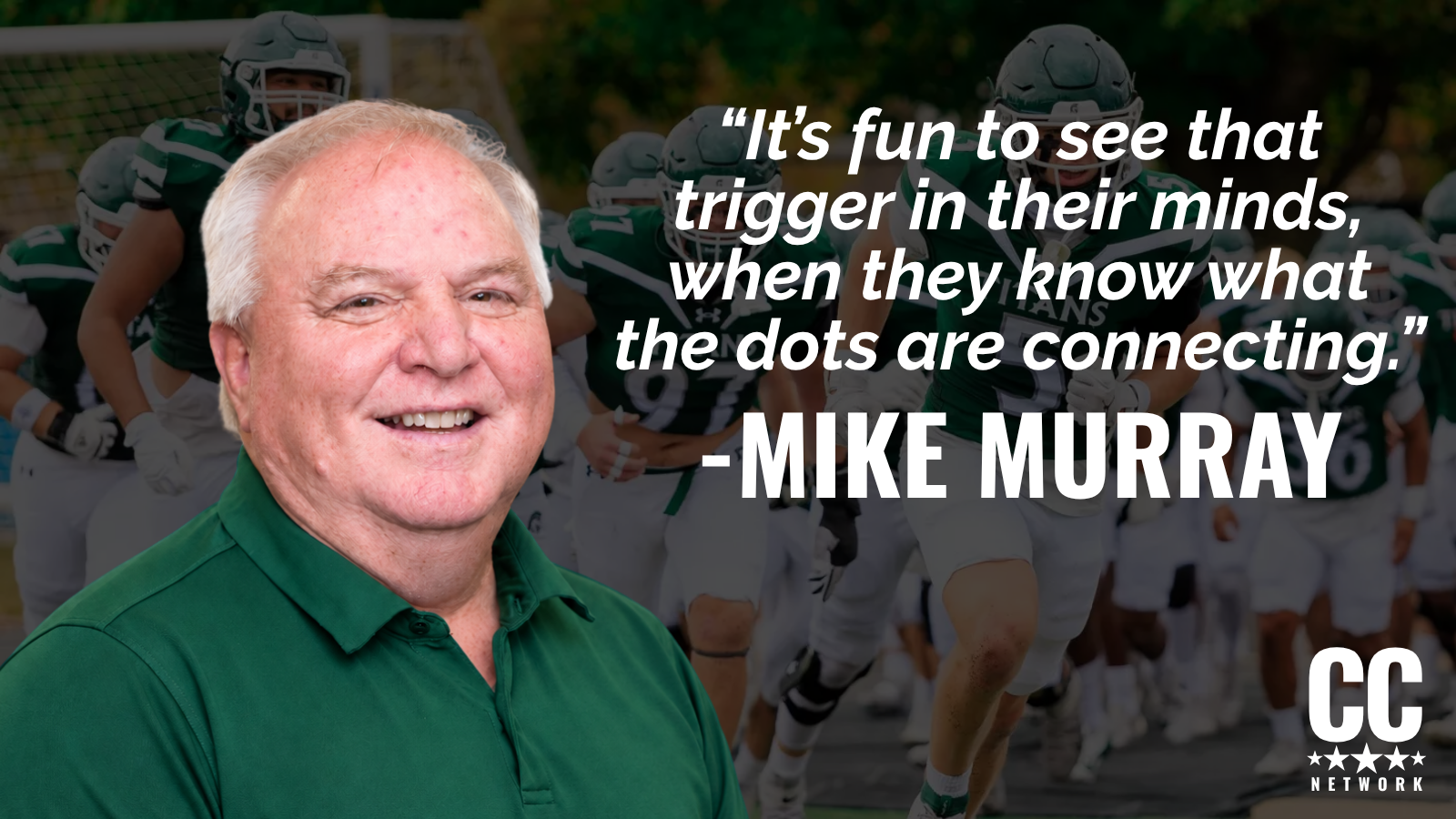
If a player has prepared the way Murray asks, the call tells him two things: what to run, and what the staff expects the offense to show. Murray said the approach helps players focus on why a call is being made: “he’s making this call for this concept or for this situation.” He also enjoys watching it land. “It’s fun to see that trigger in their minds, when they know what the dots are connecting.”
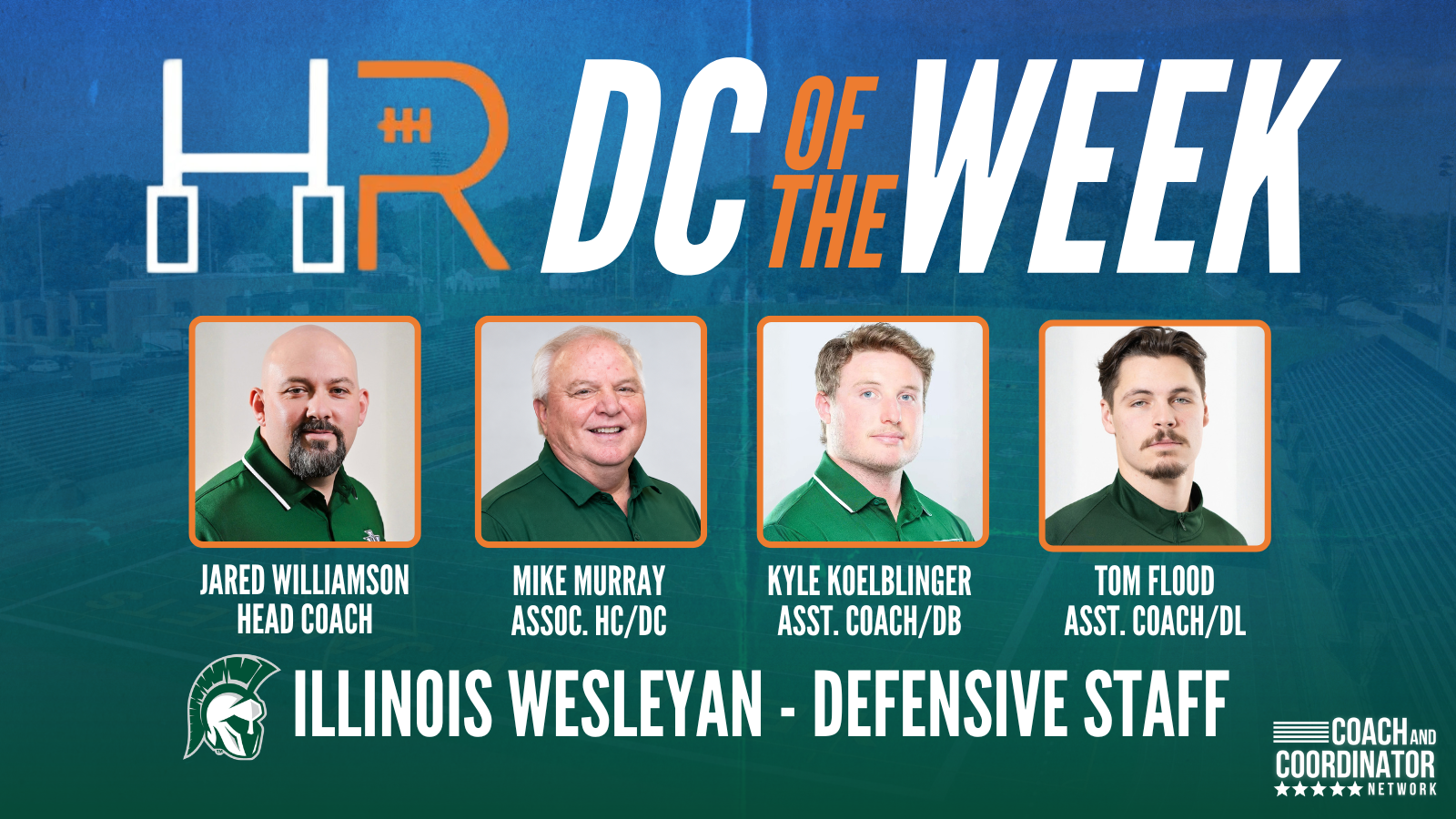
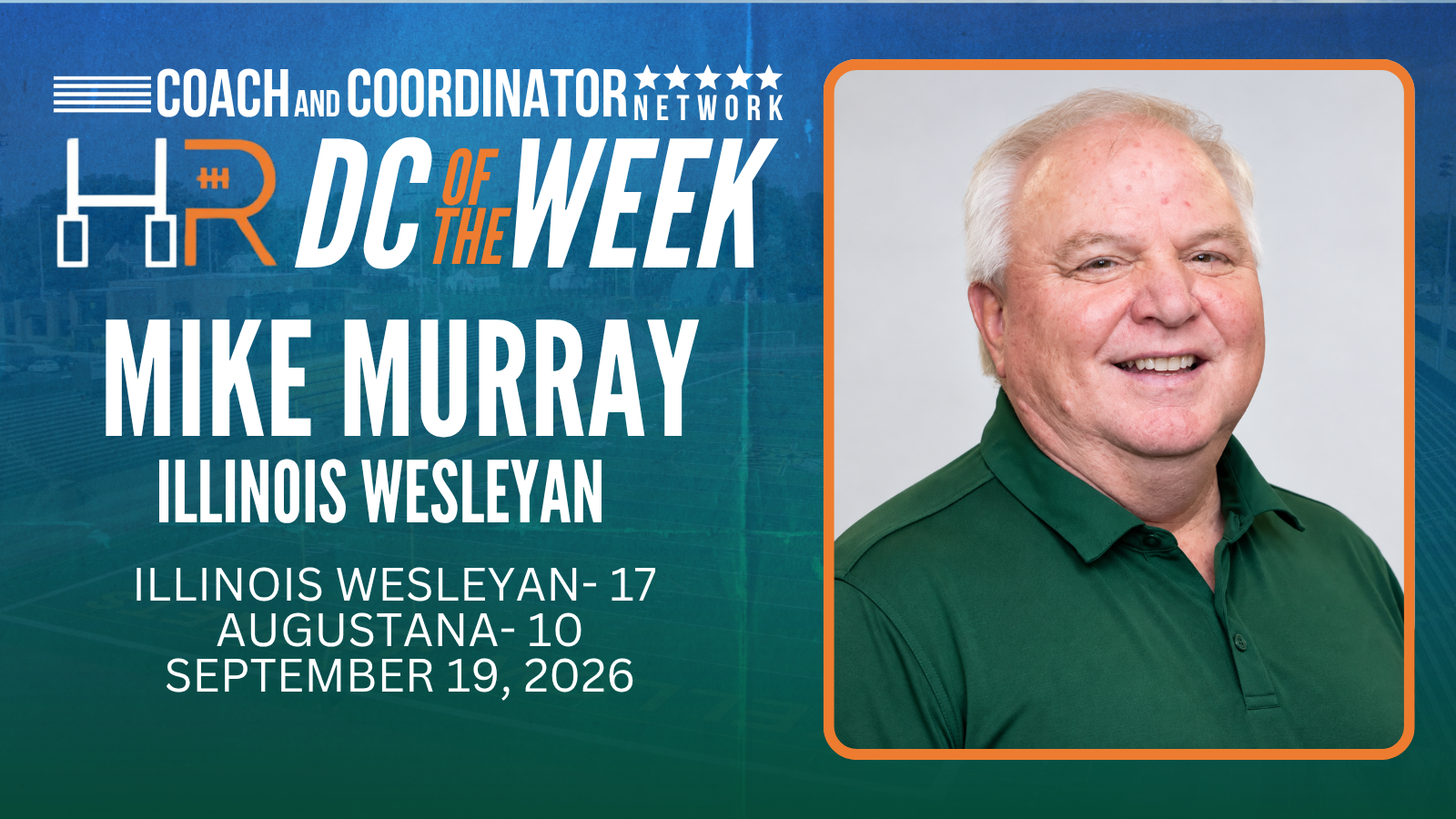
Murray was named the Hansen Ratings D3 Defensive Coordinator of the Week on the Coach and Coordinator Network after Illinois Wesleyan beat Augustana 17-10. Augustana converted 4 of 13 third downs and scored its only touchdown with four seconds left. Illinois Wesleyan had three interceptions by three different defenders, three forced fumbles by three different defenders, and two fumble recoveries by two more. It also had eight other pass breakups, seven tackles for loss, three sacks and five more quarterback hits.
Build the game plan in compartments
Murray came back to Illinois Wesleyan, his alma mater, when head coach Jared Williamson took over the program. Murray said his players have been “learning to prepare differently maybe than they had in the past,” and the center of that is what he calls compartmentalizing.
Each personnel group gets its own compartment. “Hey, this is what this personnel group’s gonna look like. Here’s how we’re gonna defend it.” The scouting report presentation is organized that way. Then players see “that same exact concept all the week through practice,” and the staff practices those plays separately until players get a good handle on spotting that personnel group in the game and “kinda know how we’re built to handle it.”
Grabowski named the problem this is meant to solve. Classroom material makes sense in the meeting room, and then the pieces start moving on the field. Murray’s answer is to make the connection itself the lesson. “Once players realize that, hey, all we’re doing is connecting the dots, right? We learn this concept and we wrap it around this part of the game plan and then that’s gonna lead us to the next.” When players get “that confidence and trust in their preparation,” he said, “that makes for great performances on Saturday.”
Carbon copy until the last practice
The compartments don’t change as the week goes on. “Really everything is going to be carbon copy,” Murray said. A concept gets presented in the classroom, then done in walkthrough, then done in the team period, and the staff keeps the compartments consistent through all of those phases.
The disorder comes at the end. “We get to our last practice of the week, and that’s when we kind of disrupt and randomize all of our scout periods.”
Illinois Wesleyan also runs Fast Fridays, high-tempo work the day before the game. By that point, Murray hopes the players have connected the dots, and he listens for the proof. “Our guys, you hear communicate during those periods and they’re regurgitating exactly how they got it presented to them, and that’s when you know they’ve got it locked down.”
Twenty-two eyes on the sideline
On game day, Murray has to deal with tempo. “A lot of different ways to skin a cat,” he said. His staff wants “twenty-two eyes looking at the sidelines to get a call.”
Part of his reasoning goes back to something the game has lost. “We haven’t taught how to line up in a huddle for about 15 years now,” Murray said, and he called that “one of my favorite parts of football.” He misses the leadership and brotherhood that happened there. Without it, “guys really need to all take ownership individually.” Players still talk on the field after the signal, “but every single guy is responsible for picking up the whole call.”
Remove the second conversation
Between series, Murray said, technology now gives his staff more accurate information than it had in the past. What they say to players is “more coaching communication than making any calls,” and the reason is speed.
“We don’t want to have to take the time for one conversation to go and it has to have a second conversation to get a call actually on the field,” he said. “So we still try to eliminate that second layer.” Every player owns getting the call himself.
When Grabowski asked about talking to one player on the field who can then relay things to the others, Murray tied it back to the week of preparation himself. “That probably comes back to your initial question about the prep. When you can just communicate that one or two words of, ‘Hey, remember this,’ or ‘Here’s the personnel grouping that we’re making this call for.’ For us, we choose to use it more of a little bit of a coaching tool as opposed to a signal call.”
About Mike Murray
Mike Murray is the assistant head coach and defensive coordinator at Illinois Wesleyan University, where he returned to his alma mater in January 2025. A 1984 Illinois Wesleyan graduate, Murray brings more than 40 years of coaching experience, including head coaching stops at Elmhurst University, the University of Dubuque, and Benedictine University.
Before returning to Illinois Wesleyan, Murray spent two seasons as the head coach at Elmhurst, helping rebuild a program that had won just two games over a 30-game stretch and guiding the Bluejays to their most wins since 2016. He previously worked with Illinois Wesleyan head coach Jared Williamson at Robert Morris/Roosevelt, where Murray served as defensive coordinator and helped the program finish 7-3 with a No. 15 national ranking in the NAIA Coaches Poll. His defense allowed 17.2 points per game, while nine players earned all-conference honors.
Murray also spent five seasons as defensive coordinator at North Central College, helping the Cardinals go 49-9 and win CCIW championships in 2013, 2016, and 2017. Earlier in his career, he served as Illinois Wesleyan’s defensive coordinator from 1987-96, coaching 66 All-CCIW selections and helping the Titans win conference championships in 1992, 1994, and 1996.
As a student-athlete at Illinois Wesleyan, Murray lettered four years in both football and baseball. He earned All-CCIW Honorable Mention recognition in football in 1983 and all-conference honors in baseball in 1983 and 1984.
Murray and his wife, Anne, are both 1984 Illinois Wesleyan graduates. They have four children, Laura, Amanda, David, and Bryan, and five grandchildren.
Related
Connect on X:
Keith Grabowski: @CoachKGrabowski
Logan Hansen: @LogHanRatings
Mike Murray: @IWUTitanFball
Check out this years Hansen Ratings here – HansenRatings.com
Keith Grabowski (00:00.182)
You did that countdown. Yeah, okay, we’re recording. Joining me now is our defensive coordinator of the week, Mike Murray. Coach, thanks for joining us here on the podcast.
Mike Murray (00:10.122)
Hey, thanks for recognizing our team and and everything that you do for for college football.
Keith Grabowski (00:16.174)
Appreciate that coach. Well, you guys had a a great performance here and I know you gotta gear back up for a another one, but let’s talk a little bit about this one here and the the week that you guys had leading up to it. What were some of the things you felt in, you know, the preparation this week that helped you guys to the performance that you had on Saturday?
Mike Murray (00:36.192)
Yeah, our guys are really, you know, they’re they’re learning the preparation, you know, as as we brought in kind of some new new ideas last year when Coach Williamson took over as a new coach and coming back with him to my alma mater. Just, you know, guys learning learning to prepare differently maybe than they had in the past. So we’re really really big on compartmentalizing.
our game plans and really trying to get our guys to wrap their minds around, hey, this is what this personnel group’s gonna look like. Here’s how we’re gonna defend it. focus on that in our in our presentation, right, to our players of the Scouting Report. But then they see that same exact concept all the week through practice. They’re gonna practice all those plays separately until they get a really good handle on, hey,
I’m gonna identify that personnel group in the in the game and kinda know how we’re how we’re built to handle it. So our players have been very, very you know, we got a bright bright group of players obviously at at at our school. but they’ve done a great job in how to wrap their mind around the mental preparation that we’re asking them to put in.
Keith Grabowski (01:53.123)
Yeah, I think that’s always the challenge, coach, is is you know, we always take take a long time. We prepare
those cut up lists, we prepare those meetings, those presentations, and all of it makes sense when you’re sitting down in the classroom and then you get out on the field and the pieces move, right? And and you have the context of the game. So the challenge is taking what you teach these guys in the classroom and then bringing it alive on the field. And and exactly like you said, that you’re gonna take that scouting report all the way and make sure that it does translate to what these guys are seeing. And I think we can all get lost in, you know, getting out there and getting
Mike Murray (02:08.371)
Right.
Keith Grabowski (02:29.008)
getting our reps in, I think you have to be very intentional about making sure that the context is always there because we we play the game in context.
Mike Murray (02:38.557)
Absolutely. Absolutely. And I think once players realize that hey we’re all we’re doing is connecting the dots, right? we learn this concept and we we wrap it around this part of the game plan and then that’s gonna lead us to the next. and when they get that confidence and trust in their preparation, that makes for great performances on Saturday.
Keith Grabowski (02:59.468)
What are some of the things you do, I guess, to to make sure that happens? How are they communicating? How do you guys communicate with them during those practice segments?
Mike Murray (03:09.097)
Yeah, really everything is going to be carbon copy, you know, the old pr present it in the classroom, do it in a walkthrough, do it in the team period. But we really try to keep those compartments consistent all the way through all of those phases of the preparation. So really we get to our last practice of the week, and that’s when we kind of disrupt and randomize all of our scout scout periods.
And so that h hopefully by that time and we do fast Fridays, so we’re getting a lot of work, high tempo work the day before game. And hopefully by that day they’ve been able to connect all the dots. And and it’s good, you know, our guys th you hear communicate, you know, during those periods and and you know they’re regurgitating exactly how they got it presented to them and that that’s when you know they’ve got it locked down.
Keith Grabowski (03:52.781)
No.
Keith Grabowski (04:05.942)
Yeah, do you guys have any methods where is is there a way you communicate and and help them? I guess, you know, you see it all the time on the sidelines from defenses holding up the big boards that have the personnel on them.
You know, making you know, I I know guys talk about having procedures for situations so that those things are communicated. Everybody is on the same page as this is the down and distance or you know, this is the the strategy we worked on all week week long. What are some of the things I guess you do to to help them along and make sure those are happening?
Mike Murray (04:37.641)
Yeah, that’s a great that’s a great point. we don’t do the boards, but we we kinda take it from a defensive perspective where we say, Hey, when they’re in this personnel group, here’s what we’re gonna give you as a call. And so we give the call and then it kind of reverses engineers itself to, Well, hey, here’s a personnel group we should expect to see because this is here here’s here’s what coaches put us in. so we kinda do it a little bit backwards.
Keith Grabowski (04:55.373)
Yeah.
Mike Murray (05:06.313)
But I think that helps our guys focus on, hey, he’s making this call for this concept or for this situation. and it’s fun to see that trigger in their minds, when they know what the dots are connecting.
Keith Grabowski (05:23.128)
For you, what what are the mechanics I guess that are helping you, whether it’s guys in the press box, guys on the field, everything that’s happening in the headsets that, you know, you guys are able to recognize real quick and get things in. I mean, you know, most of college football is is played in an uptempo world, so all those things have to happen fast. how do you guys make sure that, you know, you’re on top of it?
Mike Murray (05:46.282)
Yeah, so a lot of different ways to skin a cat, right? we’re s we’re still under the under the thinking that with all the tempo that teams can go, we still aren’t going to be able to have everybody acknowledge a signal. So we should have twenty-two eyes looking at the sidelines to get a call… because we haven’t we haven’t taught how to
How to line up in a huddle for about 15 years now. And unfortunately, that’s a that was one of my favorite parts of football, right? That the special stuff that happens in a huddle. and since we don’t do that anymore, yeah, guys really need to all take ownership individually. Yeah, they’re doing some communication out there on the field after the signal, but every single guy is responsible for picking up the whole call. And and obviously, you know, with the technology between series, we’re
Keith Grabowski (06:18.956)
Right.
Mike Murray (06:45.493)
We’re able get a lot more information, accurate information, than we have in the past. we’ll do a little bit of communication defensively, but really it’s more coaching communication than making any calls because again, we don’t want to have to take the time for one conversation to go and it has to have a second conversation to get a call actually on the field. So we still try to eliminate that second layer.
And make everybody responsible for ID in the call.
Keith Grabowski (07:19.372)
Yeah, i it’s been interesting to hear I guess so some guys are trying to get used to the in helmet communication and and how they use it. And it’s exactly that. You see you still see a lot of those operations with all kinds of signalers on the sideline, but but guys do talk about it as being able to talk to that one guy and and make sure that
Mike Murray (07:27.722)
Right.
Keith Grabowski (07:40.78)
You know, he’s the he’s the coach out on the field that he’s able to see what he needs to see and also communicate to other guys the some of those things need to get done.
Mike Murray (07:48.958)
And that and that probably comes back to your initial question about the prep. You know, when you can when you can just communicate that one or two words of, hey, remember this, or here’s the group that we’re making this call for, the personnel grouping that we’re making this call for. yeah, that’s it it’s more of a for for us we choose to use it more of a little bit of a coaching tool as opposed to a signal call.
Keith Grabowski (08:15.67)
Yeah. Yeah, you make a great point about the huddle and I mean I still remember from playing in high school some of the things that were said in that huddle, right? Like the stories that come up again and again when we get together.
Mike Murray (08:24.381)
Well yeah.
Right, right. It’s the stories, right? But it’s still you know, the leadership that took place in the huddle, the the brotherhood, you know, that took place in the huddle. Just a lot lotta things unfortunately have been lost, when everybody just goes lines up sideline to sideline and and don’t have the chance to communicate between plays like like we did in the old days.
Keith Grabowski (08:36.099)
Yeah.
Keith Grabowski (08:49.994)
Yeah. Well coach, I wanna make sure you get the chance to recognize your staff. Obviously, these these honors are always a collective effort. So who the guys are helping you out on the defensive side?
Mike Murray (08:59.305)
Yeah yeah, Coach Williamson, our head coach, has put together tremendous staff, you know, with the whole group and you know, we’ve had years together at different places. And so when he got the job, you know, two years ago, this is s his second season, after following a coach who’d been here for thirty eight seasons and he followed a coach that was here for thirty three seasons. So we had seventy one years of of two coaches.
So Coach Williamson had big shoes to fill, but he really brought together a bunch of guys who he had history with. So our defensive line coach, Thomas Flood, does a fantastic job, not just with that position group, but he handles a ton of our strength and conditioning too. Kyle Kolblinger is in our secondary with our defensive backs. had history playing with guys that have been on Coach Williamson’s staff. So again, just having that familiarity with
common people, allows you to have some really good chemistry, I think, right away as a staff. And then we brought a new guy on staff this year, another coach Murray, Kenneth Murray, and he’s handling our linebackers. And that gives me a chance to roam a little bit and kinda oversee a lot of the different segments during practice times. So that that group defensively has really done a great job of putting in a ton of work. But Coach Williamson really, you know, it’s
It’s hiring men of great character, great teachers, and then super, super competitive guys. And when you get that type of gr characteristics on a coaching staff, it makes it a lot of fun to go to work every day and to and to work together, but it also I think has some carryover into what our kids are learning and our players have just absorbed everything and done a fantastic job.
Keith Grabowski (10:49.73)
Well you guys have been causing a lot of havoc on the field as as Logan mentioned in our introduction here.
Breakups, the TFLs, the sacks, interceptions, forced fumbles, fumble recoveries. Incredible performance by you guys. I know you’re looking to carry that into another gate, big game here this next weekend, and just want to wish you and your staff of the best of luck the rest of the season and congratulations again on your performance.
Mike Murray (11:19.657)
Hey, really appreciate it and again, thanks so much for all that you guys do.