
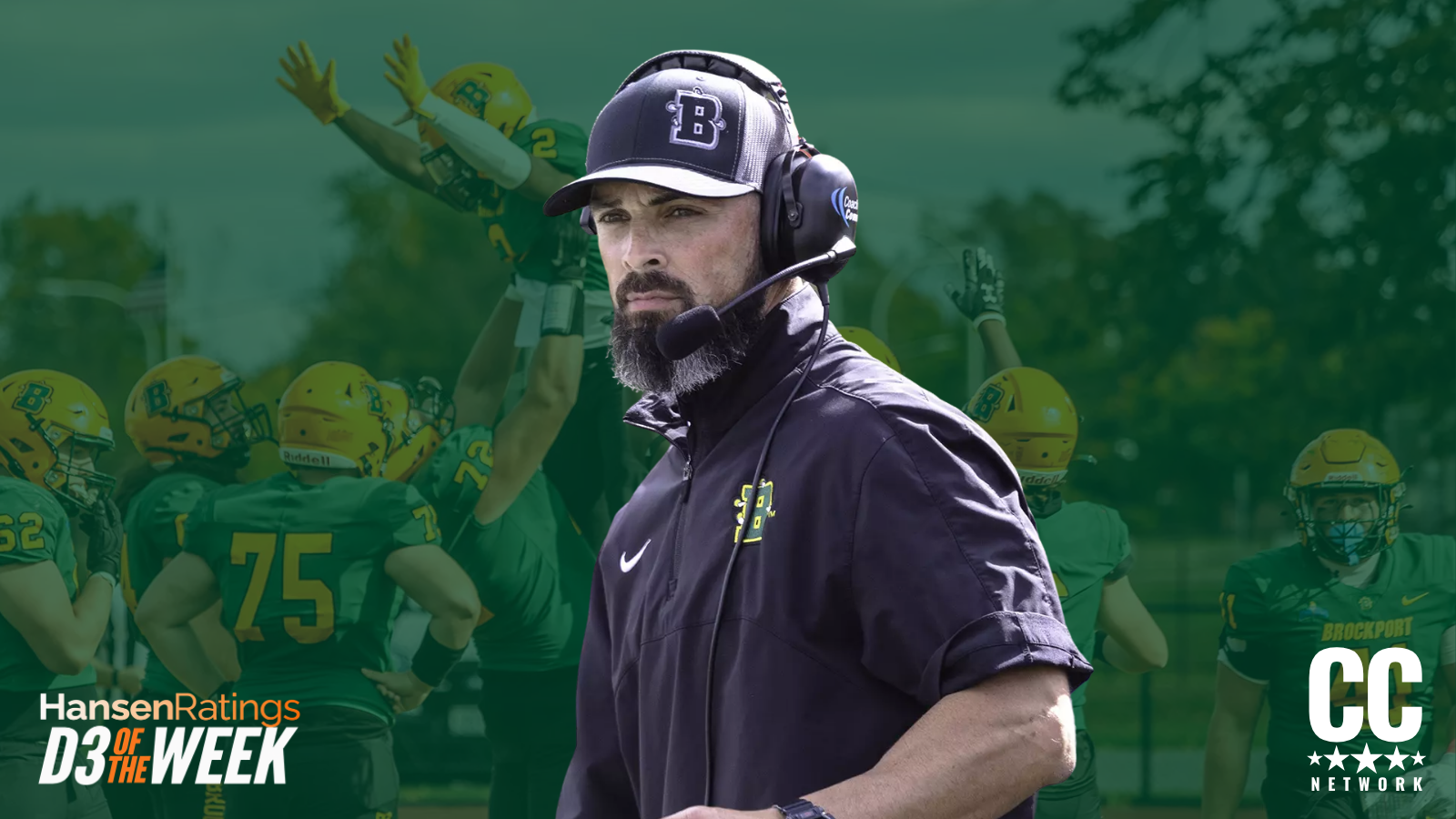
Jason Mangone judges a practice partly by which third downs it spends time on. If his offense is running a lot of third and ten, he figures it probably isn’t going to be a successful day. If it can’t convert third and one routinely, it probably isn’t going to play at the level he wants.
“Third and four to six to me is where games are won and lost,” said Mangone, the head coach at SUNY Brockport.
Practice time is limited, and Mangone has decided where a large share of his situational time goes. “In terms of a scenario where you have limited time every day, every week, how much prep can you put in game situation type stuff? I think third and four to six is one that you’ve got to spend a lot of time on.”
Ones against ones, even when it isn’t the opponent
Brockport runs its third-and-medium work with the ones against the ones, “even though it’s not necessarily what we’re going to see in that coming week,” Mangone said. The offense works its third-and-four-to-six plays. The defense works what it is going to do on third and four to six.
Each side has its own job in the period. For the offense, Mangone said, “we’ve got to get used to staying on the field as an offense and continuing that drive and letting our defense rest.” For the defense, the job is getting off the field.
Seven minutes on Wednesday, six plays
The period comes on Wednesday. Mangone calls it “a huge” ones-versus-ones period, and it lasts about seven minutes. The offense gets its best six third-and-four-to-six plays.
“Those six plays are our bread and butter,” he said.
Having six plays doesn’t mean calling them in order on game day. In a game, Mangone said, they may not come back to back because the hash or the scenario may be different. When Brockport has needed a seventh call, which Mangone said has happened, the answer doesn’t have to be a new play: “We may dial it up the same, just a little different motion or a different shift.”
That means the seventh call can be one of the six plays with a different motion or shift in front of it.
One main guy, and a second if needed
The teaching starts in meetings, before the period. Mangone goes over what the staff expects to see and how the opponent might adjust to Brockport. “Hey, here’s what they’ve shown. But based on what we do, they may do this. So we’ve got to be aware of this.”
On pass plays, the read gets narrowed to one or two players, and no more.
“I don’t think it’s fair to a young person to go, ‘Hey, listen, it’s a full progression read, but these are the four guys you’ve got to look at.’ Well, that’s never gonna happen. So here’s the main guy. And then if we’ve got to get to a second, this is it.”
The staff covers that with the quarterbacks, in position meetings, and on film before the players get to the field.
Get the sticks out
It’s easy to roll down a practice script without making the situation clear to the players. When Mangone was asked how his staff makes sure players know they’re working third and four to six, he pointed to what he called a minor point that is huge for Brockport.
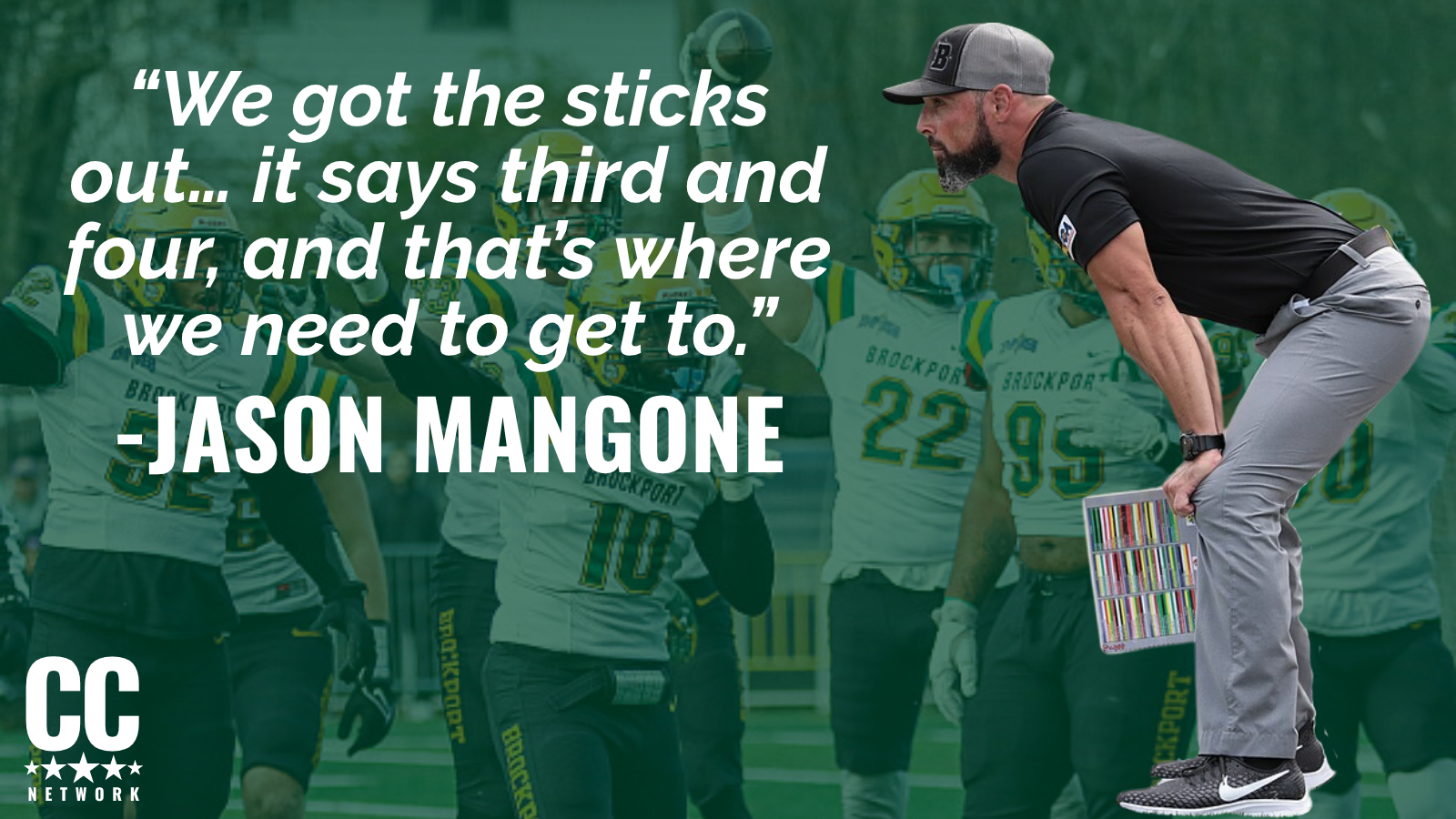
“We got the sticks out, right? We have the down markers. We got the stick. It says third and four, and that’s where we need to get to.”
With the chains on the field, every snap in the period has a real line to reach. The coaching after the rep is just as direct. The staff praises players when they get it and corrects them when they don’t. “We don’t try to demean anybody, obviously, but why did it not work? What do we have to do to stay on the field?”
Two conversions in a ten-play drive
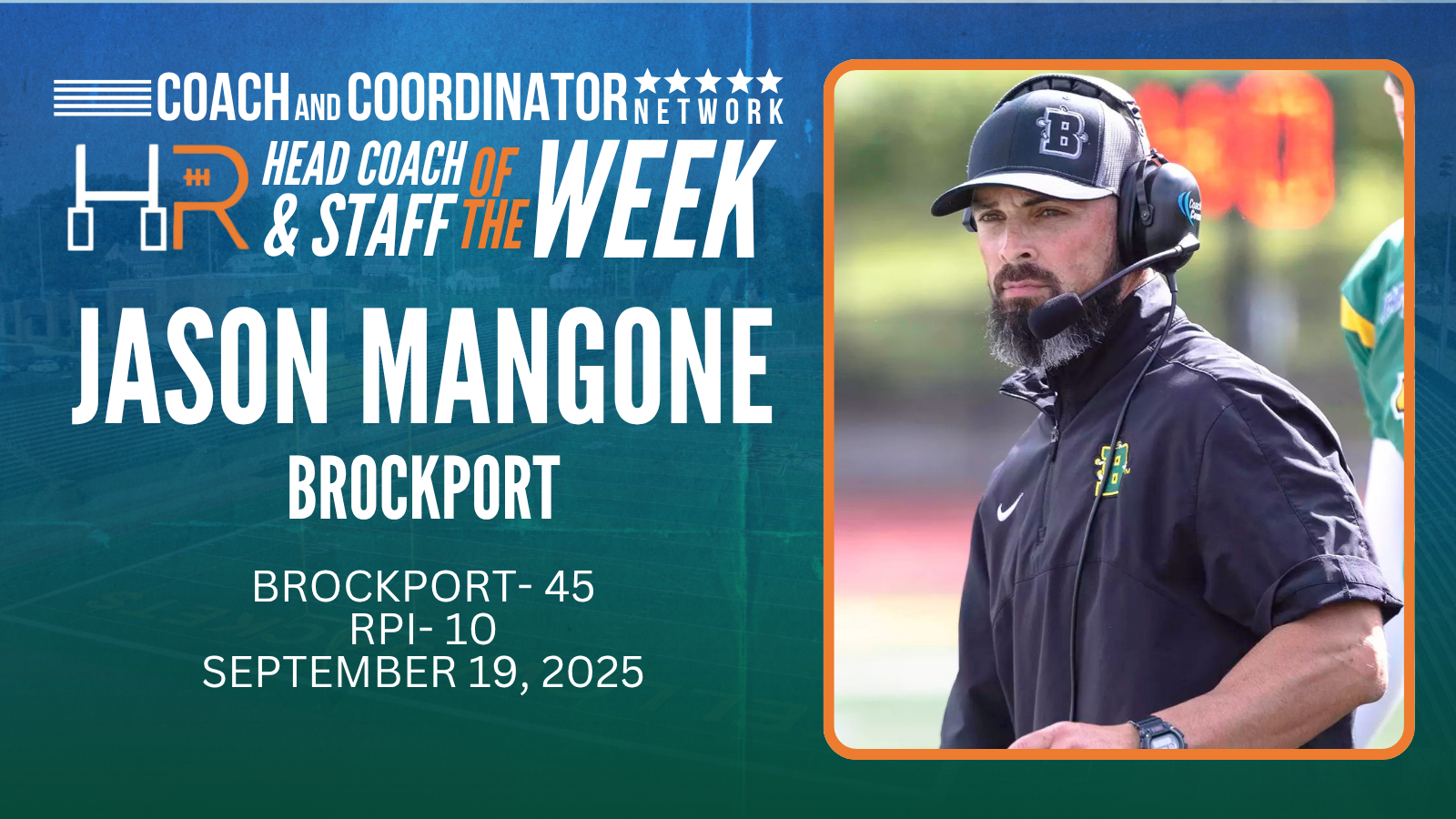
In Brockport’s 45-10 win over RPI, which earned Mangone and his staff Head Coach and Staff of the Week in the Hansen Ratings, Brockport converted 45 percent of its third downs and held RPI to 17 percent. Those figures cover every third down, not only third and four to six.
“If you’re going to go 10 plays, you’re going to have to convert probably two of those third and four to third and six,” Mangone said. “And that’s what we’re going to try to emphasize all of our time.”
About Jason Mangone
Jason Mangone is the head football coach at SUNY Brockport, where he has led the Golden Eagles since 2013. Under Mangone, Brockport has become a consistent postseason program, reaching postseason play in 10 of his first 12 seasons and making three consecutive NCAA Division III Championship appearances from 2017-19. Entering the 2026 season with 96 career wins, Mangone is approaching the 100-win milestone.
Mangone led Brockport to its most successful season in program history in 2017, guiding the Golden Eagles to a 13-1 record and an appearance in the NCAA Division III national semifinals. He was named the AFCA National and Regional Coach of the Year following that season and earned AFCA Regional Coach of the Year honors again in 2018. His staff was also named Empire 8 Coaching Staff of the Year three consecutive times from 2017-19 as Brockport captured three straight conference championships.
Throughout his tenure, Mangone has coached 175 All-Conference selections, 50 D3football.com All-Region selections, and 27 All-Americans. His teams have also continued their postseason success in recent years, including ECAC Bowl victories in 2024 and 2025.
Mangone played quarterback at Alfred before transferring to Brockport in 1997. He became Brockport’s starting quarterback in 1997 and 1998, earning Rookie of the Year honors in his first season and Offensive Player of the Year honors in 1998. He earned his bachelor’s degree in Physical Education from Brockport in 2000 and a master’s degree in Athletic Administration in 2012.
A native of Lancaster, New York, Mangone lives in Henrietta with his wife, Janine, and their sons, Brendan and Evan.
Related:
Connect on X:
Keith Grabowski: @CoachKGrabowski
Logan Hansen: @LogHanRatings
Jason Mangone: @coachmangone
Keith Grabowski (00:00.856)
Joining me now is the head coach of the week. staff earned that recognition as well. The head coach at SUNY, Brockport, Jason Mangone. Jason, great to have you back here on the podcast. It’s been a while.
Jason Mangone (00:13.588)
Yeah, it’s been it’s it’s fun to be back. It’s good to see you and and talk from some ball with you.
Keith Grabowski (00:19.128)
Jason, big win for you guys over RPI. When you look back at this week, what do you feel were some of the keys in your preparation to to be able to have a big win like this?
Jason Mangone (00:31.144)
Yeah, I think first and foremost the kids, you know, responded really well. Whenever you have a setback, you know, it’s always a thought in the back of your mind that how are the guys gonna come out, right? And I think our sport is is it’s different from everything else. you play once a week, you practice your heart out every single day in that anticipation of playing on on the weekend or whatever the game is, and you gotta sit on it.
Right. You know, there there’s some sports you play Friday night and you’re unsuccessful and well, guess what? We’re back Saturday morning, you know, and and you can put it behind you. We don’t have that opportunity. So it’s it’s the it’s what makes it so special and so different. And I our kids came out really, really hungry on Tuesday practice. And I think, you know, coach Steve Potter, our office coordinator, had a great way to say if we’re talking about that previous game on Tuesday, we’re wrong, you know, and and our kids didn’t.
moved on and and we’re able to just play well, right? And it’s it’s I I think there’s so many slogans and sayings and and ways to approach this game. And, you know, we didn’t talk necessarily about the outcome of of what we were hoping for. We just talked about the next five seconds. And and that for us was kind of what we hampered on all week.
Keith Grabowski (01:44.418)
Yeah, I I always loved, you know, getting back out on a practice field, right? Whether there was a win or a loss, you know, you you sit in the office for a couple of days doing the work you need to, sometimes, you know, commiserating on that last last opportunity, but that practice is the reset and you get to go get going again and and I love that, like focusing on the moment, right? Because kids, I mean you know kids.
kids today, I don’t think it matters whether it’s high school or the college level. You know, the last thing you want is them pressing because they’re still in their mind thinking about what happened last week. And I mean that’s that’s a recipe for disaster. You need to be hungry and ready to move forward.
Jason Mangone (02:31.121)
Yeah, yeah. And I think that was what what was so special about our our team and our kids. And, you know, I it’s funny ’cause not to sidetrack the the the question here, but like in our really, really successful runs, you know, we’re we’re in the national semifinal and people were like, What did you tell these guys? I’m like, I don’t know, not nothing. They’re it’s when you’re that good, oftentimes it’s because of the young men that are in the locker room and how they lead themselves. And, you know, once in a while you have to kind of kick in the butt a little bit, but at the end of the day
I think the guys that are that truly get the coach of the year awards are the ones that are the seven and four guys that overcame a million obstacles to get kids refocused throughout the year. Sometimes when it’s when it’s rolling, it’s it’s usually and I don’t wanna, you know, downplay the role of a coach, but it’s usually the young men that are in the locker room that are kind of keeping everybody together. And and I think that was a kind of a display we had last week. You know, there wasn’t much needed
to be said. It was just let’s come out and play well. And at the end of the day, I think sometimes you get caught up in focusing too much on who’s across the field and who’s across from you and not necessarily what you need to do, A, and then who you have around you, B. Right. Like, you know, our best years, oftentimes you don’t enjoy it until it’s over because you’re so caught up in it. And you’re like, you know, we were pretty darn good.
And we were pretty darn talented. And sometimes we forgot how talented, you know, guy A and Guy B were that made the unit come together. And and I think, you know, again, focus on us and and just get back to kind of trying not to lose the game. Cause in essence, you know, unbelievable respect for what Hobart is and what they are, and and they certainly beat us, and that’s, you know, case close, but we didn’t play well to give ourselves an opportunity to be successful. Can’t turn it over five times and
And beat a really well coached, talented team. so you know, we knew what we had to focus on and came out and and played hard.
Keith Grabowski (04:33.624)
Yeah, and and I I I don’t want to downplay the coaching either, because you guys did an excellent job one in rebounding this week, but in knowing you and your program and some of the coaches who have have been with you over the years, you do an excellent job of identifying the right guys, you know, to recruit and then you develop them and right and you you do want to get things to a spot where you can wind your team up and let go and it becomes player led. But that doesn’t just happen because they walked in the door. So you guys do an excellent job.
of developing and and you know before we get into some other ideas, I want to make sure that you you recognize those guys who are part of this with you.
Jason Mangone (05:11.857)
Yeah, I mean we’ve you know, I I tell people all the time and you know, I don’t know how who wants to listen to me, but i I don’t know if I can coach worth a lick, but I know how to hire people. if there’s anything that I can do well, and I hate to use the word I, it’s it’s just identifying people that are hungry, successful, determined, come to work and and not look at the clock and and at the end of the day be efficient with their time and everybody else’s and and we’ve got an in an unbelievable staff here and and the camaraderie we we
camaraderie, excuse me, we have amongst each other is is awesome. And everything that I say is just as good as somebody else saying it and vice versa, right? It doesn’t have to come from the head coach, right? I think the most overrated position in all sports is the head coach. It’s I value myself as much as the head coach as I did when I was an assistant coach and and I value the guys that are on the staff, right? We we oftentimes, what do you do? I’m a football coach. I don’t go around going, I’m the head football coach. I think it’s meaningless. So
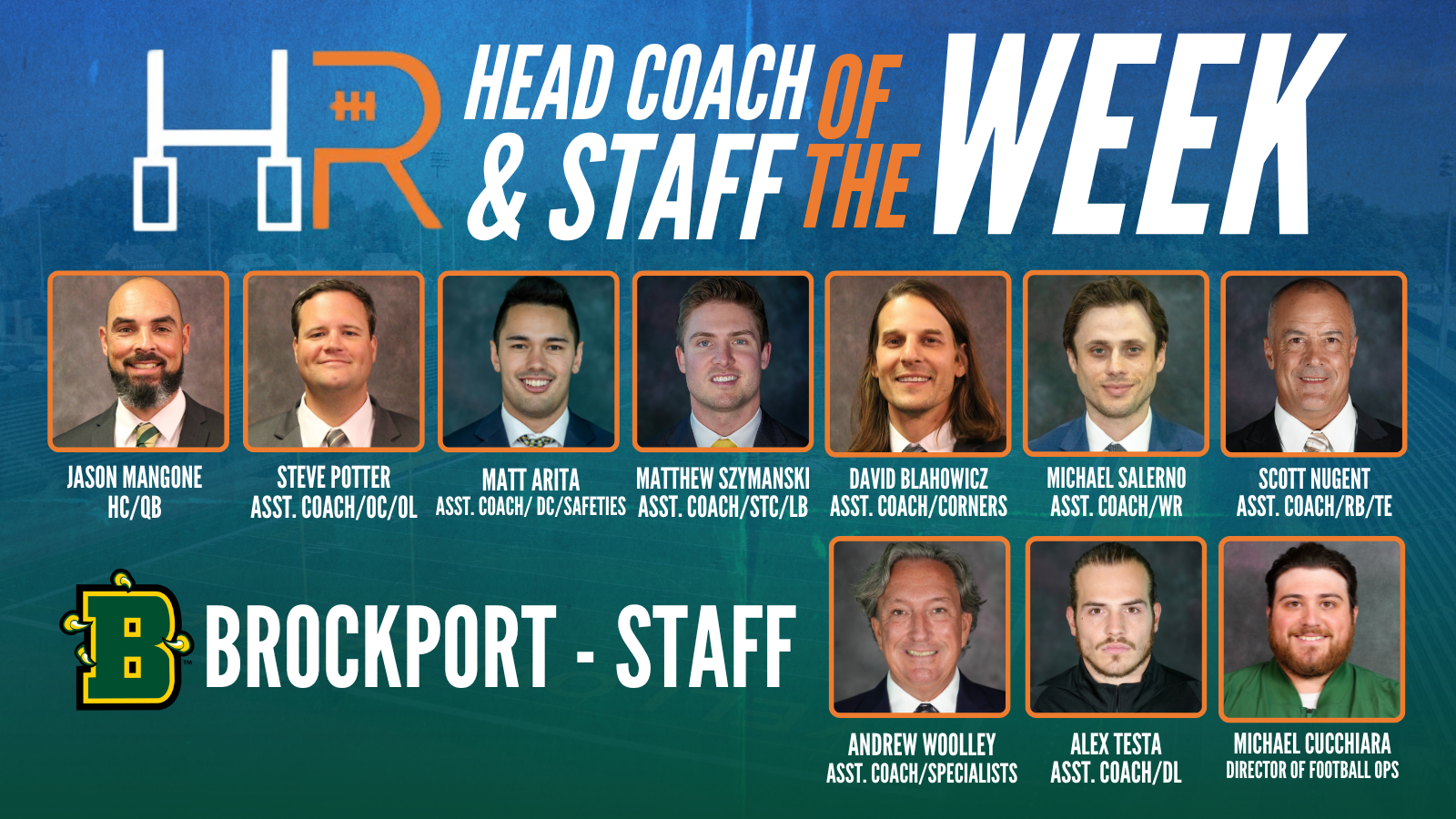
you know, we got a guy I mentioned him already, Steve Potter, who’s been with us since 13 and you know, admired what he did at a at a private univers or private prior excuse me university before we started playing. and he was unbelievable and has done a terrific job with us in in our O line and as a coordinator. and then, you know, Matt Arita was promoted this year as from our DBs to our defensive coordinator and has done a terrific job thus thus far in three games and
You know, it’s it’s awesome when you can hire guys that formerly played in your program, ’cause as I always tell them, he was on a four year interview, right? Like he every day did what he was supposed to, when he was supposed to, how he was supposed to. And there’s no one or four hour interview that can ever match what he did as a player on and off the field for four years. So it was a guy that we were blessed to get in our program as a coach and has climbed the ladder and now the defensive coordinator.
You know, Matt Simanski, former player, you know, a an a all region guy in our final four run and and coached with us, went on to Randolph Macon and did a phenomenal job with another phenomenal staff. Came back and is coordinating our special teams and and taking on the linebacker row. we rather get a guy, Matt, Mike Salerno, our receiver coach out of the West Coast. Oftentimes a guy from California not making his way, you know, to the East Coast and
Jason Mangone (07:30.408)
We haven’t been in the snow yet, so we’ll see how he handles that. But but he’s a guy that has done a great job with our receiving core and and and previously at Illinois College when they led the country in passing yards, right? So who better to to mentor your receivers than a guy that’s that’s done at a very high level? So you know, we got a bunch of guys. Obviously, Dave Blowitz came over here in in fourteen and a guy that I know for a very long time and working with our secondary. And is if you look at our statistics defensively over the years.
You know, we always preach we want to be a good program, not a good team, right? I think good teams come and go, programs stay forever. And if you look at our defense, it’s been sustainable year in and year out. And he’s a huge piece of that. So, you know, just a handful of many guys that have done a great job in our program and and and still leading our men in their individual position rooms and and collectively as a group.
Keith Grabowski (08:20.28)
Coach, before we got talking, you mentioned something that’s very important to you that you really build things around, really a focus for you, third down and four to six. Would love to just hear a little bit about that philosophy and then how you guys work that in practice.
Jason Mangone (08:33.767)
Yeah. So something that we, you know, it we we talk to the guys about, right? Like everything we think about, everything that we do is really translated to our kids. You know, there may be a scenario in a game that let’s just say fourth and two, right? We’ll throw it out to you. And I there’s you and and somebody else next to you, and I give a scenario and I give what I’m going to do. One of you may say careless, one of you may say aggressive, right? Everybody has different opinions on somebody’s kind of, I guess, action at that point. But
For us, we’re aggressive and we’re gonna tell our kids. So when there’s a decision in a game and you know, we may go for it. We went for it on fourth and one inside our 35 last week and had a 75 yard run down to the four yard line, right? Like we’re blessed that that happened, but I was willing to live with the result because it was calculated. So we’re gonna also translate that in situations throughout practice. Third and four to six to me is where games are won and lost. as I kind of mentioned off air with you before, if if we’re practicing a ton of third and tens,
probably not going to have a very success successful day. And and if we can’t convert third and one on a routinely basis, we’re probably not going to play to the level that we want to. So we need to get our ones versus our ones in practice. Even though it’s not necessarily what we’re going to see in that coming week, we’re going to work our third and four to third and six plays and our defense is going to work what they’re going to do on that third and four to six. And we’ve got to get used to staying on the field as an offense and continuing that drive and letting our defense rest. And then obviously
Getting off the field as a defense. So on Wednesday, we’re going to have a huge 1v1 period that’s going to last about seven minutes and we’re going to get our best six, third-and-four to third-and-six plays. And so when we call them in a game, they may not be in secession because the hash may be different or the scenario. But at the end of the day, those six plays are our bread and butter. and then if we need to come back to a seventh, which we very well have happened before.
you know, we may dial it up the same, just a little different motion or a different shift. So I think that’s it just in in terms of a scenario where you have limited time every day, every week, how much prep can you put in game situation type stuff? I think third and four to six is one that you’ve got to spend a lot of time on.
Keith Grabowski (10:49.156)
as coaches, sometimes I mean I’m guilty of it too, is is we’ll roll down our script and maybe not emphasize enough what the situation is. What do you guys d do to emphasize the that hey this is this is third and four to six that we’re working right here. Here’s the things that we’re doing so you know, they know what’s coming as well.
Jason Mangone (11:07.399)
Yeah. Well, the first thing we do in our meetings is is I obviously go over what we anticipate seeing and then basically what we anticipate the adjust will be. Right. So hey, here’s what they’ve shown. But based on what we do, they may do this. So we’ve got to be aware of this. And then kind of key in if it’s a pass play to one or two guys, right? No more than that. I don’t think it’s fair to a young person to go, Hey, listen, it’s a full progression read, but these are the four guys you’ve got to look at. Well, that’s that’s never gonna happen. So
Here’s the main guy. And then if we’ve got to get to a second, this is it. and then we kind of go through those things in meetings with quarterbacks in our position meetings on film. And then we get to the practice field. And and the one thing that maybe is a minor point, but it’s huge for us, we got the sticks out, right? We have the down markers. We got the stick. It says third and four, and that’s where we need to get to, right? And and the emphasis of making sure we are praising them when we get it and then correcting when we don’t, right? We don’t try to demean anybody, obviously, but why did it not work?
What do we have to do to stay on the field and just constantly emphasize the importance of if you’re going to go 10 plays, you’re going to have to convert probably two of those third and four to third and six. And that’s what we’re going to try to emphasize all of our time.
Keith Grabowski (12:21.902)
Coach, you guys did an outstanding job here this week. we’ll have to get you back on the show when we have more time to talk. But I appreciate you taking the time during a game week, sharing some thoughts with us, and best of luck to you and Brockport here the rest of the way.
Jason Mangone (12:36.019)
Appreciate you recognizing us. Thank you very much.