

If your team is stuck around a .500 record, lacks a clear identity, and struggles to compete, adding more plays won’t help. What you need is a system. Turning a high school football program around isn’t about trick plays or new strategies. It’s about setting standards, building a strong culture, and creating belief that can turn an average team into a contender.
Many coaches look for the next answer. But real, lasting success comes from a consistent approach that develops players, brings the staff together, and builds a program athletes want to be part of.
Build Culture Before Scheme
First, every successful turnaround begins with culture. Coaches often install offense and defense immediately, yet the best programs focus on standards first.
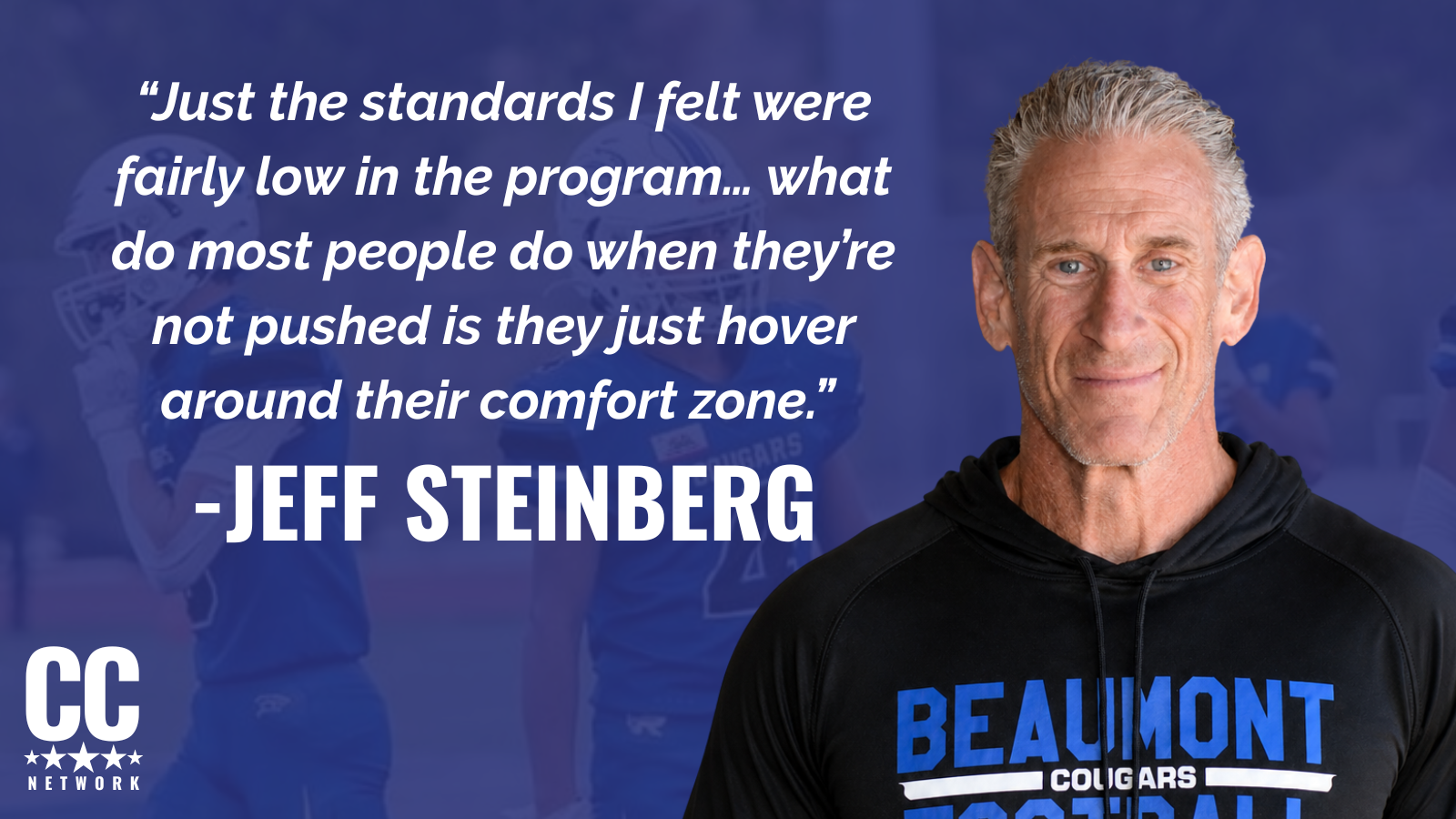
Coach Jeff Steinberg described the reality of struggling programs:
“Just the standards I felt were fairly low in the program… what do most people do when they’re not pushed is they just hover around their comfort zone.” (02:05)
It starts with raising expectations. When coaches demand more on the field, in the classroom, and through daily habits, players begin to respond.
Players rarely rise above unclear standards, but they will meet the ones that are set and reinforced every day.
That is where real program growth begins.
Build the Players You Have
Great coaches stop comparing their roster to others and start maximizing what they have. Early in his career, Steinberg made the same mistake many coaches make by focusing on opponents’ talent.
Eventually, he shifted his mindset:
“We got to stop this… let’s focus on the kids that we have.” (10:46)
That shift led to real progress. Instead of hoping for better players, his staff focused on developing the ones they had, recruiting from within the school, and building confidence in the program.
That helped the program improve because the focus moved from what they lacked to what they had and could build on.
Strengthen Staff Alignment and Trust
Players are important, but a united coaching staff often makes the biggest difference. When coaches are aligned, the message becomes clearer, the standards become stronger, and players know exactly what is expected.
Steinberg emphasized three essentials for the coaching staff:
- Passion for coaching athletes
- Loyalty to the program vision
- Commitment to improvement
With staff alignment, practices became more efficient and purposeful. Coaches spent less time managing confusion and more time developing players.
Without staff stability, it is hard for a program to build a clear identity.
Use Competition to Drive Daily Improvement
Successful programs create daily competition, especially in the offseason. High school athletes can struggle to stay motivated for a season that is months away. Coaches have to make progress feel real, visible, and immediate.
One of Steinberg’s most effective tools was offseason squad competition. This system builds accountability, encourages leadership, creates team chemistry, and provides daily motivation.
That keeps players engaged and invested long before Week 1.
Set the Standard in the Classroom
Academic accountability also set the tone for the entire program. When Steinberg took over at A.B. Miller, many players were academically ineligible.
Steinberg immediately made academics non-negotiable. He implemented a study hall, held players accountable, and communicated consistently with parents.
With these changes, players began to understand that standards applied everywhere, not just on the field.
Sell Players a Bigger Vision
Just as important, great coaches help players believe in themselves. Players are often held back due to past results or their environment, but coaches can help change that way of thinking.
Steinberg explained:
“I want to see things in him that he may not see in himself… and sell that vision.” (25:35)
When players begin to believe in their own potential, the performance follows. Confidence becomes a competitive advantage.
Build a Program the Community Supports
Strong programs reach beyond the football team. Friday night should feel like a community event, not just a football game.
When coaches involve the band, cheerleaders, students, and families, the program grows into something the whole community can support.
That pride brings more energy to the stadium, more support for the players, and more momentum for the program.
Embrace the Climb, Not Just the Destination
Finally, the turnaround formula for high school football requires patience. Progress often comes in stages, not instant championships.
Steinberg’s move from lower divisions to the top levels is a clear example. Even when the scoreboard didn’t always show it, the team was still growing.
Steinberg reminded his players:
“Look at what we’ve done… from division 11 to division 2… this is terrific.” (49:12)
In a program turnaround success must be measured by development, not just wins.
Make Your Program the Standard
A high school football turnaround comes down to standards, development, and consistency.
Do not wait for better players or better circumstances. Build the program where you are.
From Conversation to Application: The Turnaround Companion AI

This episode, along with the rest of The Turnaround series, now drives the Coach & Coordinator AI – Turnaround Companion. The platform functions as an applied learning tool built only from:
When coaches launch the AI, it begins by asking about their role, level, situation, and constraints. From there, it customizes every response to fit their individual context.
The Turnaround Companion is an applied-learning tool built exclusively from:
- Turnaround Series transcripts
- Learning files and frameworks
- Patterns and principles shared by the coaches above
It does not use outside theories or generic advice.
Instead, it helps coaches:
- Diagnose where their program truly is in the turnaround process
- Identify their biggest barriers (culture, buy-in, staff, scheme, practice structure)
- Apply Turnaround principles directly to their level, roster, and constraints
- Build clear weekly and 90-day action plans
When you open the AI, it asks a few questions about your role, level, situation, and constraints, then tailors every response to your context.
Related:
Why “Grind Culture” Is Hurting Coaches and Teams — And How to Break Free
Feed the Cats – Develop Team Speed
Related:
The Turnaround: Lessons From Steve Pyne on Rebuilding Programs the Right Way
Steve Pyne’s Formula for a Football Program Turnaround