
You’re standing on the sideline, call sheet in hand, as the offense breaks the huddle on a critical 1st-and-10.
You’ve studied them all week. You know their tendencies cold.
Yet as you scan your sheet — full of well-organized fronts, coverages, pressures, and checks — you still find yourself searching for the perfect call in the moment.
For years, Jordan Irsik built call sheets the traditional way when he was calling offense: grouping schemes by formation, stacking options by down and distance, and relying on experience and feel to make the right choice under pressure.
It worked.
But after moving back to the defensive side of the ball, he realized there’s a better way—one that creates a clearer battle rhythm and helps the defense stay aggressive rather than reactive.
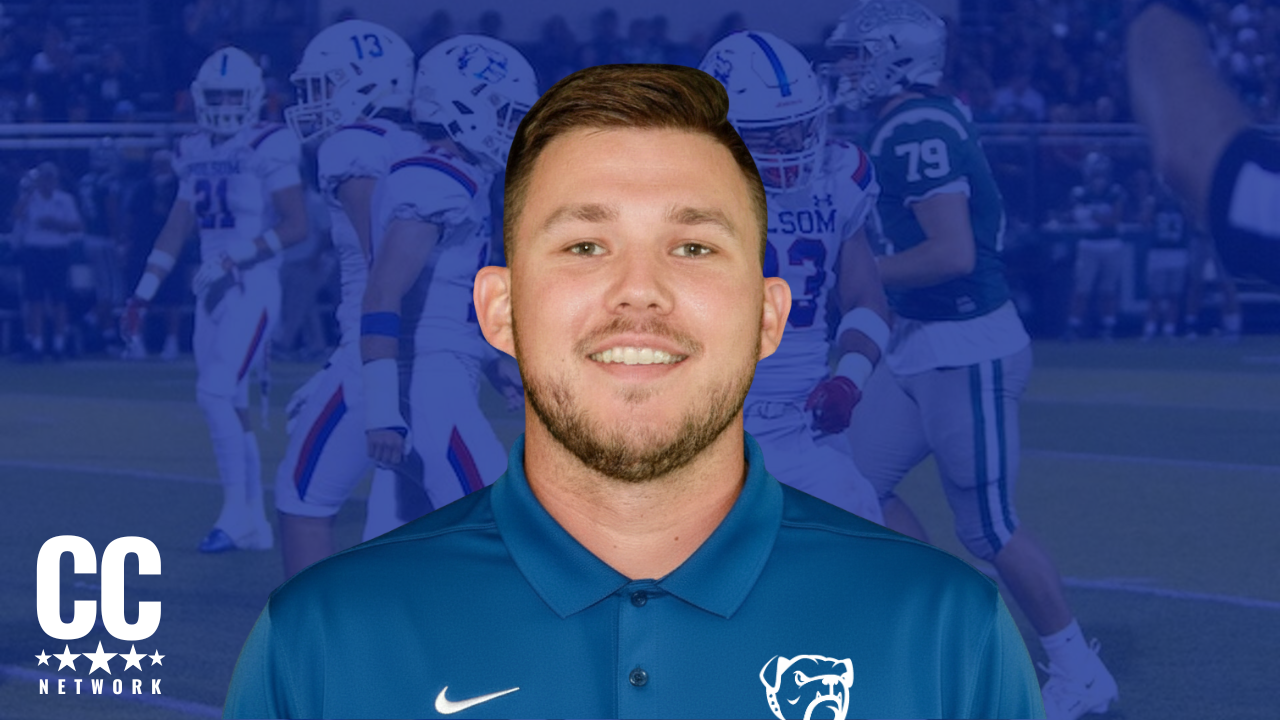
Jordan Irsik, now defensive coordinator at Folsom High School and a key part of their 2025 California state championship team, uses a disciplined system built around three simple categories for every key situation: Set, Stress, and Break.
This approach turns your call sheet into a structured, progressive plan that keeps your unit one step ahead of the offense. When supported by real-time efficiency tracking, it gives you confidence and clarity throughout the game.
Why the Traditional Approach Can Be Improved
Traditional call sheets provide a comprehensive menu of options. That feels thorough and safe.
In the heat of a Friday night, however, that same thoroughness can create two real challenges:
- Too many choices at once. On 1st-and-10 with 11 personnel, you’re scanning multiple pages trying to land on the exact call you liked in film.
- No clear progression. When the offense adjusts to your first call, you’re left hunting for the next answer without a defined trigger for when and how to switch.
The Set-Stress-Break system fixes both problems by giving every major situation a simple three-pitch arsenal — just like a smart pitcher on the mound.
- Set — Your best, most trusted call in that personnel and down/distance bucket.
- Stress — A complementary adjustment that changes the picture while staying inside your defensive DNA.
- Break — The reset pitch you save for when the offense has solved the first two looks.
Each bucket on the call sheet gets exactly these three calls. The sheet stays clean. Adjustments feel natural. Kids play faster.
Building the System During the Week
Saturday data entry
Coaches divide the opponent’s traded film into columns. Everyone contributes. Irsik handles the language layer, so players instantly recognize familiar schemes.
Sunday game plan meeting
The staff runs through a focused checklist and builds the Set call first, then layers in Stress and Break calls.
Every new wrinkle is vetted against what Jordan Irsik calls their “Big Six” — formational components: how do we handle motion in this call? How do we handle FIB? What’s the adjustment to empty? How do we handle ‘condensed’ and ‘et cetera’?
Here’s exactly what the Big Six Test looks like at Folsom:
THE BIG SIX TEST
Every new call or wrinkle at Folsom must pass this test before it makes the call sheet.
“We always put everything through a Big Six test… is it sound versus every formation and motion they could do? If it checks out and fits within their 3–5 post-snap techniques, we’re doing it. If it doesn’t, it’s cut.” — Jordan Irsik, Defensive Coordinator, Folsom High School (2025 State Champions)
The Six Formational Families
- Base (2×2 + TE attached) — Simplest alignment, the starting point.
- FIB (Formation Into Boundary) — Strength shifted to the boundary.
- Y-Trade / Slot Motion — Motion across the formation or Y-trade adjustments.
- Trips Open — Three receivers to one side, open side.
- Empty — Five wide, no back in the backfield.
- Condensed — Bunch or clustered sets (often the hardest to defend).
Why the Test is Important
- Keeps every call inside the players’ existing 3–5 technique wheelhouse.
- Guarantees the defense looks the same pre-snap, but can handle anything post-snap.
- Creates carry-over from spring ball through the state championship game.
- Turns “simple but looks complicated” into reality.
New wrinkles are built only from techniques the kids already own (their 3–5 non-negotiable post-snap rules). No defender is ever asked to learn something brand new just for one week.
Practice scripting and installation
Scripts use precise situational tags. Players get the call sheet on Monday and Thursday so they can visualize while watching film at home. By Thursday’s walk-through, the entire unit is already practicing the progression.
Modern Football makes the self-scout piece effortless. Last week’s efficiency numbers on fire zones versus outside zone or gap schemes are available instantly.
Game Day Execution: Data as Your Silent Partner
“We always call it set, stress, break… once it’s over 40% efficiency, that call is now stressed.” — Jordan Irsik, Defensive Coordinator, Folsom High School (2025 State Champions)
On Friday night, the call sheet comes alive with real-time feedback.
- Stay on the Set call as long as the offense stays below your threshold (Irsik uses 40% success rate).
- When it crosses the line, shift to the Stress call.
- If both Set and Stress get solved, hit the Break call.
At halftime, the staff pulls the reports. In seconds, you can see if the opponent’s tendencies have flipped. In the 2025 NorCal Championship, Folsom used those halftime numbers to commit to a coverage family that shut out Archbishop Riordan in the second half and won 42-38.
The same live data tracks your unit goals in real time — one negative play per drive, 10+ offensive possessions for your team, etc.
Handling Explosives Without Panic
One explosive rarely forces a full change. Most trace back to a single technical bust. Multiple explosives or a clear efficiency shift? Then you accelerate to Stress or Break. The system keeps emotions in check.
Trusting Preparation + Data
This isn’t about replacing your football instincts — it’s about sharpening them. You still read eyes, backfield sets, and quarterback tells. The numbers give your gut real-time validation.
Make Your Call Sheet Work for You
The Set-Stress-Break system offers a cleaner, more repeatable way to call games. It builds on the solid foundation many of us already use and makes it even more effective under pressure.
Jordan Irsik and the Folsom staff refined it through championship competition. The framework is straightforward enough for any program, yet deep enough to handle the best offenses.
Here’s where the Set-Stress-Break system becomes truly unstoppable — on game day.
When Modern Football’s live efficiency numbers are feeding you in real time, you instantly know the exact moment your Set call is compromised (40% success rate and climbing), when to shift confidently to Stress, and when to unleash the Break call to reset the drive.
The same real-time reports that helped Folsom turn a tough first half into a second-half shutout and win the 2025 state championship can do the same for your program.
Want to see the actual call sheet layout, the full Sunday checklist, and exactly how the live data powers Set-Stress-Break decisions in real time?
Book a quick, no-pressure demo with Modern Football at modernfootball.com/demo.
Your defense deserves to dictate terms instead of reacting. The Set-Stress-Break system — powered by real-time efficiency — is a proven way to make that happen.
Related
Chart. Adjust. Win: Building a Defensive Workflow for In-Game Success- Jordan Irsik
Maximizing In-Game Analytics for Smarter Coaching- Jordan Irsik, DC, Folsom HS (CA)
A Modern Approach to Play Calling – Jordan Irsik, Defensive Coordinator, Folsom High School (CA)
How to Build a Defensive Call Sheet for Game Day
Inside a State Champion Defense: How Folsom’s DC Preps, Adjusts, and Stays One Step Ahead