
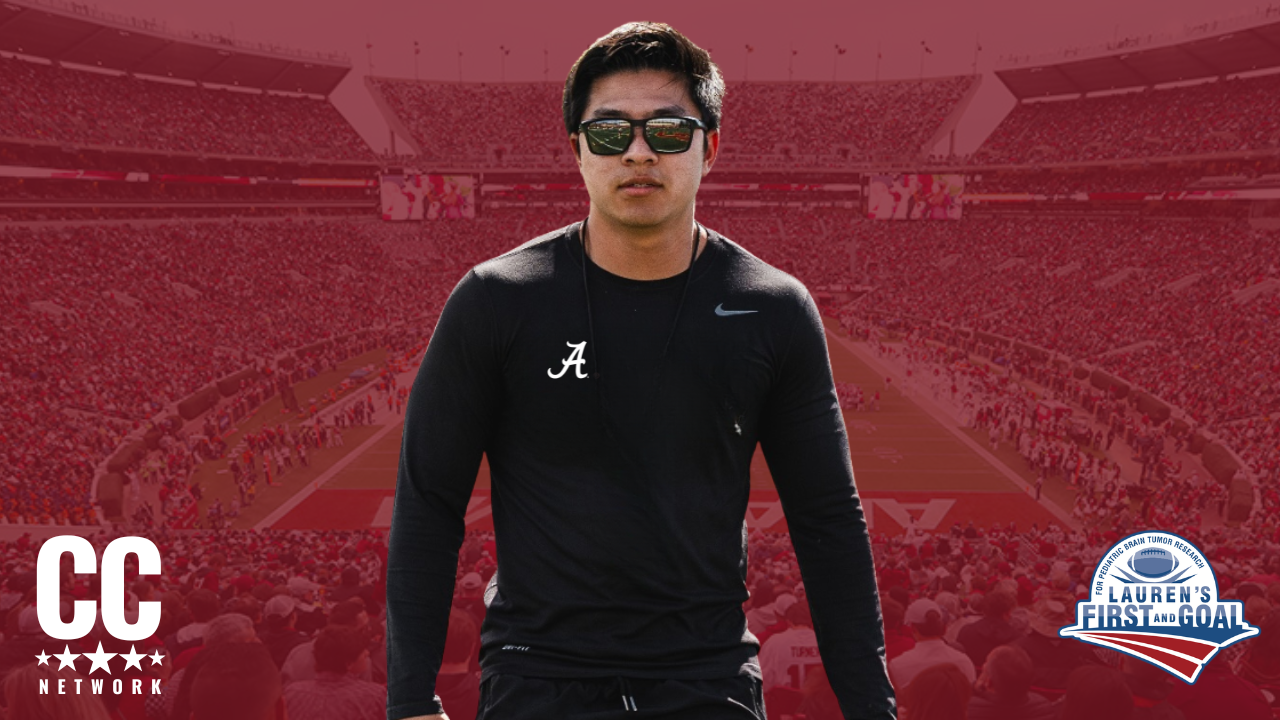
How Brad Aoki teaches situational control when the game speeds up
Two-minute football exposes everything.
It tests how well a quarterback understands the situation, how quickly he can process information, and how cleanly the offense can operate under pressure. When the clock is moving, the crowd is loud, and every decision carries more weight. Of course, talent still matters, but situation awareness matters more.
That is the foundation of Brad Aoki’s lesson on situational football for quarterbacks and thriving in the two-minute drill.
Now Alabama’s analyst/passing game specialist, Aoki, lays out a clear point right away. In two-minute football, the situation is greater than all else. In that moment, the quarterback has to understand the situation before anything else, including the play call, the personnel, or the defensive look.
Before the ball is snapped, the quarterback has to know exactly what the moment requires.
Start with the situation, not the scheme.
Aoki teaches quarterbacks to answer the same core questions on every play in a two-minute situation.
Is it the end of the first half or the end of the game?
How much time is left?
What is the score?
Do we need a field goal or a touchdown?
How many timeouts does each team have?
Those answers shape every decision that follows. Aggression level, risk tolerance, and the tempo change. Even what the defense is likely to do can change based on the timeout count and the score.
One coaching point that stands out is Aoki’s mindset at the end of the first half. He teaches a touchdown-only mentality. The reason is simple. A field goal leaves points on the board. The difference between three and seven is a four-point swing, and in a short-field or short-clock situation. He wants quarterbacks thinking aggressively, not passively.
“End of half two-minute situations are a touchdown-only mindset.” -Brad Aoki.
One explosive can change the whole drive.
Aoki backs up his teaching with data.
Using fourth-quarter FBS two-minute drive data, he found that the average scoring percentage in a two-minute situation is 32 percent. Roughly one out of every three drives ends in points. But if the offense gets an explosive gain of 20 or more yards during that drive, the chance of scoring jumps dramatically. On the other hand, if the offense takes a sack, the scoring percentage drops sharply.
The numbers make the lesson hard to miss. Explosive plays give the drive life. Sacks put it behind schedule.
Those two ideas should shape the quarterback’s play in two-minute situations. Explosives flip field position, shorten the drive, and create urgency for the defense. Sacks do the opposite. They drain time, create longer-yardage situations, and force the offense to spend snaps recovering instead of attacking.
For coaches, that means two-minute teaching cannot just be about “going fast.” It has to be about fast decisions that protect the drive. The quarterback does not need to force every throw down the field, but he must understand that negative plays are costly and chunk gains are drive-changers.
Expect the rush early.
Aoki also gives quarterbacks a realistic picture of what two-minute football feels like.
In addition to crowd noise and pressure, there will usually be a dropback pass mentality, which means defenses are more willing to pin their ears back and rush the passer. Early in the series, that rush is often at its strongest. But as the drive goes on and the offense plays with tempo, the defense can wear down.
That changes how the quarterback has to operate. Early in the drive, the rush may force the ball out of the quarterback’s hand faster. As the series goes on, tempo can wear the defense down and create a little more time in the pocket.
The quarterback has to own the clock.
One of the best parts of Aoki’s lesson is how much emphasis he puts on clock operation.
Quarterbacks need to know what stops the clock, but, just as importantly, when the clock starts again. That second part often determines how urgently the offense has to line up, get set, and snap the ball.
If the clock starts on the snap, the quarterback has more freedom before the play. He can be deliberate and work through identification. The offense can motion, communicate, and operate with more control.
If the clock starts on the referee’s signal, everything tightens. The offense has to move. Skill players must get lined up quickly, and everyone must get set. The quarterback has to know there is no time for wasted movement, extra communication, or late adjustments.
The quarterback cannot learn the situation in real time. He has to step into it already knowing how the clock works.
Avoid the mistakes that steal time.
Aoki also points to one of the most damaging parts of late-game offense: controllable errors.
Pre-snap penalties, illegal formations, illegal procedures, and intentional grounding can wreck a two-minute drive. Under one minute, those mistakes can also bring a 10-second runoff, which is devastating in a situation where every second matters.
His point is important for quarterback coaches. The quarterback is not only responsible for throws and reads. He is responsible for the operation.
Are enough players on the line of scrimmage?
Is everyone set?
Is the formation legal?
If pressure shows up, can he avoid the grounding mistake that costs both yardage and time?
Those are winning details. They are not flashy, but they decide drives.
Two-minute does not change coverage rules.
One of Aoki’s more useful teaching points is that two-minute defense is not as exotic as many people assume.
Based on data from USC’s analytics department, the coverage picture in two-minute situations looked a lot like it does in the open field. There was a slight uptick in Cover 2 man, but not enough to change how the quarterback identifies coverage. The teaching stays the same. The quarterback is using the same identification tools, just with more urgency.
A simple coverage identification process
Aoki teaches quarterbacks to start inside and work out and back.
That means beginning with the box count and front structure. Are there muggers? Is there a protection issue? Does anything need to be adjusted up front?
From there, move to the overhangs. Where is the nickel aligned? Is he apexed, outside, or inside? What does that say about zone, man, or possible edge pressure?
Then get to the safety shell. Is the middle of the field open or closed? Where is the boundary safety? What is the depth, width, and demeanor of the safeties?
Finally, take a last look at the corners. Are they pressed or off? What are their eyes telling you? Is there leverage you can attack? Is there a one-on-one matchup worth taking?
It is a clean progression, and it gives the quarterback a repeatable way to process information before the snap. Under pressure, repeatable process wins.
The lesson for coaches
What makes this lesson useful is that Aoki never treats two-minute football like chaos. He treats it like a teachable situation.
That is the real takeaway.
Quarterbacks do not stay poised in two-minute situations by chance. They get there through training. Good coaching helps them connect the situation, the clock, the defense, and the decision before the pressure hits.
If you coach quarterbacks, that is the standard. Go beyond the play call and train the full moment. Your quarterback has to understand time, score, timeouts, coverage, and risk, along with how one explosive play can change a drive and one sack can end it. The operation is not separate from quarterback play. It is part of the job.
Because in the biggest moments, the quarterback who understands the situation gives the offense its best chance.
About Brad Aoki
Brad Aoki is the passing game specialist at the University of Alabama football, where he works with the quarterback position and contributes to the development of the offense.
Before arriving at Alabama, Aoki spent two seasons at the University of Southern California football as a quality control analyst working closely with the quarterbacks. He also served as a graduate assistant on the Colorado State University football team, where he worked with the receivers.
Aoki began his career as a player at USC, where he was a walk-on quarterback and wide receiver before transitioning into coaching. His background on both sides of the ball and his experience working in high-level offensive systems have shaped his approach to quarterback development, situational football, and decision-making under pressure.
Watch the Full Lesson
Most quarterbacks do not fail in two-minute because they lack arm talent. They fail because the moment speeds them up, clouds their judgment, and exposes what they do not fully understand.
Brad Aoki’s free lesson breaks down how to fix that.
Watch the full video on YouTube to learn how quarterbacks can take control of late-half and late-game situations with better awareness, cleaner decision making, and stronger operation. Then keep learning year-round at LFGClinic.com.
Inside the full lesson:
- The questions every quarterback has to answer before the snap.
- Why should the end-of-half two-minute rule be a touchdown-first mindset
- The stat that shows how one explosive can change the whole drive
- Why are sacks drive killers in two-minute situations
- What quarterbacks have to know about clock stoppage and restart
- How pressure changes from the start of a drive to the end
- The coverage identification process, Aoki teaches from the box out.
- The avoidable mistakes that waste time and kill scoring chances
- How to train quarterbacks to stay clear, fast, and under control when the game is on the line
Watch the free lesson on YouTube. Then go deeper at LFGClinic.com.
Related
Jimmy Robertson on Quarterback Development
Seeing the Game Beyond Film – Doug Brady, Founder of American Football IQ
Accelerate Everything – Davis Webb, Quarterbacks Coach, Denver Broncos