
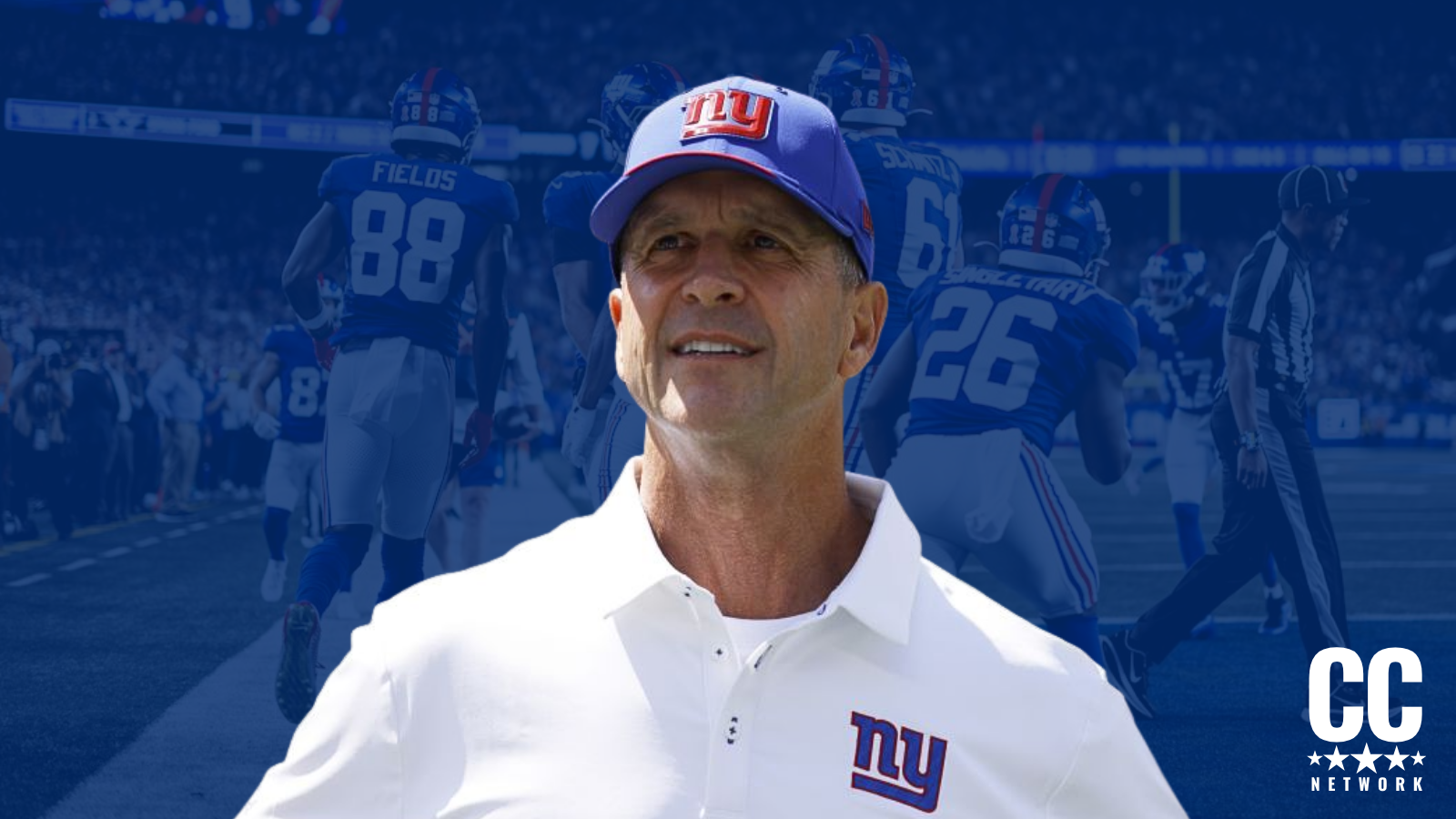
Ask John Harbaugh what he does for a living and he will not say he calls plays.
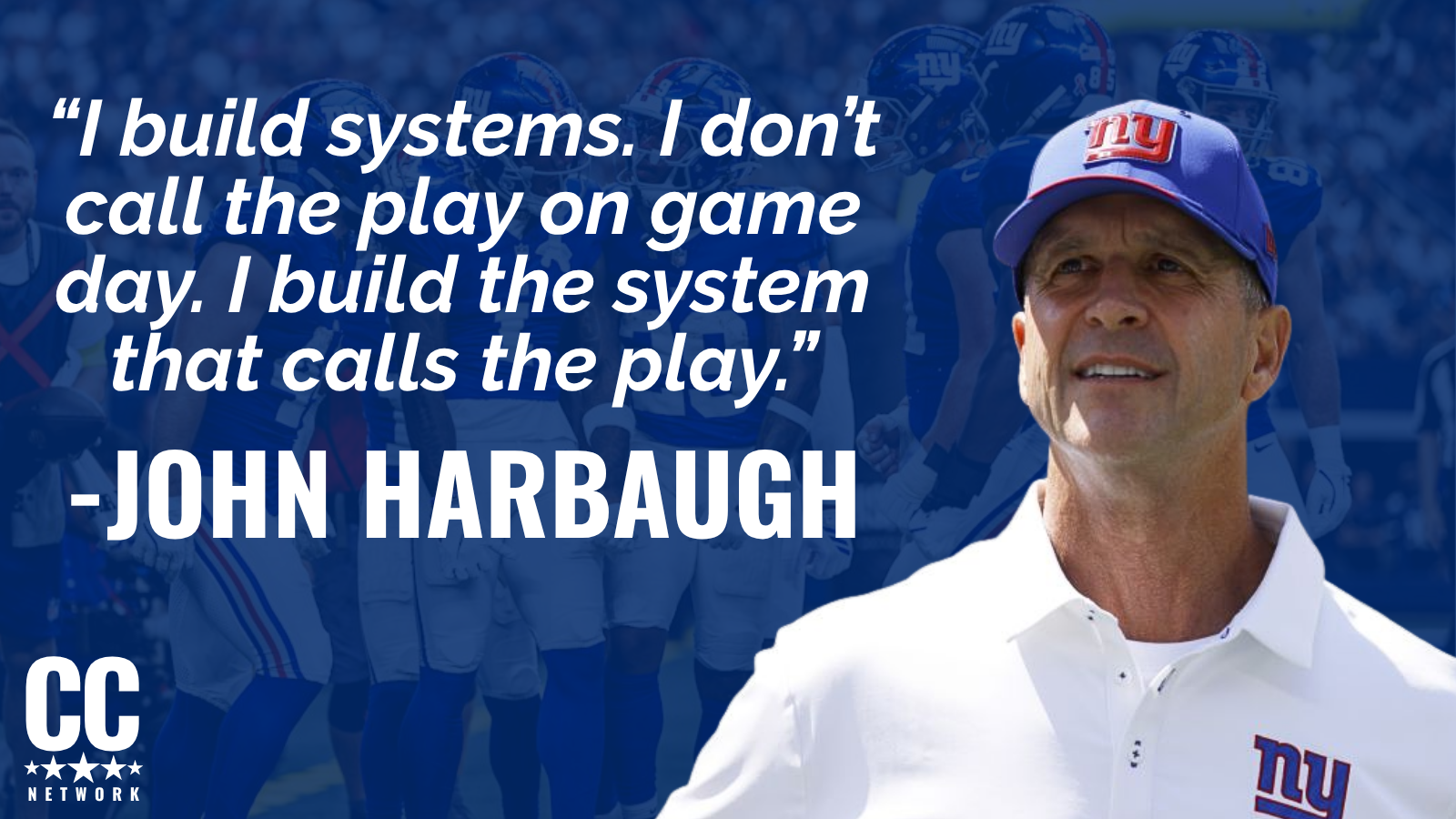
“People will say, what do you do? It’s like, well, you know what I do? I build systems. I don’t call the play on game day. I build the system that calls the play.”
That line came in answer to a question about what a perfect day looks like for a coaching staff, and it reframes the job. The play call is the visible part. What Harbaugh is describing is everything that has to be in place before a call can be made well, by whoever is making it. Harbaugh is not saying the system makes the decision by itself. He is describing the structure built around the play caller so the decision can be made simply in real time. He calls the goal of that work “elegant simplicity,” and the rest of the conversation is a walk through how he thinks about building it.
The phone in his hand
Harbaugh’s illustration for elegant simplicity was the phone he was holding while he talked.
“It took quite a system to get to the moon, probably. But this phone right here, that’s even more than what the system that got us to the moon. This thing is unbelievable, man. All it can do, all it can operate, what you’re capable of doing with it. And even I can figure out most of it. So if I touch it, swipe it, move it, pound it, click it, I can make it do a lot of incredible things very simply.”
The point is the contrast between the inside and the outside. “What’s happening inside of that phone to make those things happen is part of the system that was created. It’s very, very elegant. It answers a lot of questions, a lot of problems, a lot of science and technology, there’s a lot of thoughtful thinking in there so that it can be operated simply.”
Then the translation to football: “In our football systems, we call that building through elegant simplicity. We want to build something that’s really well built so that it can be operated very simply in real time in the game. We’re always chasing that.”
Notice where the complexity lives in that definition. It is not removed. It is absorbed by the people building the system so the people operating it do not have to carry all of that complexity in real time. “So that when we present it to our players, it’s really easy to teach and it’s really easy to understand so that they can go out there and they can operate it, execute at the highest level.”
Coaches are the problem, and the opportunity
Harbaugh opened his answer with a line that sets the tone for all of this. “Coaches are the probably the biggest problem. I mean the biggest impediment, or maybe the biggest opportunity too.”
His reasoning is competitive. “If you find a way to do things really well, then what an advantage it is to do it better than the guy who’s coaching the team you’re going against, if you can.”
The questions he asks of a staff are all about what the coaches set up rather than what they do on Sunday. “Are you setting the stage? Are you creating the opportunity for the perfect play? Are you creating the opportunity for the players to play their very best? Are you creating advantages for them in your game planning?”
Read next to the phone example, the pattern is clear. Harbaugh treats coaching as design work. The staff’s job is to build something the players can operate, and if the system is not well built, the coaches can become the impediment before the players ever get a chance to execute it.
The filter: what do you choose to draw?
The obvious problem with any system is what to leave out. Host Keith Grabowski put it in terms most coaches will recognize. Coaches used to learn the game from a few videos, a book, and a staff visit. Now, as he said, “you could get every playbook, you could get every piece of film,” and thousands of hours of clinics have come out since the pandemic. “If we put everything in our playbook, the things we’d love, that thing would be as tall as us.” So what is the filter?
Harbaugh said there are “a whole bunch of filters,” but he started with an analogy. “If I’m an artist, there’s a lot of things I can draw. What am I gonna choose to draw? I’m gonna choose to draw what I really believe in, I really think is important, what has a chance to be successful.”
Then he listed what “a chance to be successful” depends on. Who do we have, and what is the talent level? What is presenting itself as the most viable thing we can be the best at? Who are we playing? And, in his words, “how are we affecting the game?”
That last one is the one he spent the most time on.
The Revolution, and why he kept moving
Harbaugh’s example was 2019, Lamar Jackson’s first season as the starter.
“We’ve got this unique guy who’s super, super talented, who is a quarterback in every sense of the term, but people don’t see him that way because they don’t think he’s gonna play the type of playbook, so to speak, that Tom Brady or Peyton Manning or whatever. So therefore he’s not a quarterback. That was a big advantage for us.”
The offense they built that year had a name. “We called it the Revolution. That was the offense that we put in that year. And he was the MVP and we set a bunch of records because we had a bunch of plays in that people weren’t prepared for and weren’t ready to defend.” Run, pass, play action, RPO. “He executed them beautifully.”
Harbaugh’s account of the next year is the important part. “Everybody, the whole league, it seemed like, they all had like a stop Lamar defensive seminar among defensive coordinators. And they started coming up with ways to do that. And they got a little better at it, but you’re not stopping Lamar.”
Rather than defend the Revolution as it was, the staff changed it. “When we pivoted with Todd Monken a couple of years later after Greg, we opened it up, so to speak. We went to some other ideas. And Lamar was MVP again.”
The lesson he draws from it is short. “You’ve always gotta be, what I always say is, keep it moving. There’s trends and there’s things that everybody’s doing. I’d like to be going the other direction if we can be.”
Put this next to the artist analogy and the filter gets sharper. In 2019 the thing Harbaugh believed in, that the roster was built for, and that opponents were not ready for, was the Revolution. A few years later the answers to those same questions had changed, so the system changed with them. The filter did not.
Stone and water
Harbaugh closed with the distinction that holds all of this together.
“It’s all gonna be based around principles that are written in stone, that are self-evident truths of football. Those are the fundamental truths that they’re all going to be built around. But the scheme thing, man, that’s like water. That’s methodology. That can be done a lot of different ways. And the best way to do it is the best way at that time, based on all those different things. Water flows where it flows because it makes the most sense to go there at that moment. And that’s kind of, I think, how your methodology should be.”
This is what lets a head coach say he does not call the play. The principles are fixed, giving the system a foundation that can stay steady even as the methodology changes. The scheme is fluid, so it can adapt around who you have, who you play, and what the game is presenting. And the whole thing is engineered so that on game day, whoever is operating it can touch it, swipe it, click it, and make it work.
What this asks of your playbook
Harbaugh did not lay out a checklist, but his answers suggest a few questions worth asking before anything goes in.
Which parts of what you teach are stone, and which are water? If everything in the playbook is treated as permanent, nothing can flow. If nothing is treated as permanent, there is no foundation to build on.
Of everything you could draw, what do you actually believe in, and what does this roster have a chance to be the best at? Harbaugh’s filter starts with belief and talent before it gets to opponents.
And the question underneath all of it: how much of your system’s complexity is being carried by the coaches, and how much is being handed to the players? Harbaugh’s standard is the phone. The thinking goes inside the system. What reaches the players should be easy to teach, easy to understand, and simple enough to execute at the highest level in real time.
More From John Harbaugh
John Harbaugh is the founder and a member of the leadership team behind the Harbaugh Coaching Academy, a free library of honest, coach-to-coach conversations covering leadership, culture, and team performance. Learn more and sign up at harbaughcoachingacademy.org.
Related:
Coach and Coordinator Network Partners with Harbaugh Coaching Academy
Connect on X:
Keith Grabowski: @CoachKGrabowski
Harbaugh Coaching Academy: @HarbaughCoach
Keith Grabowski (00:01.579)
Welcome to another episode of the Coaching Coordinator Podcast. And I’m really excited to be joined by the New York Giants head coach, John Harbaugh, today. So coach, I really appreciate you taking the time here before you guys get going with your season.
john (00:16.28)
Great to be with you, Keith. Appreciate it. Appreciate all you do for coaches and the profession and by extension for all the players that get coached.
Keith Grabowski (00:24.117)
Absolutely. That’s what we do as coaches, obviously has that that ripple effect. and you know, in and even, you know, think about some of these high school coaches in their small communities, even a small community, what a positive impact we can have as coaches because of of what we do for our players. So I’m excited to dig into some of these topics we’re gonna start, you know, we’re gonna talk about today, but
For you, this is new, right? you know, months back sitting in that seat in a new building, obviously coming from one of the most respected programs in the NFL with what you did in Baltimore, but you know, day one walking into that building for you, you know, kind of in a way starting over, what were the first things you really thought about? This is what we’re gonna establish here for the New York Giants.
john (01:17.24)
Well, that’s the thing. You walk in and I don’t think you I don’t think you know. You know, you’ve certainly there are principles and beliefs, standards, we call self evident football truths that we believe in that we know are gonna have to be the core of what we do. Those things never change. Those things are inalienable requirements of football. So we we stick to those things. We know that but how are you gonna establish those things and and and what the quote quote unquote culture, you know, what the mindset.
what the shared understanding is going to be. It’s all based on the circumstances and the people. So try to meet the circumstances where they’re at, you try to meet the people where they’re at. So the first thing is you walk in and you try to learn, you know, you try to figure it out. Try to get a grasp on the status of things and how things operate, where things are at, what your resources are, etc. And then then you s just kind of go to work from there, just case by case, conversation by conversation, decision by decision, choice by choice.
Request for funds by request for funds, you know. And and figure out day to day kinda kinda what the next steps are. most of the most of the decisions you make are are just based on the landscape that you’re facing that day.
Keith Grabowski (02:18.357)
Mm-hmm.
Keith Grabowski (02:29.983)
Yeah, I I think that’s an important point. I mean
you can’t look at at coaching or developing an organization as as a copy and paste function. Just because it worked exactly like this in one situation doesn’t mean it’s gonna work exactly here. You know, I I think I learned as as a young coach, you you fall in love with ideas. It might be an offense, a playbook or a play. And you see how that’s designed, you know, for somebody else, what you gotta realize is, you know, they designed it with
With their situation in mind, with their people in mind, to work a certain way against a certain opponent or whatever it might be, and some of those things will work, but it’s like you said, you have to understand, you have to learn how is this gonna fit over here? It doesn’t mean that the principles change, but the way that they’re presented, the way that you approach it, I think that’s what’s unique about coaching is it is not copy paste. if it was, we everybody could stay in this profession for a long time.
That’s where we really have to work at it as a coach.
john (03:36.533)
I agree totally.
Keith Grabowski (03:38.956)
With with that, as you step into that building, you know, the standards start to go into place. you’re quickly, because of the nature of what you guys do, you’re getting into it. You’re gonna have your your meetings, your mini-camps, all those kinds of things. And and when you’re looking at that process for you as the head coach, what’s the most important thing that you do in terms of getting the standards going and and getting those systems going?
john (04:06.103)
Well, you know, you try to kind of establish like how how you’re gonna operate, like what the value system is. And what and that kind of goes to you you there’s a there’s things that you say, well, what are we gonna emphasize? You know, and there there there’s a there’s a leveling of it. You know, you you start with rules. Rules are rules are the most basic thing. You know, do this, you can do this, you can’t do that. If you if you do that, then this is gonna happen. You know, rules are are are a low common denominator, the lowest level of common denominator for
Mm-behavior, but we’re taught not talking about behavior. We’re talking about accomplishment, achievement. So beyond that, now now now you kind of go towards expectations. You know, what are the expectations? The expectations are based on the requirements. You know, what is it going to take? And we have to understand what’s it going to take. What are we trying to accomplish and what’s it going to take? So those are requirements. So these are the expectations. This is what has this is where we have to start with that as a standards. I mean, so there’s a level of doing things. there’s a level of doing things, you know.
Just we gotta work hard. How hard? As hard as we can. How hard is that? That’s really It’s really hard to work as hard as you can every single day. But you say you want to do something special. You say you want to be great. Are you willing to work as hard as you can every single day? I mean, when you’re just, when your lungs are about to explode because you’re working, you know, an an anaerobic type of a training method so you can recover between plays. Is that Are you embracing that? Are you excited about that? Are you embracing the opportunity of fatigue or are you running away from the opportunity of fatigue?
So, do you know how much, you you know, you said you wanted to be great. Well, okay, this is what’s going to be required. This is the standard. And then the idea of of raising the bar on the standard. So, you know, you know, the four-minute mile was never going to be broken. It was a barrier that was impossible. Roger Bannister decided he was going to do whatever it took. And he did, and he broke it. And now what are they running the mile in? You know? So the bar is always raising on human accomplishments. So why not us? I mean, we’re humans.
We we’re trying to accomplish things and we’ve only got this one life and this one opportunity. So why can’t we try to why can’t we try to raise the standards? And to raise standards, we feel like we feel like you have to chase perfection. You have to chase perfection. you know, people say, well, you can never attain perfection. Well, I don’t think that’s true. You can’t atta You can attain perfection. As a matter of fact, the Bible will tell you that that that that perfection is is a is a is a requirement, that you you you can be perfect.
john (06:32.225)
You can’t be perfect all the time, but you’ve had perfect days, haven’t you, Keith? Yeah. You’ve had perfect moments. Have you ever had the perfect meal? How about the perfect date? You know? How about the perfect wife? I tell my wife, she’s the perfect wife, every single day. That’s how I see it. You know, so we’re going to chase perfection and we’re going to expect to to achieve achieve perfection a lot. So we we we grade that, right, as coaches. We we chart that.
Keith Grabowski (06:36.513)
Yeah.
Keith Grabowski (06:45.758)
You better.
john (07:02.325)
We we we we ch we we know So there’s gonna be a play where everybody’s gonna do exactly the right thing the right way and finish it perfectly. And when we can when we can get a perfect play, man, we are gonna celebrate that thing, we’re gonna point it out, and we’re gonna count it up, you know, and chase as many of those as we can. So with that mindset, it gives us the best chance to to raise the standard, to accomplish the standard every single day, and to try to, you know, fulfill our expectations.
Keith Grabowski (07:29.997)
you know, looking at that was kind of a little bit more on the the the player perspective and for example the the perfect play and their execution, you know, those guys who are planning it all day long, your coaches, what would you you say is like a a perfect day for them? How how do they go about their job for the New York Giants to create that perfect day as a coach?
john (07:52.888)
Well, I mean, like coaching is is is science and art, but you know, there’s a lot that goes into it. And, you know, coaches are the are the probably the the biggest problem, you know. I mean the biggest impediment, or maybe the biggest opportunity too, because if you if you if you find a way to do things really well, then what an advantage is to do it better than the the the guy who’s coaching the team you’re going against if you can. That’s certainly the competitive part of the whole thing. But are you are you setting are you setting the stage? Are you creating
the opportunity for the for the for the for the perfect play? Are you creating the opportunity for the players to play their very best? Are you creating advantages for them in your game planning? But also are you are you setting, are you, are you, we I’m a big I’m a big systems guy. Like, you know, people will say, what do you do? It’s like, well you know what I do? I build systems. You know, I don’t call the play on game day. I build the system that calls the play. You know, and that to me is what that that is where
success lies in accomplishment. You know, it took quite a system to get to the moon, probably. But this phone right here, that’s even more than than than what the system that got us to the moon. This thing is unbelievable, man. All it all it can do, all it can operate, what you’re capable of do with it. And even I can figure out most of it, you know? So if I touch it, swipe it, move it, pound it, click it, I can make it do a lot of incredible things very simply. But
What’s happening inside of that phone to make those things happen is part of the system that was created. It’s very, very elegant. It it answers a lot of questions, a lot of problems, a lot of science and technology, there’s a lot of thoughtful thinking in there so that it can be operated simply. Okay. In our football systems, we call that building through elegant simplicity. We want to build something that’s really well built so that it can be operated very simply in in real time in the game. We’re always chasing that.
So that when we present it to our players, it’s really easy to teach and it’s really easy to understand so that they can go out there and they can they can operate it, execute at the highest level.
Keith Grabowski (09:55.682)
The I I love that idea of elegant simplicity. And you know, a a after ten years of
being away from the sideline, I’m I’m coaching this year. I’m helping a one of my former players on the high school team back in the saddle. but as I’m I’m putting together the the playbook for this team, I realize like one, I’ve I’ve got different players from the last time. I’ve I’ve coached this particular playbook. I’ve got to create it for them. And simplicity
john (10:07.606)
Good for you. You’re back in the saddle. About time. We missed ya.
Keith Grabowski (10:26.617)
making it simple enough to learn and execute was a a a big filter. I mean for you, you know, especially today we look at what we get as coaches, you know, it it used to be in learning this game, I’m I mean, I’m sure you could think back to the early days, John, where it was you know, you get some videos from coaches choice, you might visit with a staff.
You might read a book and there wasn’t necessarily a lot of football content. Now we’re overwhelmed with it. I mean, you know, in one way or another, you could probably get anybody’s playbook now.
I can’t say that they’ve all been put out there legally, but like the truth is you could get every playbook, you could get every piece of film, you can, there’s, you know, thousands and thousands of hours of of clinics that have come out just since the pandemic, right? And so we have all this knowledge and all these ideas, and they all look great. And if we if we put everything in our playbook, the things we’d love, that thing would be as tall as us.
We have to figure out what is that elegant simplicity? What’s the filter for you as a head coach? Because you’re looking at all the systems, right? You’re you’re looking at how you guys coach, how you teach, what exactly goes in the special teams playbook, the defense, the offense, all those things. What’s the filter for elegant simplicity?
john (11:44.631)
Well, there’s a whole bunch of filters, but you know, if you’re gonna talk about if you’re talking about how many plays you can run or how many schemes you can run, that’s that’s one thing, you know, and you y if the more the more the longer you begin it, just the more options that you have, you know. If I’m an artist, you know, I could there’s a lot of things I can draw. What am I what am I gonna choose to draw? You know, what’s gonna what’s gonna well, I’m gonna choose to draw what I really believe in, I really think is important, what has a chance to be successful based on the things you mentioned right at the start.
are you know who do we have? What what’s the talent level that we have? You know, what what’s presenting itself as the most viable that we can be the best at, most successful at? And who are we playing? And then also like how are we affecting how are we affecting the game? You know, night in 2019, we had Lamar Jackson. It’s going to be his first starting season. And we were we were you know we were facing the defenses that we were facing. And it’s like, okay, we’ve got this unique guy who’s super, super talented, who is a quarterback in every sense of the term, but you know, people don’t
People don’t see him that way because they don’t think he’s gonna play the the type of the the type of playbook, so to speak, that that you know, Tom Brady or Peyton Manning or whatever. So therefore he’s not a quarterback. That was a big advantage for us. We called it, you know, with the revolution. It was the revolution. That was the offense that we we put in that year. And he was the MVP and we set a bunch of records because we had we had a bunch of plays in that people weren’t prepared for and weren’t ready to defend.
And he executed them beautifully. Run pass, play action pass, RPO, all that stuff was in there. And he did it so well. The next year everybody they all got together, the whole league, it seemed like, and they all had like a stop Lamar defensive seminar among defensive coordinators. And they and they started coming up with with ways to do that. And they got a little better at it, but you’re not stopping Lamar. you know, and he was and then then then then we when we pivoted with Todd Munkin, you a couple of years later after Greg and then
We went a day. We we we opened it up, so to speak. We went to some other ideas, you know, and and Lamar was MVP again. so you’re always gotta be, you’ve always gotta be what I always always say is I just say, keep it moving. You gotta keep it moving. So there’s trends and there’s th there’s there’s things that everybody’s doing. I like to I like I’d like to be going the other direction if we can be. but it’s all gonna be based around principles that are written in stone, that are that are self-evident truths of football. Those are the fundamental truths that
john (14:03.511)
that they’re all going to be built around. But the scheme thing, man, that’s like water. That’s methodology. That can that can be done a lot of different ways. And and the best way to do it is is the best way at that time based on all those different things. Water it water flows where it flows because it makes the most sense to go there at that moment. And that’s kind of I think how your methodology should be.
Keith Grabowski (14:26.433)
Yeah, I love that analogy. I mean, that’s exactly it. You look at the football landscape today, in terms of
Turnover and keeping rosters together. The the NFL is really the the only place where that seems to have some stability anymore. You look at college football, I mean they’re putting some new rules in place, but I I I think I saw the stat at the the combine of the guys who were there. I think there was they said there was one guy who was at the same school all four years. I mean, to me that’s insane in how you develop or how you evolve something. but we’re seeing that trickle down the high school level. I hear coaches all the time telling me, yeah, this, you know, there was one this.
Spring in Georgia. He had two quarterbacks transfer out right before spring ball started because they thought that the sophomore was going to win the job. Like to me, it’s, you know, those things that happening give a a lot of merit to thinking exactly like that. Like
You know, where’s where’s the water gonna go? That’s how we need to evolve. And I think it’s just one of the things now. We’ve always done that at coaches, but at the college and high school level, you’ve got to do it at an accelerated place on until maybe some of the controls are put in place for you. That that’s I guess the that that’s the art of of being a coach right now.
john (15:46.604)
Right. You know, it’s it’s there’s a lot of you know, you can debate always, you know, my my brother seven, eight years ago and they got mad at him, you know, all the all the coaches got mad at him because he said, you know, the pairs are the players are gonna get paid, you know, and they’re like, Don’t say that. Don’t say that. And they he got he got kinda ostracized in that community. I even think the NCAA came after him as as for that reason. You know, that’s just my opinion. What do I know? But it’s like because he spoke the truth and and he told him, he said, he said
They what are we gonna do about it? You know, it’s it can’t happen. He goes, We’re amateur sports. And he said, Right. He said, but yeah, we’re amateur, but we but we tell them we’re making all this money, as you know, the top level play teams are, and yet and yet the players can’t share in it, in the in the in the finances. And but we’re saying you can’t, you’re not allowed to go pro, you’re not allowed to make money until you played in college for three years. that’s the problem. So that’s that’s not gonna hold up. And so his solution was.
Do like high cup basketball does. If you want to go pro, you can go pro. You want to go pro at high school? Go pro. You want to go pro after your first year? Go pro. We’re going to hold anybody back from earning a living playing the sport of football. But we are amateur football. We are amateur sports. And if you and if you want to stay at this level, then it’s not a pay-for-play model. Okay. And that would I thought I’d look back on that and I’m like, man, that was like so forward thinking and so ahead. But
Maybe that cat’s out of the bag now because because they they they weren’t they weren’t thinking like that. They weren’t thinking in a way that was just they could they couldn’t get out of that mindset of like, you know, they wanted their cake and they wanted to eat it too. And it wasn’t fair. So now you gotta now you’re paying your players in amateur sports. And now that doesn’t make any sense either. Because well, they’re not getting taxed. They should be, they’re employees. They don’t have collective bargaining. They should, they’re employees, you know, so the whole thing’s a free for all.
And it’ll get fixed, you know, it’ll it’ll it’ll get squared away because it doesn’t make any sense. But, you know, you know, send you you gotta draw some lines somewhere. The old line between amateur sports and professional sports, no matter how much amateur sports bring in, it’s still amateur sports. That doesn’t mean there can’t be, there can’t be like stipends and things like that, but it’s amateur sports. And if you want to go be a pro, go be a pro. The minute you say that, you know, amateur sports are now pro sports, then they’re pro sports. And there’s a lot of things that go with that.
john (18:12.635)
And I just think it’s kind of sad that, you know, it’s everybody’s a different path. But man, the idea that you’re you’re you’re with it, you know, you could transfer back in the day, you know, and it was probably too restrictive. But the idea that you can play with, you know, you can be on a team for all these years and make all these friends and have all these relationships and have this experience and got tough out the tough times and all those things. That’s that’s the things I cherish. I mean, my buddies, my college teammates who I have had four years with, they’re they’re, you know, some of the best friends in my in my whole world, my whole life.
because of the the shared experiences that we had, you know. you know, we we drank a few beers playing the radio game. You know, we’d run the dial and try to guess. Now this is old stuff, because that’s when you had radio. And all of a sudden you come up on a song and it’s like, you know, it’d be like, it’s Fleetwood Mac, Fleetwood Mac. And you’d first one, you know, and I don’t know, maybe you won a dollar. But that was those things, you know, I I hope the college guys are are are not losing some of these great these experiences because now
Keith Grabowski (18:50.082)
Mm-hmm.
Keith Grabowski (18:53.773)
That’s right.
Keith Grabowski (19:00.717)
Mm-hmm.
john (19:12.469)
They want to be pros, you know, before it’s time to be a pro.
Keith Grabowski (19:14.413)
Right. Yeah, 100%. I mean that that’s part of the the beauty of this game is the bonds that it does build. And that’s something you would hate to lose because we’ve we’ve turned it into something different at that level. But I I know this coach, and you look historically over time, our our game, at whatever level has always had its challenges. And it’s not been
some governing body that’s fixed it for us. It’s always been the coaches figuring it out. And I and I think as difficult as some of those things might seem right now, we’ll figure it out. I mean just i you want the if you wanted the world to work right, I think you’d put football coaches like in in every position. We’d be good.
john (19:59.732)
Yeah, you would. I mean, I I think when the when the you know the the legislators and maybe it is Congress, because it is now this is like legal stuff. So, you know, there is gonna we see Congress is like they’re they’re gonna get involved. They have to because this is labor this is labor law now. We’ve we put ourselves in that world, and that’s okay. So they’re gonna have to make some decisions, some choices, but where are they gonna go? They’re gonna they’re gonna talk to coaches. They’re gonna talk to administrators too, sure. And they’re gonna talk to athletes, I hope. They should. but at the end of the day,
Keith Grabowski (20:10.733)
Sure.
john (20:28.959)
Coaches, but the coaches have a responsibility with that. And it’s basically the responsibility is to is to be smart, to open up their thinking a little bit, to understand the ramifications in the big picture. You can’t sit up there and just say, start speaking from this the standpoint of what’s best for the coaches or what’s best for the my team or what’s best for my league and all that kind of stuff. You know, how’s it going to help me or or even the administrators? What’s going to make us the most money? No, it’s like what makes the most sense based on the
principles of what’s right and what’s fair and decide where you’re gonna what principles that you’re gonna adhere to and then work from there, then you can you can build the standards and the rules out from there. I think amateurism and professionalism is a is a good is a good dividing line between college and pro sports. You know, it’s it’s it was around for a long time. It makes a lot of sense. You can you can you can do something with that. But you but but you know hopefully the coaches will when they get their chance, Keith hopefully they’ll
They’ll they’ll give those those people some good advice.
Keith Grabowski (21:29.931)
Yeah, I I I think that’s the hope for everybody. you know, going back to the coaching side of this and and looking at, you know, whether you’re
Stepping into the building for the New York Giants for the first time, or you’re in you know, year 30 of coaching your high school football team. I had, you know, le legendary high school football coach Chuck Kyle on a on a podcast man years ago talked about every season, you know, being being like a book. Every single one is a new story. And so whether it’s it’s guys who have been on our roster for a long time or guys joining us for the first time, whatever your situation.
might be I think that’s a good analogy because even those guys who have come back from that previous year they’re different the pieces are always different the story’s going to be different i mean the challenge for us is is to write that story with the as as the coaches and I think the the first piece of that is alignment right if we’re going to go forward together and if if we’re going to write a good story with a happy ending it it all starts with alignment and I saw a
Years ago, somebody draw a diagram with us. It was this big thick arrow, and inside it had all these little arrows of different sizes, different colors, you know, some with with a a longer line, some with a shorter line, like different shapes of those arrows, etc. And the point being that you know, we have all these individuals within our organization, whatever kind of team we have, and those arrows can be different, but they all gotta be pointed the same way before you as you
walked into that building the first time, what what were some of the first things you worked to do to start to to set that path so that all the arrows are pointed the same way?
john (23:19.272)
Well, you know, Chuck Kyle, man. I mean, I when I was young in my mid twenties, I went to Cleveland St. Ignatius and started recruiting and and the coach was Chuck Kyle. And he had just started, it was like his first year. Hanky replaced a legendary coach there. But we were both young and and I hadn’t talked to him much over the years, but we maybe we bumped into each other once or twice. And my God, you know, what an unbelievable, you know, career and compishment he had when you’re somewhere for that long.
That much success with that many people that love you and and all those all those stories that he created, like each one of those little arrows that you talked about is a unique individual person who is putting everything on the line to be on your team and be a part of your organization. And s and the experience that they have with you as their coach will be remembered for the rest of their life. so that arrow is a human being who you can affect and impact, and you will affect and impact.
For the rest of your life. The only question is will it be for good or for not good? And coaches have great power and great influence. They will always be remembered. You as a coach will always be remembered because when someone signs up for the team, that’s a that’s a big, big step, step out type of a moment. That’s a big risk that people take, young people. I don’t care if they’re eight years old or 17 years old. They step out and they take a shot. They have a dream, they have hope.
just gonna go. And this so they’ll remember that experience for the rest of their life. And you can do you can do a lot of damage, man. You can do, you can make a lot of mistakes. And that’s where coaching and that’s like the Harbaugh Coaching Academy, but not just us, but Spoken and some others. It’s like, hey man, you have a you have a great responsibility. Coaches like Chuck Kyle handle that responsibility with a plum, you know, and and that’s why they were successful. That’s why they won all those games because they understood that. I want that memory to be one that they cherish.
When they think about that year that they spent at at St. Ignatius playing high school football, I want them to smile inside every time they think about it for the rest of their life. I want them to cherish all the great things that happened, all the one all the challenges, all the adversities, all the disappointments. I had a very disappointing career at Miami, Ohio, but I still challenge my my career. I still cherish my career there because they they helped make it a great experience, the people, the coaches, everybody, even though I didn’t become a pro football player like I thought I was gonna be, you know. So
john (25:47.699)
There’s way more to it than that. So that kind of goes with that alignment thing. I mean, I know where you’re going with the alignment question, and and it’s a great question and towards success. And that, that, that contributes to, you know, how how we how how we build our culture and our shared understanding, how we run a perfect play. We better be aligned. We better be on the same page. I think that part of the question is all about communication, constant communication. We we talk about obnoxious communication. We coined that phrase seven, eight, nine years ago. Obnoxious communication.
Now we’ve gotten into joyous and glorious and overwhelming and beautiful communication. Communication all the time, all the time, and everything that has to do with our football. Why? Because we want to be on the same page, because we want to be thinking the same way. We want to be playing with one mind, one heart and one mind. We wanna, we wanna, when when the when the battle hits the fan in the game, we wanna be thinking alike. We want to see it the same way.
We wanna already know how we’re gonna react and how our how our teammate is gonna react to that situation. Takes a lot of work, takes a lot of communication, takes a lot of practice reps and all those kind of things. So that’s that alignment thing. You gotta work really hard at getting all those arrows pointed exactly in the same direction. I just one other thing, Keith, about alignment. Think about think about the old days of of navies, naval warfare. Think about the Great Armada, the Spanish Armada, you know, the the the the British Empire.
Think about was was built on their navy. Think about think about the the the Americ the American Navy that was built like into World War II, even, but but mainly let’s go back to the wooden ships with the sails, right? so without radar and so on and all that. It’s pitch black. You’re in the middle of the Atlantic Ocean. The waves, the storms are raging everywhere. You can’t see two inches in front of your face. And you’re sailing your ships, your fifty ships, okay?
When the sun comes up, where are the ships? What happened? Are they spread out all over the ocean? All dismembered and vulnerable? Or are they still sailing in exactly the same direction? Okay. And what does it take to build that kind of discipline, that kind of communication, that kind of everybody being on the same page? That’s that’s the analogy that I make. It’s incredibly hard, it’s almost impossible, but you better do it.
john (28:10.952)
If you wanna be if you wanna show up for battle together, and that’s what we’re trying to do on on Sunday, we’re trying to show up for battle together, on the same page, operating in a a way that is aligned, as you said, shoulder to shoulder, so we can so we can so we can operate and and and and run perfect plays as much as we can.
Keith Grabowski (28:32.267)
I think a big part of of that alignment of buy in, of creating a culture is how you evaluate and how you give feedback, right? I think I think that’s what you’re looking just in the realm of human performance.
that that feedback goes a long way. That evaluation goes a long way. I mean, I’ve, you know, been on our head coach, like please film every practice. Like it may seem like an insignificant practice, but I I we need to film it. We need to be able to give these guys feedback. I mean, what are some of the things as far as, you know, things you think about, like the z design of it, this is how we’re gonna do it with the New York Giants. This is how we’re, you know, you’ve talked about communication. This is how we’re gonna communicate these things. And and there’s some individual
you know, adjustments we have to understand about how certain people take it and kind of coach them along to take take that the right way for you. The the evaluation, the feedback, how do you want that done within your organization?
john (29:36.263)
Yeah, I mean there’s a lot of There’s a lot of ways to communicate and there’s just there’s there’s there’s two obvious things. There’s praise and there’s correction as a coach, you know. And praise is affirmation, praise is awesome, praise is fun, praise is good, praise is encouraging. Praise is very important. Correction is is constructive criticism, it’s done the right way. Correction is is is care. Correction is is is how much I love you.
And how much I want, how much I’m in your corner. Because if if if the coach or the other player, the leader is willing to step out on the limb and grab a guy aside and say, Hey, listen, this is something I’ve been watching, you know. This is something that you could do better. You know, you could really, if you could get this thing done a little bit better, you know, you this technique or maybe the way you’re approaching the weight room, or maybe the way your your your grades are going.
If you could do a little better with that, I just see so much in you. you know, and and this is near this is what I I see. It takes a l it’s a risk to do that. It takes our ’cause you risk what? You risk you risk rejection. You risk the person putting their their hand in your face and being mad and all that kind of stuff. So I think that shows, it should show if someone comes to me and corrects me, someone tells me I got lettuce in my teeth, you know. My wife tells me all the time when I got something on my face when I’m eating, you know, which I do more often than I probably should, you know, at this age.
And you know, it’s like, and I’m just like, I’m just like, I I know she tell that ’cause she loves me, because she cares about me. She wants me to get the lettuce out of my teeth so I don’t embarrass myself, you know? And I appreciate it. And so it goes with that. It’s like if I’m willing to accept that, the way it’s given, which is from the perspective of somebody that cares enough about me to take the risk to make the correction, then I have a chance to really improve and become something special. If I if I reject that, if I’m defensive, if I just want to make excuses for that.
Well, what what’s the per what are the people around me gonna do when they see lettuce in my teeth? Are they gonna tell me anymore? Or are they just gonna let me kill and keep keep walking around with this this this glaring issue, you know? that’s what a coach can do, but you gotta do it the right way. And and here’s the last part of that. We call it the 90-10 rule, but the idea that, okay, if a person’s doing 90% of the things well and 10% of the things that they need improvement on, which is, you know, a really good player, great player might be in that world.
john (31:59.474)
Ray Lewis used to always say, coach me like you coach the other guys. Correct me. Make me better. You know, Ray Lewis probably had 2% of the things he wasn’t doing well, but he wanted to hear about the 2% of the things. But I owe it to the player to tell him, to tell him about the 90% as much as I tell him about tell him about the 90%, 90%, and the 10%, 10%. And if I do that, then he’s really going to listen to the 10%. But if I don’t do that, if I if I harp on the 10%, 90% of the time and the 90% 10% of the time, then he’s going to get the impression that I think he’s
10% good. When I really think he’s 90% good, and he’s gonna say, I can’t do anything right. Every time I turn my toe the wrong way, you’re on me about it. You know, it’s like, no, no, no, no. I’m on you about it because I love you and I care about you and I want you to be great. But But you know how I can express that? If I do love the guy, I can I can tell him how good he is 90% of the time. Then he’s gonna understand the context of the correction, and that’s really important.
Keith Grabowski (32:38.005)
Mm.
Keith Grabowski (32:56.535)
Coach flipping ideas here a little bit, practice is has been on my mind quite a bit and so the the I guess the one thing that’s that’s different now getting back into and I had to think back like twenty some years when I was doing this before is you know, two way players means a practice has an offensive part and a defensive part. So that ninety minutes or that two hours I’m only getting a little piece of it, which really, you know, I’ve been looking at how we practice and the drills we use and and why we use drills and
The realization like we’ve got to be really efficient with time and really understand how this fits into the bigger picture and how is this gonna show up on film? f for you guys, obviously every everybody has their own area, everybody has you know a lot more time than than I have. what are the important things in designing a practice? What gets into practice, the things that coaches use in individual periods, etc.?
john (33:53.661)
The the thing about practice is the elegant simplicity thing. It’s like it’s like you have to put together a great practice if you wanna if you wanna be great. I mean, it’s you gotta get the most done. You gotta coach, you gotta get the most you gotta get better the the the the most you can in that practice in every single way. And football is a complicated sport. There’s a ton of layers to it. There’s a lot of things happening out there because it’s eleven players and it’s a lot of different phases and there’s a lot of different types of plays and there’s a lot of different situations, a lot of rules.
I mean it’s it’s crazy all the things that you gotta cover in football. So if you’re not organized, then you know, you you’re not a good coach. So you have to you have to have every everything down to a T and everybody and every and within every every aspect of how you organize the practice, every coach has got to have everything that he’s doing down to a T, especially his individual period. My brother’s a big, a big proponent of, you know, if you’re an indiv if you if you’re a p a position coach, individual period is your time to shine. That is your period.
You need to have that thing organized. You need to have as Brett guys, many guys get you only a bunch, they should never be in lines. There should never be long lines during individual guys Should be getting work, should be getting reps, and you should be working on the things that are gonna are gonna matter, not just broke drills that you learned in when you were junior high defensive back. And so this is the drill. That’s how you backpedal? You better have some dr you better have your drills organized in ways that relate to the defense that you’re playing, the skills and the things that they’re gonna have to accomplish when they start playing. And you gotta be thoughtful and creative and imaginative
And you gotta and you gotta be safe, all those things. And the people come to our practices, and the thing I I love to hear it, and I always hear it. It’s like, wow, I can’t believe how organized that is. I can’t believe how people are moving all the time. Everybody’s doing something all the time, coach. There’s just a is activity everywhere. And it’s all so intentional. Intentionality, what a what a great word. That that has to be the the the by word. How you do that, man, that’s up to you. Okay. I can’t tell you how to set up your practice, how to set up your you you gotta figure all that out all the time.
You know, training camp is organized all through training camp, but and we’re gonna and we’re gonna tweak it every single day because we’re gonna meet the circumstances as we face them. But but these practices are set up in a way that we make the most out of every minute that we’re out there because that’s valuable time. And if you if you don’t do that, you’re doing a disservice to your players and to your team because you’re just wasting their time.
Keith Grabowski (36:14.229)
If high school coach s showed up for training camp here in a couple weeks and wanted wanted to learn what’s the one thing you would want them to steal from a a giants practice, what would that be?
john (36:29.17)
man, that’s such a hard question. I mean, I would hope they would see a lot of stuff, but and it would depend on what they’re looking for. But the biggest thing I think they’ll see is that efficiency of everything we’re doing. And I think they’ll they’d see the high level of coaching. I mean, it’s an art, you know, it’s one thing to teach a to teach a you know, a gap scheme, double team on a three technique, you know. but you know, the the the way you drill it and the way you coach it and the way you say it, the way you correct it, yeah, you better be
filming everything and you got videotape now. It’s not like 16 millimeter film. It costs a bunch of money. Put your phone on the thing if you have to. You know, you look at you should be looking at everything all the time because if you’re if you’re a good coach, then you know it’s it’s a precise game, you know, and you’re chasing perfection all the time. So and what an opportunity it creates for you to I I text players like, I’ll be watching practice tape and I’ll I’ll I’ll just put my phone up to the screen and I’ll do it and I’ll voice over it. You know, it’s like what are you thinking here in cover three? You got two verts.
off off of a off a fast motion rail release, where should your eyes be that? Or or tell me what tell what what happened. Then then it gets us into a they text right back. And you get back a little back and forth and and you’ve had a great conversation. Why? Because you care enough about to spend the time to text them and show the video. I mean it’s you know, I’m a pro coach. I have a lot of time to do that. You know, it’s some guys have jobs, you know, so you gotta figure all that out. But but there’s always a way, you know, to to
Keith Grabowski (37:34.86)
Yeah.
john (37:54.706)
To you I you think if you’re if you want to coach and you wanna be good, you’re thinking about it all.
Keith Grabowski (38:00.054)
Yeah. Well I mean, I think any coach can do exactly that. Put it in front of your huddle and send it to him right away, whether you know that’s me working what I do do during a day or a teacher during his planning period and you have those opportunities. I think the one thing as you talked about that how how you would would do that is you know, tell me what you saw here, right? Asking the question rather than saying you should have done this really
Opens up opportunities for that player to learn, right? Instead of you being just the guy commanding it all the time, do this, do that, getting them to think about it, that’s really how you develop a player who’s gonna go problem solve out on the field.
john (38:39.708)
Scott O’Brien, the the great legendary special teams coordinator of National Football League, who’s one of my mentors, used to always say and still does. He’d say, Boy, it’s not what you know that counts. It’s what they know. So how are you going to know what they know if you’re not if you’re not dialoguing with them all the time about it? We are in a c part we’re a we’re in a collaboration coach and a player is a collaboration. We’re we’re we’re working together. And so we gotta be talking all the time.
I’m not I’m not dictating to you. I want, I want, we’re sharing, we’re sharing. I’m sharing with you. I’m teaching you, hopefully, and you’re learning, but you’re teaching me too. And you and one thing I really need to learn from you is is what you’re thinking, what you’re seeing, what’s going through your mind. Cause that it’s like anytime there’s a mistake, and it happens at this level too. Like it’s not enough to say, well, that’s just bad technique. Or what what happened on that one? Yeah, he’s wrong. He’s wrong. He got it wrong. Or well what you know what.
Well, I told him. It’s like, well, yeah, okay, you can what what did that th those are not answers to me? It’s like, why did he do that? He did it for a reason. There’s a reason he reacted that way. What did he say when you asked him? Okay. That starts the conversation and that starts the correction process.
Keith Grabowski (40:02.315)
Yeah, definitely. And you’re gonna get a lot more out of it than if you just told do this, do that, for sure. Well, you’ve you’ve done some incredible things also in thinking about developing coaches and putting together
The Harbaugh Coaching Academy. And when I first became aware of this and and and saw it, what a treasure trove of just honest coach-to-coach conversations. It’s it’s not thinking of it as as clinics, because I think some of the best things you can get are these honest conversations that coaches have. I think that’s where some real real learning occurs. Talk to us about, you know, the I guess how did this originate? Why did you put it together?
and and you know what what do you want coaches out there to be able to learn from this?
john (40:52.082)
Great, great. Thanks for bringing that great question. It’s it’s really what what you’re doing right here, Keith. You know, it’s it’s an opportunity to to sit in on a on a on a coaching conversation, you know. And and I I do it all the time as much as I possibly can. you know, the one the thing that because of, you know, the relationships that you know, you and we all have relationships in our business, but I’ve been coaching the NFL. I know a lot of these guys. And so you get a chance to get to know them and and they’re willing to sit down and talk and they’re
And and tell you, you know, what they think. And I think when you listen to a lot of these conversations, you see it’s like, gosh, gosh, Dan Campbell’s really not that much different than me. You know, he’s a lot bigger, a lot stronger. He’s got a way better beard, Fu Manchu, than than I could ever grow. But but you know, we kind of we look at things the same way. He has the same problems, he’s he’s he’s he’s he’s wrestling with the same things. And this is what he said about it, you know. And I think it I think it’s just such a window into growth and
It’s fun. Everybody listens to podcasts nowadays. If you’re a coach, you know, put these things on. They’re like a podcast. They are a podcast, basically. And it’s like it’s so much fun to hear Sean McVeigh, you know, talk about. I mean, Sean McVeigh. Now you gotta listen because he talks really fast, you know, and he’s he’s pretty high high level. The guy’s brilliant. or Kevin Stefansky or or or or I so many, just unbelievable number of great guys. So I I I love I love those things. We’re gonna we’re gonna I wish you had more time to do more, you know.
Keith Grabowski (41:54.177)
Yeah, yeah.
john (42:17.733)
but we we we I think we got like five or six hundred interviews on there. So that’s that’ll keep people busy for a while. And there’s also business people and there’s military people on there, generals the military who are friends or there’s talk about health and safety. So many cool things. And I I would just encourage it’s a great it’s a great if you’re looking for a good podcast type deal, it’s free. I mean, you know, all you gotta do is put your email in there, you know, if you wouldn’t mind doing that. We’d like to know who you are. But I don’t think that’s too much to ask for
some of the most high level eavesdropping that you could ever have. So I think it’s pretty fun, pretty fun stuff.
Keith Grabowski (42:49.484)
Yes.
Keith Grabowski (42:53.907)
If if if I and this is probably a really tough one for you ’cause people ask me about and I’ve done like I don’t know two thousand coaching episodes, right? and you’ve you’ve done a lot of these in there too, but what’s one of those conversation that for whatever reason s sticks out for you or one one coaching point or something you learned from Harbaugh Coaching Academy?
john (43:14.523)
You know, it’s you you just it’s so it’s so interesting that you asked that. And I I could I could just give you so many examples. But you know, I I I think about Bobby Chesney when he was coaching at Holy Cross, he came in and he was talking, he’s just enthusiasm undone to mankind. You know, I’m like, damn, I’m I’m this guy, man. This guy’s a real deal. He goes to James Madison, he’s in the playoffs. Playoffs? Are you kidding me? And then he’s now UCLA, and he’s gonna do great things at UCLA. I don’t doubt it.
Keith Grabowski (43:37.581)
Mm-hmm.
john (43:42.917)
Because why? Because I just what jumped out at me was his unabashed enthusiasm for all these things that were very unconventional, that are ways to get your team motivated, ways to to bring out all the things that really kind of matter in team building and also how get the guys to play hard, get the guys to to to perform under pressure. He had he had He had really good theories for why he had these certain tactics that he used in practice. And I was just blown away by it. I’m like, man, ooh, I could make, oh it got me thinking like, how could I do this in the NFL? Like, could I, could I
simulate something like this. So I encourage you if you’re watching this, go watch Bobby Chesney on the Harbaugh Coaching Academy. He’ll give you some some really cool ideas for how to, how to how to how to bring some things out of your guys in practice.
Keith Grabowski (44:24.021)
Yeah, it’s it this is something I I’d encourage our listeners to dig into. There’s incredible things there. I think so many conversations, just like this podcast. If there’s something you’re looking for in coaching and you want to hear it from a high level, you’ve put together that library of guys. It’s at Harbaugh Coaching Academy dot org. We’ll put that link in our show notes as well. And as coach said, it is free. Just put your email in there and
Get after it. definitely a lot of learning. And I I think that’s what all of us really value about this profession as we get to continue to learn. And and coach, I appreciate that opportunity to learn from you today and have that conversation with you as well.
john (45:07.471)
Yeah, it’s great to be with you, Keith. And I hope I hope the guys got a few good things out of it, maybe some ways of thinking about coaching or thinking about how they go about it. you know, it’s there’s certain things that I I feel like I’ve learned that and and the hard way, most of those things, because I’m a pretty hard-headed guy. And hopefully hopefully some of this stuff helps out. So great for what you do. Thanks for what you do. you’re a great advocate for coaches and coaching and for the importance of coaches being being really good at what they do because of the incredible impact that they do have.
on young people.
Keith Grabowski (45:40.366)
Awesome.