
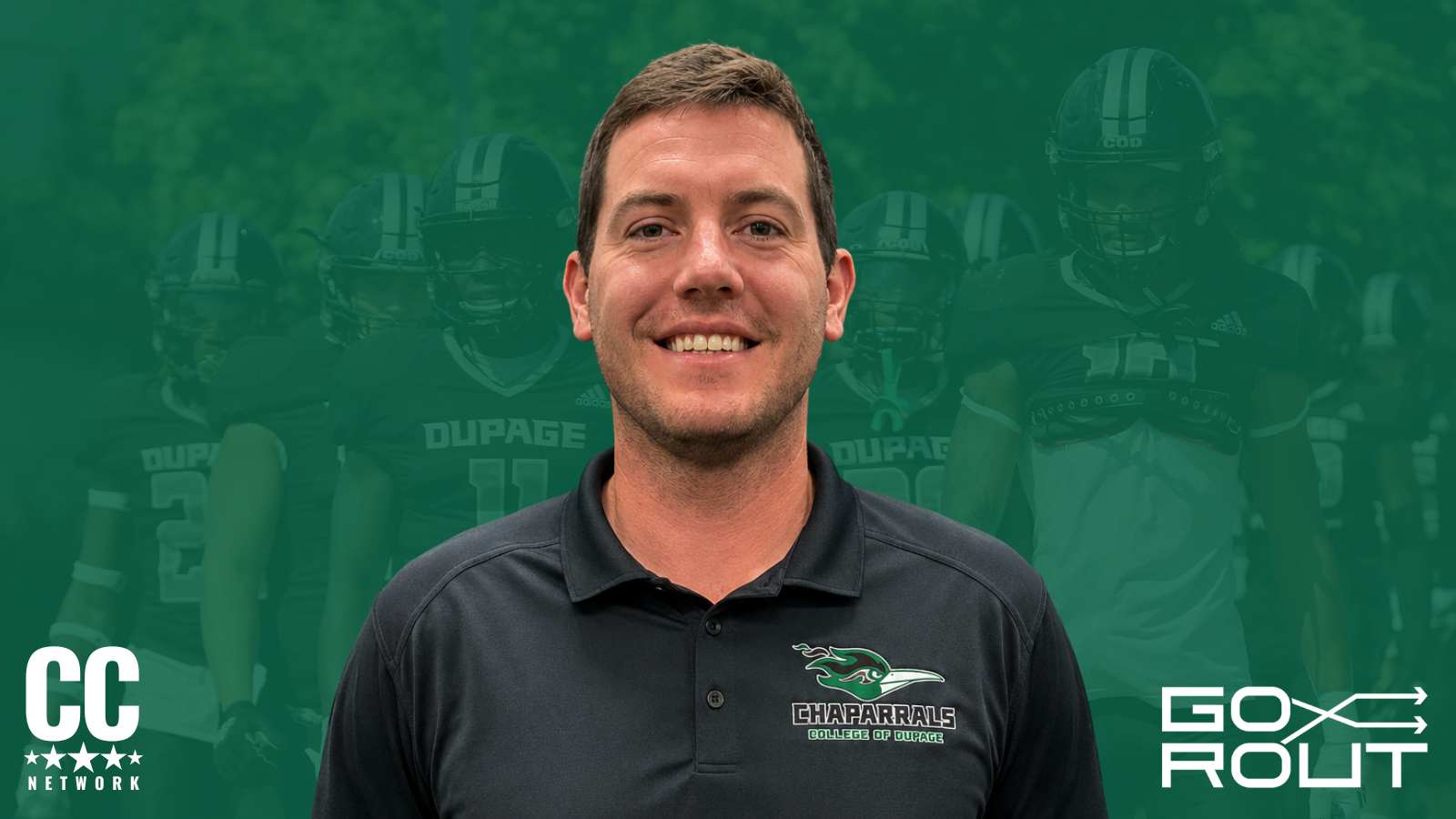
Joe Furco, Assistant Coach, College of DuPage
Joe Furco knows what it feels like when football is not the only thing on the plate.
He has coached in college football, worked in Division I football, served as an offensive coordinator, and helped build GoRout. He is also a husband and a father.
When Furco talks about efficiency, he’s speaking from real-life coaching experience.
He is talking about building a coaching life that can actually thrive and last.
For Furco, the question is simple:
How do you coach well without letting coaching take over everything?
Family First, Work Second, Football Third
Furco was clear about his priorities:
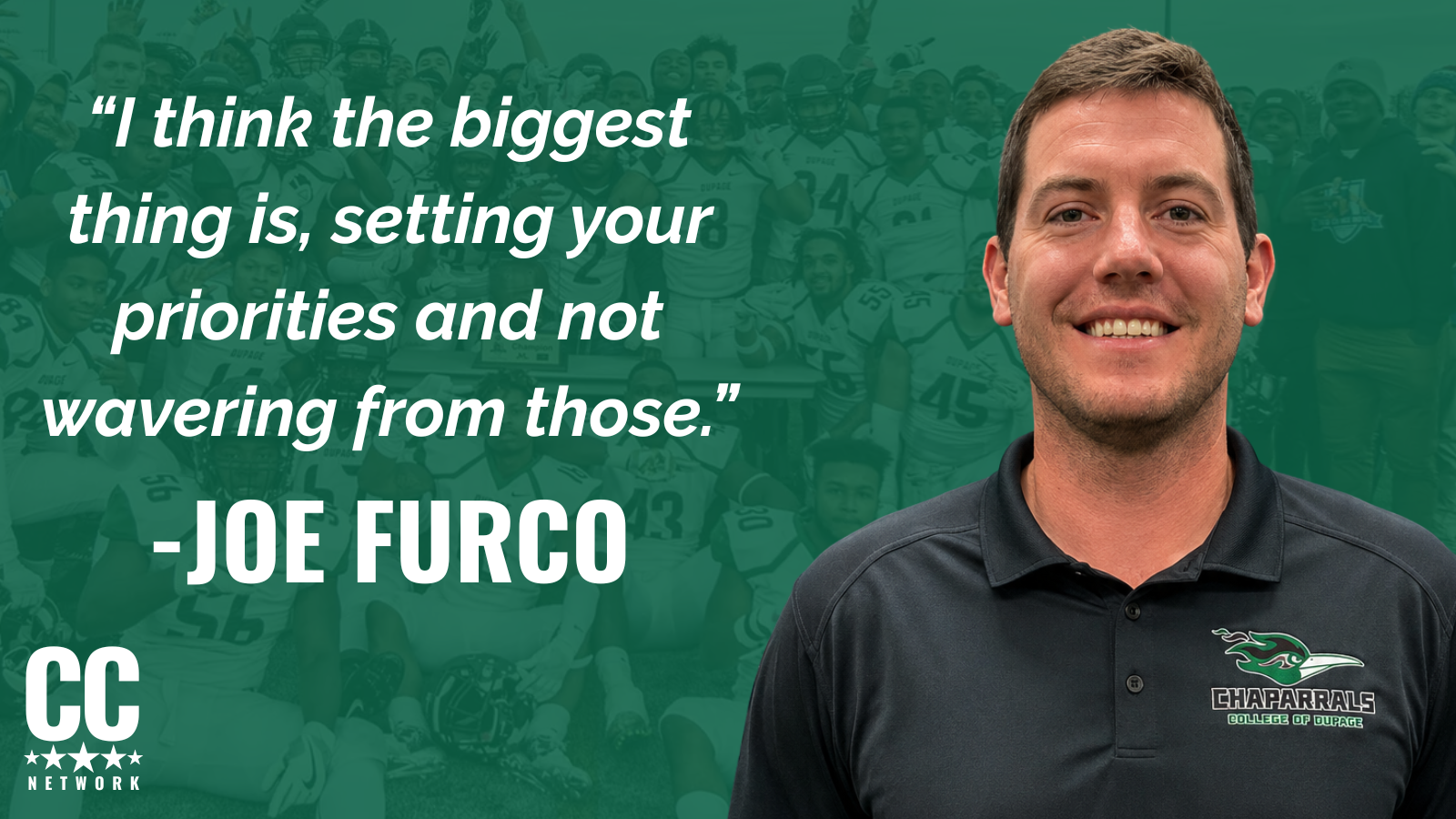
“I think the biggest thing is, setting your priorities and not wavering from those.”
During the season, his order is clear: family, work, football.
That may sound unusual in a profession that often celebrates whoever stays in the office the longest. But Furco has lived the other side of it. He has been in college football buildings where the hours never stopped. He has also reached the point where he had to decide what kind of life football could fit into.
His answer was not to walk away from the game.
His answer was to keep football in the right place.
Protect the Schedule
Furco used the phrase “militant schedule,” and it fits.
When time is limited, the schedule cannot be loose.
“And as soon as you fall behind on schedule, the rest of the day just falls apart.”
During the season, he built his rhythm around real blocks of time. Football early, GoRout during the workday, family time from 5 to 8. Football again after the kids went to bed.
The lesson is not to copy his schedule. It is to protect your own.
A meeting that runs long steals from the next priority. A film conversation that drifts off topic steals from the next priority. A Sunday game-plan session with no structure steals from the staff, the players, and the families waiting at home.
Furco’s lesson is not “work less.”
It is “make the work fit the time.”
Shared Language Saves Time
One of Furco’s strongest football points was about language.
“If I call it a speed release, I need the receivers coach to call it a speed release.”
Every staff knows what inconsistent terminology costs.
One coach uses one word for a concept, another coach uses a different word, and suddenly the staff is explaining language instead of coaching football.
Furco sees clean language as an efficiency tool.
Shared language makes meetings move faster, improves scout team work, and lets defensive coaches help with scout offense.
Players hear one message instead of three versions, and clean language lets everyone play faster.
Players, Formations, Plays
Furco’s offensive filter is simple:
“Players, formations, plays.”
Start with the people.
The players tell you what formations you should live in. The formations tell you what plays make sense.
If your best players are four receivers, live in more 10 personnel. If you do not have two tight ends who can handle the job, stop building the week around 12 personnel because it looks good on the board.
Coaches can waste a lot of time forcing concepts instead of building around players.
Furco wants concepts that can travel. If a play can be run from several formations, it has more value. If it only works from one look against one picture, it probably doesn’t belong.
The call sheet should be built around what your players can execute.
Shorten the Game Plan
Furco was honest about one major change in his process.
“We don’t staff game plan hardly at all.”
The offensive line coach owns run-game and protection thoughts. The receivers coach owns passing-down ideas. A trusted assistant works ahead on the next opponent. Everyone comes back with answers.
Furco’s approach is built on delegation and trust. Coaches handle their assignments during the week, study their area, and come back with answers. The staff meeting becomes a chance to confirm the plan, clean up details, and move forward instead of sitting in a room for 12 hours watching every clip together.
If the coordinator and receivers coach land on the same third-down answer, it goes on the sheet with conviction.
Trust Someone to Work Ahead
Furco also pointed to one of the most valuable people on a staff: the coach who can look ahead.
He wants a trusted GA, analyst, part-time coach, or assistant already digging into the next opponent before the current game has even been played.
Sunday is too valuable to waste entering data.
If the breakdowns are ready, the staff can start making decisions. If coaches walk in Sunday morning and still need to build the reports, the day is already behind.
Furco’s point was direct: the staff is only as good as the data it puts in.
Bad breakdowns create bad answers. Good work ahead of time creates a cleaner week and better decisions.
GoRout Gives Coaches Their Time Back
GoRout fits directly into Furco’s world.
GoRout gives coaches real-time, coach-to-player communication on the field, replacing hand signals, paper wristbands, and verbal calls with secure wireless devices that send plays, adjustments, and tactical information instantly.
For Furco, the value is not just speed. It is better practice structure.
He talked about using GoRout during walkthroughs so offensive players can see defensive shells, pressure looks, and rotations on their devices. The quarterback processes the picture, the receivers adjust, and the line communicates.
Now the walkthrough is not just routes on air. It becomes a processing period.
He also shared how programs use GoRout in special teams and scout periods to cut wasted time. Players get the look, line up, and go again.
GoRout helps coaches eliminate huddles, increase reps, and maximize efficiency with game-changing technology. Coaches can sign up using code “coordinator” for up to 50% off setup fees at https://gorout.com/podcast/.
Protect the Weekly Reset
Furco made another point coaches need to hear.
You need a reset.
For him, that has looked different at different stops. After games at Elmhurst, the staff and families would hang out in the parking lot. At College of DuPage, people came over to his house after games.
The form does not matter as much as the function.
Coaches need a moment where football is still present, but the pressure drops.
A healthy staff cannot live in grind mode forever. Coaches need family, food, laughter, and a way to clear the mechanism before the next week begins.
Those resets help keep the game fun.
Keep Loving the Game
Near the end, Furco gave the real reason behind all of this.
“You gotta love it.”
Football takes too much time and energy to do it halfway. Coaches have to love the players, the staff room, the teaching, the competition, and the game itself.
But love can fade when football starts taking from everything else.
Furco has seen both environments. He has seen staffs where family was part of the culture. He has also seen places where coaches slept in the office and burned out.
His message is clear: the game has to fit into a life that still allows you to be whole.
The efficient coach is not the coach who cares less.
The efficient coach knows what needs his time, what needs to be simplified, what needs to be delegated, and what needs to be protected.
Related:
Mastering Efficient Practice with Noel Dean
Time Well Spent – How Less Practice Time Led to Better Performance
Connect on X:
Joe Furco: @CoachFurco7
Keith Grabowski: @CoachKGrabowski
GoRout: @Go_Rout